
Phoebe Bridgers - Lost Weekend Review
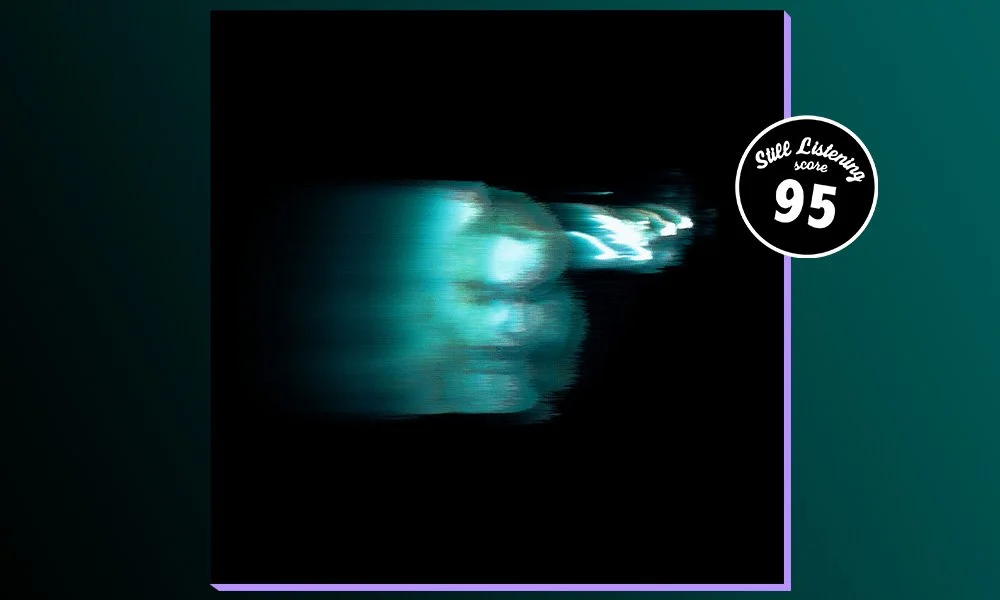
On Lost Weekend, Phoebe Bridgers delivers her most confident and fully realised album.
It’s been six years since Phoebe Bridgers’ breakout album Punisher. Yet she’s hardly been quiet in the meantime. There’s been the meteoric rise of boygenius, four Grammy wins, shows and songs with Taylor Swift and the intense interest in her personal life that inevitably comes with that level of fame.
For all the acclaim surrounding Punisher, it never completely felt as though Bridgers had progressed in any substantial way from her debut. Stranger in the Alps wore its Elliott Smith influence openly, but there was something cohesive and bruised about it that Punisher lost. At times, the latter felt almost Disney-fied by comparison. In the years that followed, Bridgers became pop culture’s songwriter princess, her reputation growing to the point where she became one of the defining songwriters of this decade.
Lost Weekend is the first time the music feels entirely deserving of that reputation. Bridgers finally sounds fully realised as an artist. The influences are still there, but they no longer sit so obviously on the surface. Instead, Lost Weekend has a sound that feels distinctly hers: fuller, stranger and more confident than anything she has released under her own name before.
‘The Outside’ establishes that shift immediately, opening with Bridgers’ vocals heavily processed and warped through a vocoder. It’s a surprisingly bold way to begin the album, taking perhaps the most recognisable element of her music and deliberately obscuring it. Where Bridgers’ voice has traditionally been used to create a sense of intimacy, here it feels strange and almost detached. From the outset, Bridgers is pushing beyond the sound that once defined her.
Lead single ‘Lost Boys’ is more immediately familiar territory, built around a deceptively catchy melody that Bridgers has always excelled at, now framed by the broader, more expansive production of Lost Weekend. There’s a loose, distinctly summery quality to the track, its warmth and immediacy making it one of the album’s most inviting moments.
Bridgers shows some bite on ‘The Governor’s Waltz’. “And she can pretend to be me / Since she took my place in my bed on that stage / I have not lost any sleep,” she sings, in what certainly sounds like a swipe at Gracie Abrams, who is now dating her former partner Paul Mescal. It’s fun to hear Bridgers embrace the celebrity drama, but perhaps inevitable too. Her songwriting has always drawn intimately from her own life; these days, that life just happens to involve some of the biggest names in pop culture.
‘Bobby’ is one of the album’s standouts, and among the best songs Bridgers has written. The production is remarkably rich, moving from comparatively stripped-back verses filled with intricate guitars into the heart-in-your-chest swell of its choruses, before beautiful, airy synths emerge towards the end. There’s a fullness to the track that runs throughout Lost Weekend, while the songwriting itself is equally assured, particularly in the beautifully affecting couplet: “Now I don’t know if I can make it tonight / But what are you doing the rest of my life?”
That romantic euphoria sits in stark contrast to the grief that hangs over much of Lost Weekend. Bridgers’ father, Tony, died in 2022 following a complicated and often strained relationship. His presence drifts through several of the album’s songs. ‘Still Standing’ is particularly devastating, beginning with Bridgers almost alone against deep, ambient synths before acoustic guitar and banjo pull the song towards folk. Those two worlds gradually converge as the synths swell around the acoustic instrumentation, eventually dissolving into a reverb-drenched choir of voices. “I can’t imagine you dead, but you are, every day / Thank you for everything,” she sings, capturing the conflicting grief, anger and gratitude that run through the song.
His presence becomes literal on ‘Never Going Back!’, which incorporates a voice note from Bridgers’ father. There’s something deeply moving about suddenly hearing the voice of the person whose memory hangs over so much of the record, particularly when the relationship being mourned was never neatly resolved. It turns memory into something physical, briefly collapsing the distance between Bridgers’ past and present.
‘I Can’t Wait’ offers another example of just how unpredictable Lost Weekend can be. Bridgers’ heavily manipulated vocals become another instrument in the arrangement, drifting across the stereo field before the synthetic production suddenly gives way to a delicate, banjo-led passage. It’s here that the mysterious “Son-John Johnson”, who sounds suspiciously like Geese frontman Cameron Winter, enters the picture, joining Bridgers around the “Hyde Jekyll Hyde / Finally together” refrain.
Across Lost Weekend, there’s a confidence that Bridgers’ previous records never quite possessed. Its production is more adventurous without feeling overworked, while the songwriting is sharper than ever. Most importantly, its stranger impulses never come at the expense of the intimacy at the heart of Bridgers’ music. Six years on from Punisher, Bridgers has made something that feels entirely her own.