
PISS’ debut demonstrates how much we need uncomfortable listens.
There is somewhat a trend in recent times of praising music for its ease of listening. The flow is smooth, the production seamless, the general impression is that of a record that can be inhabited comfortably and returned to multiple times, seemingly without effort. And certainly there is much value in music that can create a pleasant, immersive bubble for a listener to reside within, especially in the more meditative genres. The risk, however, in becoming too enamoured with this kind of easy-access predicament is that we might set aside, or even forget about, the power inherent in music that can be confrontational, sharp-edged or angular, or even deliberately uncomfortable. There have been entire music traditions built on this idea - it is the central tenet of punk, it has been toyed with by various strands of hardcore, metal, and even prog-rock, and it was a far more pronounced element in old-school goth - but it has become something of a rarity to bump, nowadays, into a record that can deliver it coherently, consistently, and at full blast.
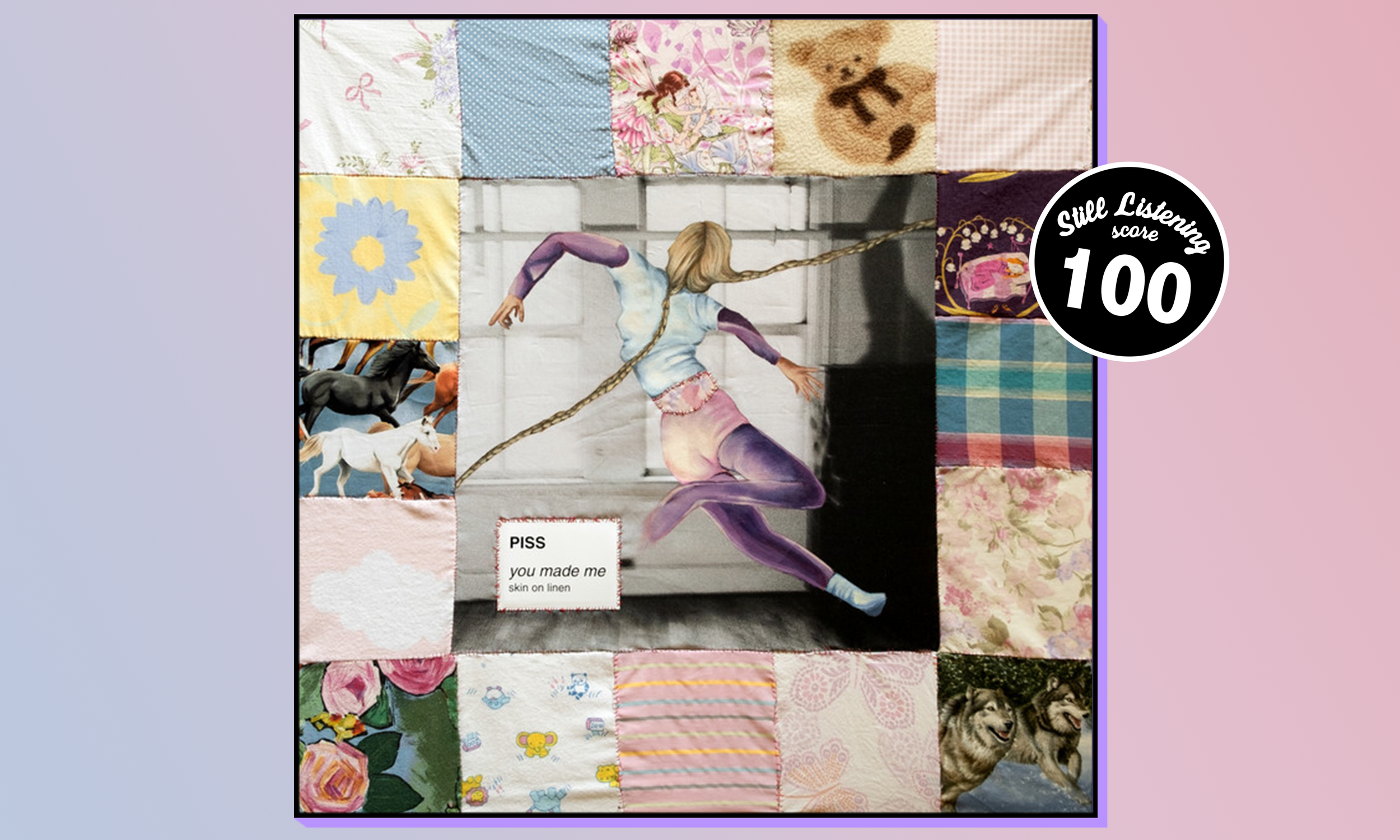
Enter Vancouver’s PISS and their debut album, you made me/skin on linen, which seems to have made the cultivation of its listener’s discomfort the central tenet of its philosophy. The album is a renewed testimony to the inadequacy of the post-punk label, in that while the music and its underpinning concept are indubitably punk in spirit (the structure of the record, fifteen nominal tracks which are actually an alternation of soundbites with mostly short-to-very-short tracks slowing down into a longer finale, ‘i keep trying to change the ending’ - a song that feels like being mired in quicksand - is pretty much punk-by-the-book), the sound is something altogether difference, that has evolved from, or perhaps emerged from the rot of, punk as we once intended it. It is also both visceral and intellectual, without the two elements ever feeling at odds with each other. This creates a double system of challenge for anyone listening: the intellectual ferocity commands sustained in-depth engagement, the raw feeling bursting at the seams through it all seems deliberately distilled to cause an uneasy reaction. There have been records in the past capable of striking the same balance, but few and far between. Bowie’s Outside did it through an almost baroque architecture of sounds, voices, and characters; Led Zeppelin’s IV through maintaining an unsettling occult undercurrent throughout; Discharge’s Hear Nothing See Nothing Say Nothing, perhaps PISS’ closest cognate, used the brutal language of hardcore to give voice to equally intense feelings.
you made me/skin on linen has a similar approach to sounding shocking without seeming affected. The warning is explicitly given, in a haunting, broken vocal, in i wanted to be a singer, the first full-length track on the record: “this is not a song, it’s self harm”. The record is, however, not self-indulgent in its depictions of the realities of assault, sexual exploitation, and violence, presented from the point of view of someone who has lived them. Taylor Zantingh is not turning her experiences into a spectacle. She is unravelling them gradually from track to track, with self-compassion (the first thing we hear on the record, kai and friends, leads us in on a note of childish hopefulness), a careful selection of political and intellectual frameworks that are presented without need for commentary (Andrea Dworkin and Manon Garcia among others), and something like the vocal representation of physical anguish (the best example is probably self blame with thorn necklace and hummingbird, where the vocals break through a torrent of uninterrupted raw noise). The music has evident noisenik tendencies that it doesn’t try to temper (listen to time loop at hot slit for a perfect example) but it also knows where it’s time to strip them away and leave room for something both tender and ominous, as in its obvious centrepiece, blocking a scene you can’t remember, which is candid, uneasy, and almost generous in its openness.
It is a thoroughly punk album, in spirit, approach, and unconditional commitment to the hardcore sound, but it is also so much more. It is feminist in its very bones, yet it stubbornly refuses to turn itself into a feminist manifesto, because manifestos are too easy. It is almost confessional in its contents, but it consistently chooses rage, defiance, and chaos over self-pity. It is deliberately disjointed without losing its internal cohesiveness. It is, most of all, a brutal, uncomfortable record that forces the listener through it rather than invite them in. By the end of it, one feels challenged, unsettled, almost exhausted, and in that lies the greatest strength of the album as a work of art. We have almost forgotten what it is to be truly confronted by a record. Perhaps we need more like this one, to remind us.