
The Wran - The Stone Man Review
Irish folk outfit The Wran deliver a memorable debut album that establishes themselves as one of the best new acts around, ahead of a support tour with Madra Salach. Who’s to compare to the Wran? Probably nobody.
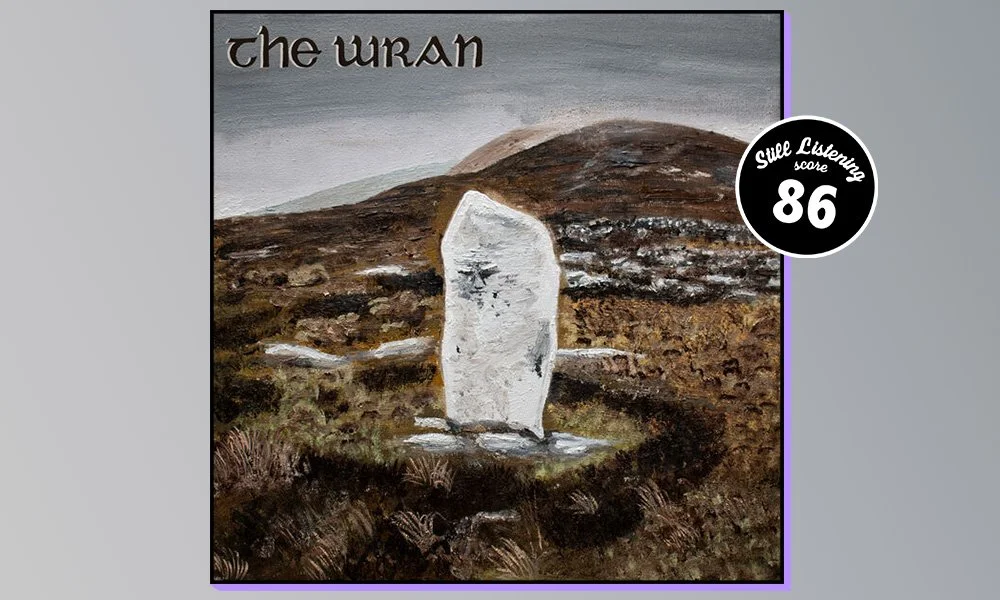
The Wran first came to my attention when they were used on the Netflix series House of Guinness, and they have never been more on point than they are here, evoking a sense of mood, atmosphere and tradition in the same way that, say, Madra Salach have done. Having toured with both them and The Scratch, a band known for their metal fusion of folk and trad Irish songs, The Wran feel firmly part of that wider, thrilling Irish folk revival, while still operating very much on their own terms.
Exploding out of thin air with ‘Some Say the Devil is Dead’, they joined the ranks of the great new Irish bands almost instantly, crowned by Steven Knight alongside Girl in the Year Above on Peaky Blinders. It wouldn’t be long before they released their debut album, The Stone Man, borrowing from The Pogues for an eventful grunge-trad evening that pours punk and psychedelia into the scene in a way that feels completely different from almost anyone else operating in that sphere.
We open with ‘Sullivan’s John’, which pulls you into their world from the very first line. ‘Oh Sullivan’s John / to the road you’ve gone far away from your native home,’ The Wran sing. They have the chemistry of brothers, and all four of them are siblings: Tommy, Danny, Seán and Stephen Dunford, hailing from the Comeragh Mountains of County Waterford. It’s a trad take on the folk song popularised by The Dubliners and written by Pecker Dunne, casting your mind towards a lonely traveller’s wagon. It isn’t a criticism of the traveller who uproots his home, ‘You won’t stick it long’, but a warning for the uncommitted, ‘Til your belly will soon get slack’. It takes a brave band to open their record with a song so deeply associated with The Dubliners and such a cornerstone of Irish folk culture. Sheer audacity, really, and a statement of confidence from the off.
Confident now, The Wran follow ‘Dunford’s March’, built around bodhrán, banjo, acoustic guitar and harmonium, with another traditional song, taking on the lofty task of following Shane MacGowan. This record is incredibly instrument-heavy, and it really shines because of that depth. To the uninitiated, you’d think some of these songs were their own originals. The psych touches on ‘The Limerick Rake’ give it a unique sound, as they dip into the same territory of reinterpretation that Muireann Bradley has used to great effect, updating the classics in clever new ways while paying homage to them. They give these traditional Irish songs some punk and psychedelic weight, allowing them to grow, transform with the times and remain current, drawing inspiration from Planxty and Lankum, with modern instrumentation feeding new versions into the song.
The next tracks, Irish-language ‘Aird Ui Chauin’ and ‘Fear Dearg’, are beautiful. ‘Aird Ui Chauin’ draws from Aird a’Chauin, a townland near Cushendun in County Antrim, and stretches back to the 19th century, tackling emigration, homesickness and the loneliness of leaving home. The Wran, with their ability to update classics for new audiences, inject it with a whole new voice that places it within a communal setting, popularised perhaps by the likes of Lillis Ó Laoire and Ciara McCrickard.
At seven minutes and 44 seconds, it shows The Wran defying modern music tradition in favour of harking back to their country’s folk history, operating as a bridge between what is old and what is now new. You’d have to be, bluntly, made of stone not to feel anything from this deep Irish trad song tradition, propelled forward with the weight of history behind it. It’s rightly one of the centrepieces of the album, constructed around people leaving home and the family they left behind, exploring the longing to return and the knowledge that leaving, while tempting, might not always be in your best interests, especially if you find yourself stuck on the road too long. Perhaps most notable is The Wran’s original Irish trad debut ‘Fear Dearg’, a fast-paced track that moves with deliberate unease through a rich landscape of experimental sounds, evoking the identity of an entire culture.
‘Some Say the Devil is Dead’ is the live-engineered song that goes down an absolute storm. It’s bonkers. The rapid slow build of ‘Some say…’ and its repetition is pure delight, ramping up and up until you can practically see a crowd going absolutely nuts to it. It looks at how evil isn’t always found in the places you’d expect, and how something supposedly dead and buried might not be dead at all. Sometimes, as the band say, it might be ‘right beside you’. The creeping, unsettling lyrics really come together here, reflecting how often the line between good and bad is crossed.
I really like ‘The Waterford Boys’. It takes a comic story and turns it into a celebration of working-class survival, making a singalong out of resilience. It is their anthem-builder, a song built for harmony, defiance, drinking outside the tavern and finding community in the face of overwhelming despair. Like the rest of the album, the heavy instrumentation remains a core focus, and this gripping track is absolutely on fire. A singalong about finding something essential in community is what really makes The Wran so special, able to fit this track amid the grimness and despair without making it feel forced. ‘Who’s to compare to the Waterford Boys?’ the lyrics ask, which prompts the question: who’s to compare with The Wran? Probably nobody, as things stand. They exist in a class of their own.
Final track ‘All Kilbrien are on a Spree’ is another arrangement of a traditional song by The Wran, and they take it to all new heights. Across its eight tracks, the album is rough, unruly, organised chaos operating in its own sphere. The Wran are not another Madra Salach or The Scratch, but a distinctive force of their own, and The Stone Man shows a band who, with time, could stand firmly alongside both. No small order.