
Start Listening To: Artyplanet
London-based artist and producer Artyplanet talks contrast, vindicating pop, and the importance of having a creative community.
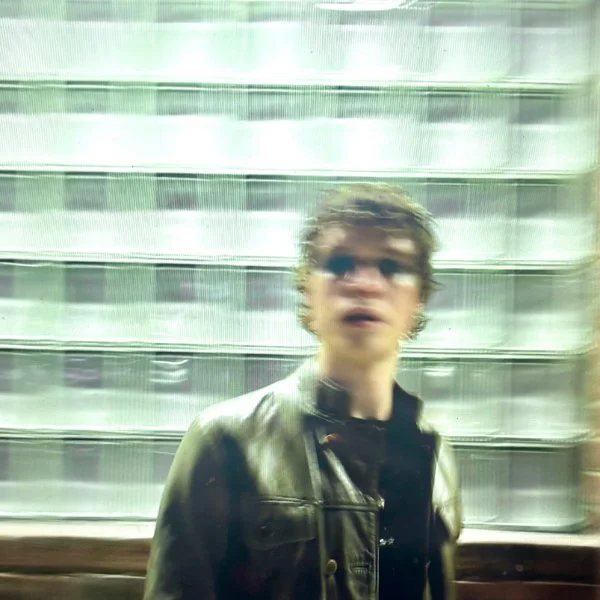
When parents let their kids explore their interests without bounds or judgment, you get Artyplanet: a music nerd whose unrestrained passion for music culminates in a sound that pays homage to influence whilst twisting and pulling itself into something effervescent and new. The Birmingham-born, London-based artist’s hauntingly melodic pop sensibility leaves no room to be forgotten, and you’ll likely catch yourself subconsciously muttering hooks under your breath. During a string of shows in London, I caught up with Arthur to discuss his defenses for pop music, gigging, perfectionism, and the significance of perspective.
For those unfamiliar with your music, can you tell us who you are, where you’re from, and about the music you make?
I’m Arthur (Artyplanet), I’m originally from Birmingham, and I make indie electronic and synth-pop music.
Your music pulls from a lot of different genres. What are your top three musical influences?
David Bowie. My mum’s a huge Bowie fan so I grew up listening to him all the time in the house. He’s a massive influence not even just musically, but his general concept of art. I love the way he attacked creative projects - like it was never just music, but a full creative vision.
There's also a band from Birmingham that I really, really love called Broadcast. They’re the closest to what I want to do sonically. They do clever, hooky, pop melodies with interesting production. The way they reference older music, but then make it modern makes their sound so timeless. You can listen to it now, and it doesn't feel like it's from the noughties, it sounds just as relevant. Definitely one of my favorite bands of all time.
Kylie Minogue is probably in there as well, to be honest. She's just cool. She was so cool in the 2000s. She's still so cool now. I love someone that does pop in an interesting way. I was obsessed with her when I was a kid. I literally had a giant poster of her in my room when I was like three or four.
You label your music as synth-pop. What do you think of the often-negative connotations people have towards the term ‘pop’?
I think different people have different definitions of it. When I was younger, I thought of it as being more of a negative thing. I synonymized it with like Top 40, which, especially when I was a teenager, was not cool to me.
But now I don't think it's that. To me, I think of it as a word for accessible and appealing. There are loads of indie music and alternative music that's really poppy, and that's not a bad thing. If anything, I think it's a good thing because every indie band's biggest hit is usually a pop song. It's almost an advantageous word to add because it sells it to people, which is an interesting concept.
Now it has more of a cool factor. And I also think it's really tied to queer culture as well. The gays love a pop diva.
Out of the three singles you’ve released, ‘Just u’ and ‘Static Silent’ feature other artists. How important is collaboration for you?
Oh my god, so important. It's the foundation of everything I do with music. When I was in Birmingham, I started off in a band called Cage Park when I was like 14. We played around Birmingham a lot and sold out headline gigs. All of that process was collaborative from the start, so I think that has just always felt like a part of my songwriting process.
Now I enjoy working by myself, but there's still a real joy that I get from working with other people. Beyond music, creative spaces in general are built for you to work with your friends. I love that I have loads of creative friends that do their own thing, and we can bring those worlds together. Creative culture is built on collaboration and working with other people.
The stereotypical ‘tortured artist’ is always in the room alone, writing the music and pouring their soul out. It can be that, but it can also be messing about with your friends, drinking wine, and crying together. That's just as valuable.
‘Spent out’s’ lyrics feel bittersweet in comparison to the melody. How do emotions influence you creatively?
People often write from an angry or sad place, but I actually tend to feel quite unmotivated and uninspired when I'm in a bad mood. When I've had time to process a situation, I can go from there, and then the writing ends up being more true to how I'm feeling. It's layered and comprised, because most of the time I never really feel one thing.
A lot of my writing is seeing patterns and behaviors of mine. ‘Spent out’ was about feeling like sometimes I want to be introverted, and sometimes I want to be extroverted. Sometimes I want to stay at home, do nothing, and talk to no one, and then I see that everyone's out and I'm like, ‘Why am I not there?’. I want to be with everyone, and then I get there and I can't talk to anyone.
‘Just u’ plays with a lot of glossy pop elements with gritty distorted synths. What is your relationship to consistency in terms of sound?
Sonically, I love contrast. I guess that's what makes a lot of music good. I have quite a soft voice usually, so I love playing with effects and putting loads of delay, distortion, and weird stuff on my voice, but then having really pretty stuff in the background. I love contrast in that way for sure.
Your production involves layering a lot of different instruments, vocals, and effects. How do you know when a track is finished?
I find that so hard to know. Sometimes I have to show it to my boyfriend and be like, is this good? And then I'll be done. I'm such a perfectionist, I could just go over the same part over and over again. Especially because I mostly produce everything myself. I can have forty tracks of different synth parts and other things - but that means I have forty different things I can obsess over and really tweak until I think it's perfect. Sometimes you have to take a break from it for a couple days. If it sounds good when you first come back to it, it's done - just leave it.
When you produce for other people, your ego is not in it as much. You can look at things way more objectively in comparison to when you write or produce for yourself. There's this looming thing in the back of your head that the music needs to be as good as possible because of how it’ll be received or perceived by other people, but that can limit you.
You’ve been gigging solo around London more recently. How different does it feel to transition from performing as part of a band to performing by yourself?
Similarly, I find that way less stressful when I’m not playing music that I've written. I think maybe that's actually why I like doing session work and playing with Lava or Gecko at the moment. I can just relax and perform.
I enjoy it in the moment when it’s just me playing, but the buildup before and the aftermath I find so stressful. Again, it's probably about being a bit of a perfectionist and wanting everything to go well. It means I sometimes don't really enjoy myself leading up to it. But when I'm actually on stage, I really like it and can get into it and relax. You want this to go well so bad that it feels almost connected to your identity - like a deep judgment you have towards yourself.
What do you love right now?
The underground London music scene right now. All the people and my friends who are a part of it inspire me so much.
What do you hate?
I hate fascism. I hate music snobbery.
Name an album you're still listening to from when you were younger and why is it still important to you?
‘Treats’ by Sleigh Bells. I downloaded it to my iPod when I was like a kid, and I was so obsessed with it. It has sugary hooks with a loud rhythmic crunch. I think it's such a brilliant album. Every song on it is a banger.