
Start Listening To: DOUR
Written with their late bassist Gabe Jacob Ferman, AGORA transforms collective unease into a tense, immersive meditation on what it means to find community in an increasingly fractured world.
Every generation imagines itself to be living through uniquely turbulent times. Ours, however, bears the strange new burden of witnessing every catastrophe in real time, endlessly refreshed and delivered directly into our hands. We are overstimulated yet undernourished, hyperconnected yet profoundly lonely. The result is a horrible form of collective paralysis: an age in which information has never been more abundant, but meaning has never before felt more elusive.
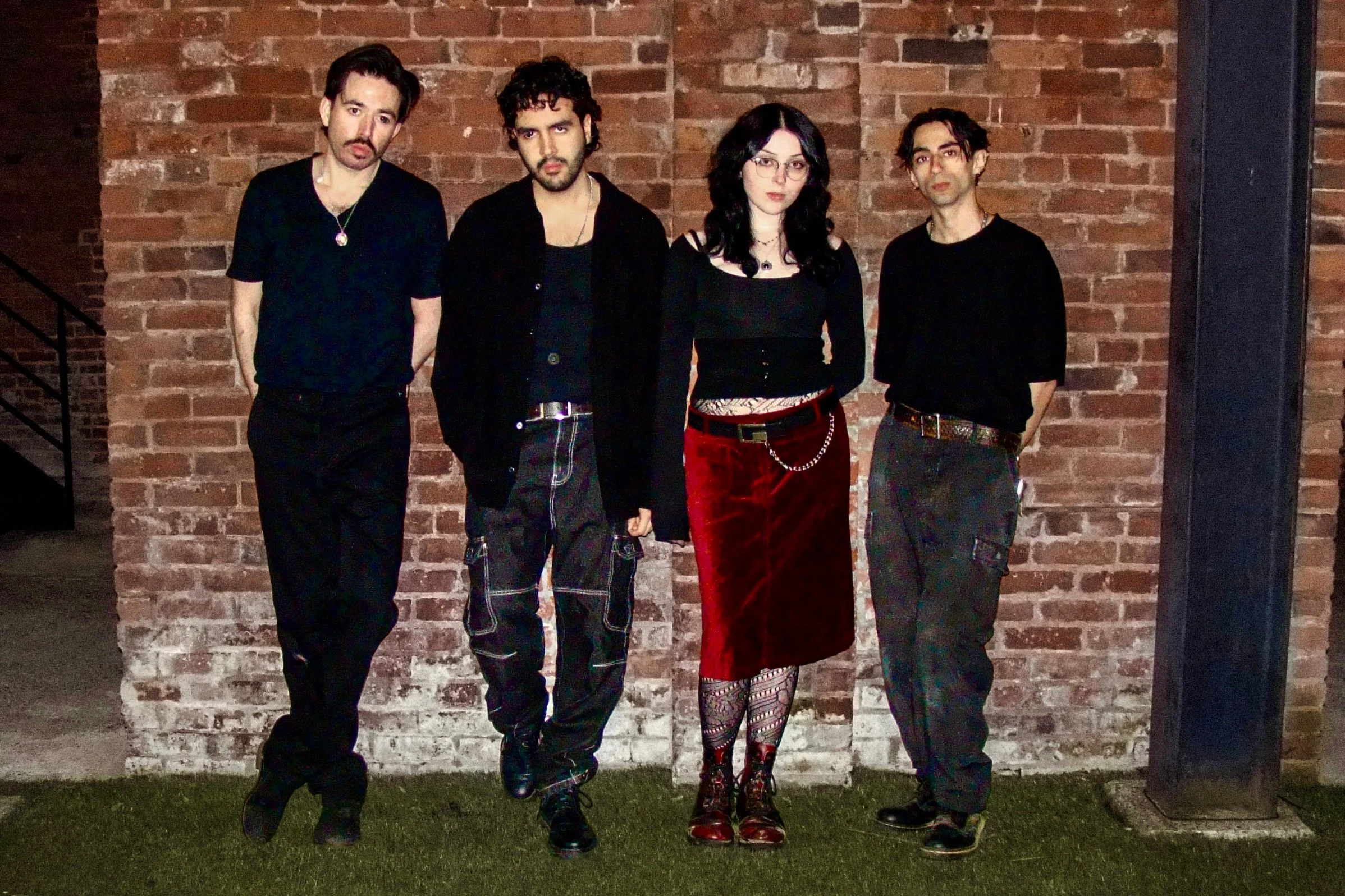
Vancouver post-punk outfit DOUR inhabit that unease in full. Written with their late bassist Gabe Jacob Ferman, who passed away earlier this year, their debut album AGORA is haunted by technological saturation and the slow erosion of human connection. Yet for all its claustrophobia and tension, the record is ultimately driven by a deeply human impulse: the desire to feel understood, finding one another again amidst all of the noise. Across its taut, no-wave indebted post-punk, AGORA becomes just what its title suggests – a meeting place, albeit in musical form. I spoke with frontman Zak Salehian to discuss media-induced numbness, preserving Gabe's legacy, and why community remains the sole antidote to modern isolation pandemic.
How would you describe DOUR to somebody who's never heard the band before?
It’s a darker, gloom-wave, shoegaze kind of thing, but the focal point for me is the subject matter. A lot of it comes from being against the media and what I'd call the colonisation of the mind in the modern day.
You've described your debut album, AGORA, as reflecting technological saturation and social detachment. Were those conversations already happening naturally within the band before the record took shape?
With myself, yes. Those were things I'd been struggling with for a long time. But when it came to the lyrics and the overall direction, I don't think the rest of the band fully understood it until it was kind of finished. That side of it was mainly coming from me.
What do you feel is the core purpose or message behind AGORA?
I wouldn't say the record actually gives you any answers. It's about bringing awareness to something that everybody is suffering from and struggling with. It's really about holding up a mirror and getting the listener to reflect.
The moments of quiet feel just as significant as the noise. How deliberately did you use that space to shape the atmosphere of AGORA?
Very conscious. These things were bothering me so viscerally that I had no other means of dealing with them than making music. Music is my lifeline. It doesn't solve anything, but it gives you something to focus your time and care into. Sometimes I feel completely paralysed by everything I'm seeing, and then eventually you return to making music because you have to.
A lot of post-punk engages with alienation and people becoming passive observers. What's striking about AGORA is that the tensions it explores feel visceral, not just emotional.
The subject matter is visceral, but the way it's presented is almost numb. Eventually, you understand how brutal everything is, but your reaction to it becomes diluted. It makes you feel powerless. Now that the record's finished, I'm kind of sick of that. Going into the next record, I think there's going to be a lot more frustration and anger coming through.
The album's title refers to the “agora” as a central public gathering space, yet the record itself feels incredibly isolated. Was that contradiction intentional?
Yeah. It's supposed to be a place for people who do feel that way. Alienation and isolation are a huge part of how the media affects our relationships. But what do you do when you feel that way? How do you bring those people together?
I think people who are sick of this need to understand that there are other people who feel the same way and that they're not alone. We need to break that barrier and bring those people together.
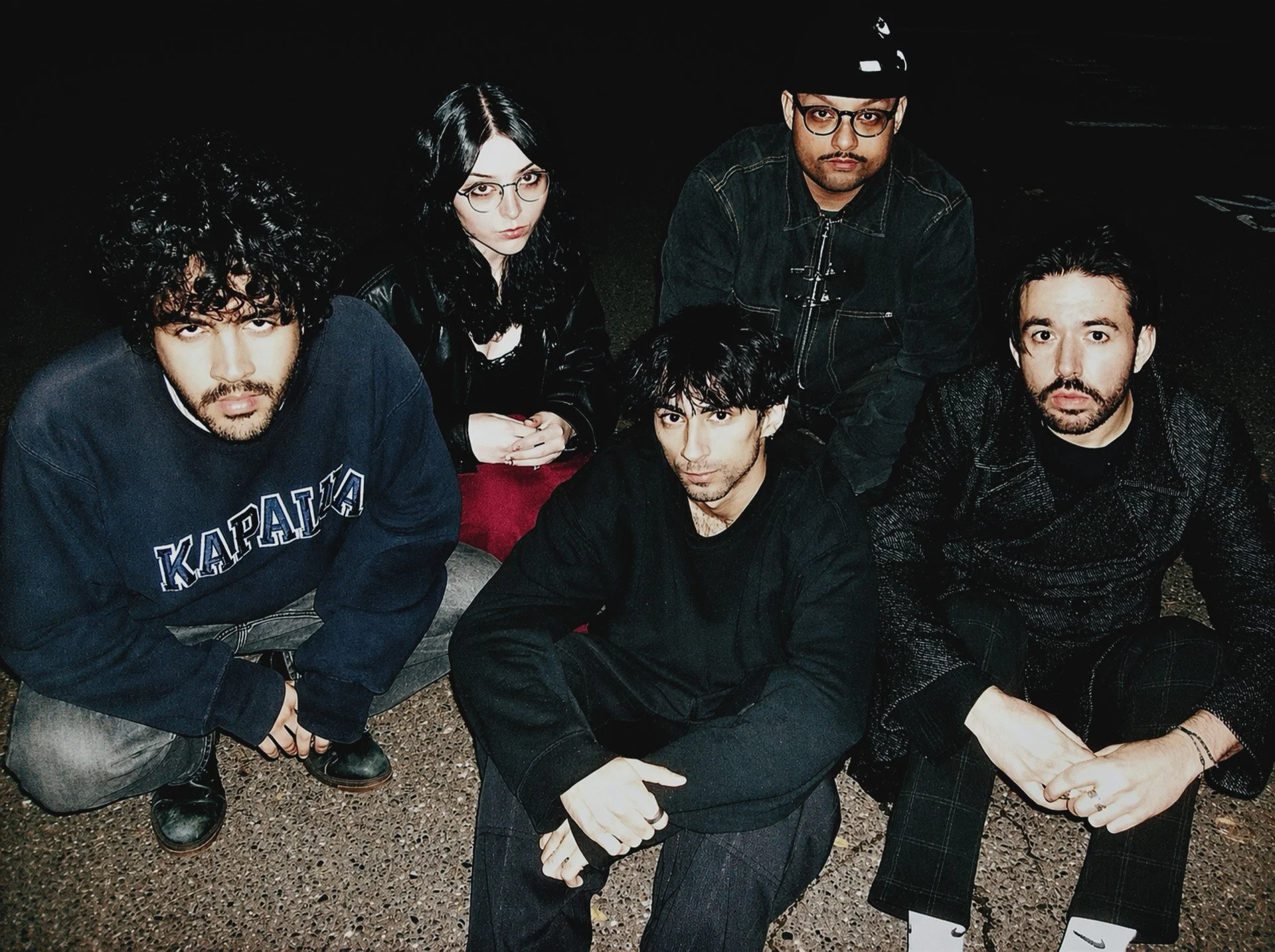
With that idea of bringing people together, AGORA is also a deeply collaborative piece of work.
We have this band because we have to. The future feels incredibly dire, and a lot of young people aren’t seeing a way out. The only ways we can combat it are through collective action or by holding onto something you love enough to carry you through it. That's what music is for me. It's my outlet.
You consciously chose to leave AGORA untouched after Gabe's passing. Why was preserving the album exactly as it existed important?
We shared those beliefs and that time together. It felt like not only the most honest way to present the record, but also [Gabe’s] right too. He's not here to say anything different, so it should be exactly the way we intended it.
He was fully involved and fully aware of what the record was about. He also struggled with the things we're writing about, and had more on his plate than most when it came to mental health. But he was fully there and fully aware of everything.
Knowing that the album now exists partly as a document of Gabe's presence within the band, does releasing it change your understanding of what a record can preserve?
I think so. This is the first record I've ever released with anyone, so it's strangely unfortunate that this is how it happened. But now he's part of something bigger than himself forever, for as long as people continue to acknowledge and listen to the record. I think that's really beautiful. I know he'd be proud.
If AGORA exists as a reflection of a certain psychological condition of modern life, what do you hope survives beyond it?
This record is supposed to have patience with people. It's trying to create awareness and understanding, but also connect with people emotionally through things like love, loneliness and loss.
I think it’ll mean a lot to people who maybe aren't there yet, who don't yet realise how easily we can be coerced and manipulated as a population. It'll matter for as long as people still want to understand and keep learning.
How did living in Vancouver influence the emotional landscape of AGORA?
Vancouver is a really odd city. It doesn't favour young people. Housing is extremely unaffordable, it's very business-oriented, and it almost feels dystopian. When you do find culture, it exists in these tiny pockets that you have to seek out. That definitely influenced the record in terms of the lack of connection and community, because those are things we're living with every day.
When you think about performing these songs live, do you think they'll naturally evolve, especially given that the band's current lineup is completely different?
I think it's already evolving. I played this record as a three-piece for a long time, so everything was quite strict. Now, most of what's heard on the record can be recreated live, which I'm excited about. I love this record and value all the production we put into it. Being able to bring that to the stage is going to be really interesting and fun.
If you could translate AGORA into a physical environment, what would people see when they stepped inside it?
I hope it would be a gathering of kind-hearted people. People who want to connect with others and be there for each other, even if they're strangers. I want it to feel like a place where people feel understood. When people have understanding and community, it becomes a beautiful space. People feel connected and loved.