
Start Listening To: Laptop
Jesse Hartman of Laptop talks touring with Richard Hell at age 20 and getting back into the music scene after a long hiatus.
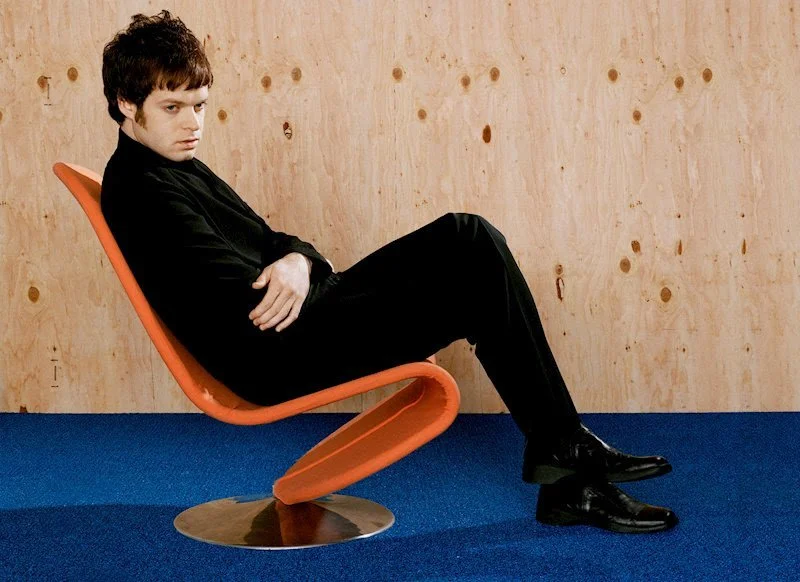
It takes an odd duck to get their career start touring in Japan with Richard Hell in their junior year of college and then immediately decide to disavow music; and then to found their own band before disavowing that, too. From this particular sequencing of true events, two pillars of Jesse Hartman of Laptop’s character profile expose themselves: he’s a bit of an anomaly, and he’s also very into disavowing things.
“I was 18 when I met Richard”, Jesse tells me. “I’d grown up loving him, and I met him through my brother, and I went over to his apartment with my demo tape. My brother said, ‘Don’t do that.’ Richard loved it, but it was a scary thing to do. He can be a little tough.
After tinkering with some demos with Richard in the studio over the following two years, Jesse was invited in his junior year of college to play lead guitar with him in Japan. “That was pretty wild and eye-opening. There were some great moments, and there were some not-so-great moments. I was 20 years younger than everybody else in the tour, so I had big shoes to fill because I was playing guitar parts that had previously been played by Robert Quine, who was like the most legendary punk new wave guitarist in history. I was playing his parts, and I realized at that moment that I wasn’t the guy who gets put into a lead guitarist situation. I needed to be a front man or my own person. When I got home, I was kind of disillusioned. I sold all my instruments and amps, and I disavowed music.”
Presumably, he sorted out the money to purchase some back; a couple of years later, he founded the classically ‘90s rock band Sammy, whose record ‘Tales of Great Neck Glory’ had done the rounds around the UK radio stations and magazines.
While Sammy’s ultimate termination was nowhere near the endpoint for Jesse - he said that being compared to bands like Built to Spill and Sebadoah infected him with a desire to transcend the role as a predetermined placeholder in the indie rock sandbox - its overseas success did foreshadow his work being more appreciated in the United Kingdom than it was back home, a recurring pattern that he never fully escaped with later projects.
“When I stopped doing Sammy, I really wanted to change everything”, he continues. “So I really went out on a limb and did something most people don’t do: I kind of reinvented myself. It’s not that I didn’t like Sammy, but I really consciously wanted to do something different. I was traveling around Europe at the time, and I was hearing a lot of things that I hadn’t heard in America - you know, Daft Punk and Aphex Twin and all that stuff was starting. When I got back to New York from that trip, I just kind of changed everything. My voice became different. The songs and themes became different. It was very liberating to reinvent and do something crazy.
Under the alias of Laptop, Jesse found immediate media support with ‘End Credits’, a somewhat stateless snapshot of the technology at the time: cooler snare drums and detached synth, grounded by a more rooted analogic recording style that was still central to production norms. “When Laptop started, we were just starting to use samplers”, Jesse recalls. “But the original ‘End Credits’ was very interesting because it was still a reel-to-reel analog team; we didn’t have Logic or Pro Tools yet. That was coming only a year later.
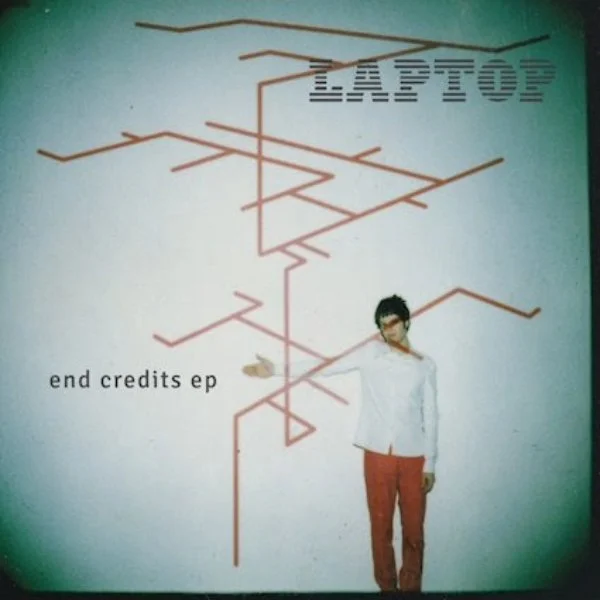
We used synths and organs, and we were not sequencing or using software; we also used a sampler, with our thumbs. It was all pretty organic and pretty analog while creating a digital world.” All capabilities and technological thresholds considered, ‘End Credits’ sounds like a live capture of the radiation, motion, and slight claustrophobia of a tinfoil-wrapped ping-pong being dribbled around the room: peripheral and a bit hapless, yet undeniably in motion with a distinct kinesthetic imprint to match.
Back in New York, that distinctly Laptopian house style felt just legible enough as a derivative of synthwave, yet still lacked enough in clear influences to be immediately hat-sorted and resolved by the media; whether that particular slotting into the broader music scene lands as brilliant positioning or a tragic almost-famous moment likely depends on who you ask. Jesse, if inquired directly, would probably leave space for both interpretations.
“The good side of it is that it caught a lot of people’s attention because it was so different; the downside is that there wasn’t really a scene for it”, he continued. “There wasn’t a crowd, so I wasn’t going to get compared to anyone, which was fun. That was refreshing. And then, like, three or four years later, this electroclash movement started. But the world sort of started catching up to it. I do think this stuff sounds kind of fresh still because it may have been a little ahead of itself.”
While endorsement from John Peel and Melody Maker earned him a major label deal with Island Records and a slot at Reading Festival - with Laptop slated to play above Eliot Smith and Sleater-Kinney - his agent failed to inform him about the booking; in response to his vacancy on Reading Festival Grounds, the enthusiastic crowd of fans had become somewhat disillusioned by the newly-rising enigma. Enough small and large disappointments such as these compounded, and Jesse decided to step away from music entirely and stream in and out from the filmmaking business - including producing ‘River of Grass’ in 1994, directed by Kelly Reichardt.
“I left the music industry 25 years ago, because I just got tortured by it. I think that’s kind of the best way to put it”, he reprises. “After my second major label was eaten up by another major label when I got caught in another corporate merger. Yeah. I kind of, like, was, like, a little devastated, and I kind of laughed. But I kept doing music in my bedroom. way, and somebody just called me, like, the inventor of bedroom pop, because that is kind of what I started doing in the ‘90s.
I guess I’m a little sad that I let the music business beat me up and send me in a different direction. But, you know, I come from very humble roots and schoolteacher parents. At a certain point, I had to kind of get real a little bit, but it’s not my fault. It just kind of what it is. I mean, it would be nice to kind of be like on record sixteen at this point, you know? On the other hand, it’s that kind of amazing that I recently created the seventh album of my career. So it hasn’t been too bad.
I also always dreamt of having my own restaurant, which was kind of a rite of passage in my family. We had our own place called Mo Pitkin’s in the 2000s - Jimmy Fallon was an investor, and it’s where Lin-Manuel Miranda started. That was also kind of a dream. And then I’d perform certain nights, too. Jimmy was kind of in between things, and he was there like every night hanging out and super fun guy; so it was all kind of a unique, special time.
Maybe I regret a little bit that I’m interested in too many things. At some point, you do have to choose. Right now, I think I am choosing to return to music.” It could be argued that the most significant way in which he’s pushing himself is a return to playing live - the night of the interview, where he played an anniversary show at the Betsey Trotwood in London, also marked his first performance in twenty-something years.
“Some of this EP is comprised of older things that have been sort of remastered and reworked a little bit. We did a couple covers: a Vince Clark song and Blancmange’s ‘Living on the Ceiling.’ They had both covered me, so we covered them back. It was cute.” Accompanying the two covers are four distinct remixes of ‘End Credits’. “You know, it started out as an 8-minute song”, he enthused. “It’s like this endless, epic song, and we cut out some verses to make it work as a single. I kind of forgot, honestly, until we went to storage and found the tapes, and I was like, ‘Oh, my God. This was like a whole different thing.’
Vanessa, the girl leaving the message at the beginning, is the amalgamation of many girlfriends. The original is just hearing her voice message on her answering machine. Well, the song was my response - but on the original version that I lost, at the end, it has my real message.
I brought my old answering machine tonight, so I have it as a prop. I’m not really mad in the message. I’m actually just trying to see her again, so it’s like it punctures the whole thing: basically, this guy’s acting like he’s all that, ‘I don’t want to see you anymore.’ And then in the end, he’s like, ‘Do you want to get some coffee or a drink?’ Classic.”
While the EP consists of remixes of ‘End Credits’ - Jesse enthused over the seemingly endless iterations that the track can endure - and covers, it recalls itself as perhaps an early harbinger of modern indie sleaze: the rubbery punk vocals, iterative disco beats, and, moreso than anything, a tonal bias for capturing where irony and mania collapse into each other past the point of no return. Despite the parallels that seem apparent to the freshened and attuned Gen-Z ear, he “doesn’t fully understand it”.“I’m a bit in my cocoon. I mean, it is a funny thing to be associated with - when I have looked back at the older Laptop stuff, I do feel it seems a bit sleazy. Like, I didn’t think of it that way then, but I was a bit of a cad. I’m trying to find my inner cad now that I’m doing Laptop again.”