
Start Listening To: Biita Houdei
Biita Houdei discusses songwriting as instinct, the influence of place and family, and the deeply personal reflections that shaped her new single ‘Life Inside The Hourglass’.
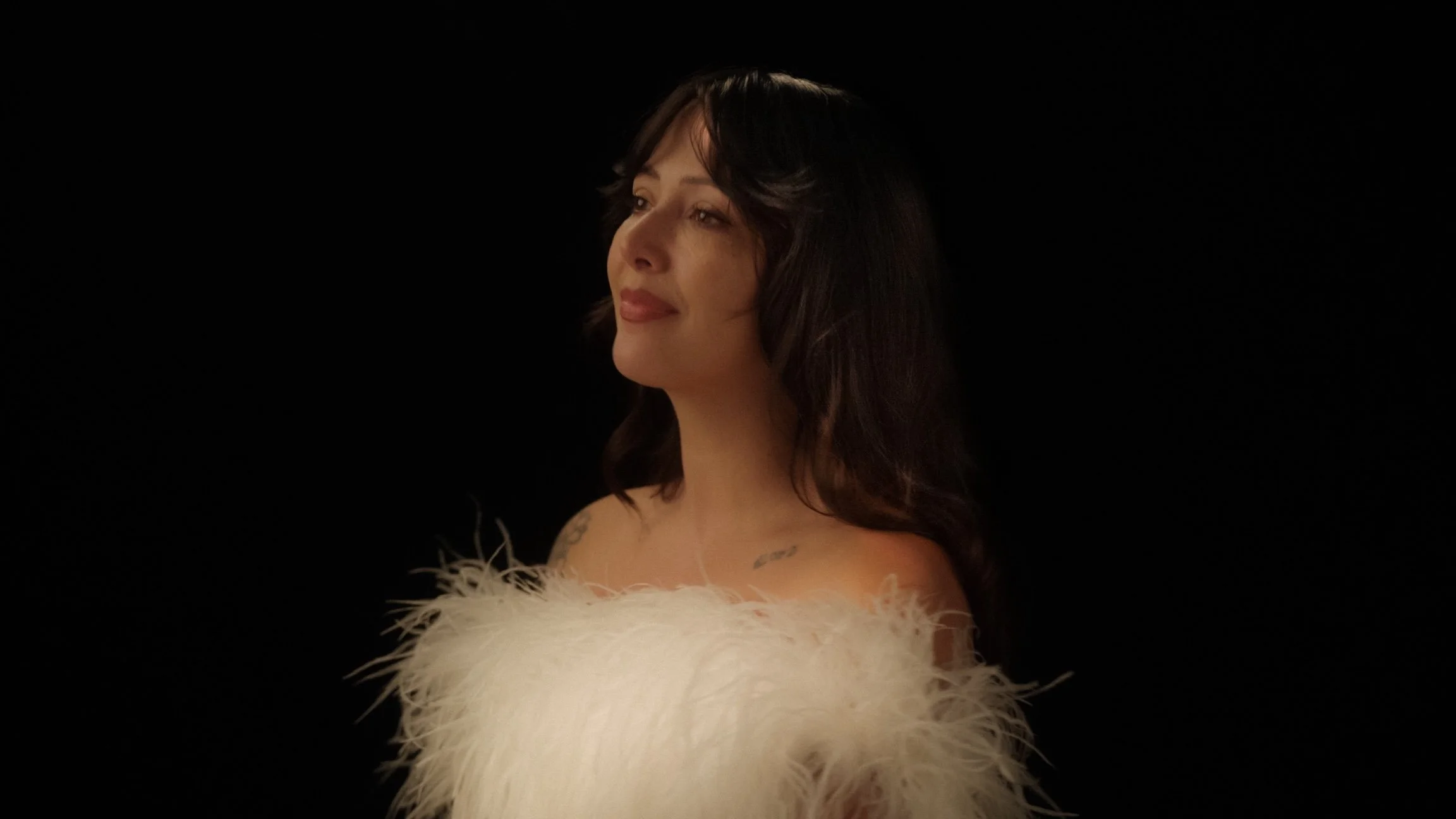
Raised in rural Missouri and now based in the Catskills, Biita Houdei creates folk music that feels both timeless and deeply personal. Her latest single, ‘Life Inside The Hourglass’, arrived almost fully formed, carrying reflections on youth, identity and the passing of time through warm, psychedelic textures and intimate songwriting. With production from Haley Heynderickx and a growing connection to her Persian heritage informing her artistic journey, Houdei is entering a new chapter. We caught up with her to discuss the origins of the track, creative instinct, finding home in different landscapes, and what it means to carry family traditions forward.
For those unfamiliar with your music, can you tell us who you are, where you’re from and about the music you make?
I am a singer-songwriter/multidisciplinary artist from a rural small town in Missouri called Defiance. I write all of my songs on two sweet guitars of mine, and it seems my music is classified as folk.
‘Life Inside The Hourglass’ feels incredibly intimate and dreamlike. Do you remember the exact moment the song first appeared to you?
I was walking from my house to my little art studio (shed) in Topanga and the melody dropped out of the sky and into my head. I hummed the melody to a few friends over a voice note and asked if this song exists already. Once I heard back, I sat down and wrote the song very quickly.
You mentioned the song arrived “from a ghost of sorts” and was written in around twenty minutes. Does songwriting usually come naturally and instinctively for you like that?
Yes, I would rarely strain when it comes to writing songs. I don’t usually go back and edit anything I write the first time, with the exception of a word here or there. It can take time to understand the flow and patterns of where the guitar instrumental is going, but I don’t get tied up in lyrics too much. To answer your question, it does seem natural the way I find the words. But it doesn’t always drop into my consciousness the way this song did.
There’s a strong feeling of movement and transformation running through ‘Life Inside The Hourglass.’ What were you reflecting on emotionally while writing it?
It is mainly about looking back on my adolescence and decisions I’ve made that may or may not be “regretable”. As it currently stands, I’m not sure I have any regrets. The song is personal in a way where I was asking for forgiveness of myself, while also focusing on the slipping of time.
Your vocals have this very warm, floating quality that perfectly matches the psychedelic textures of the track. How conscious are you of creating a visual or cinematic feeling through sound?
I love that you said psychedelic! I am so curious to hear how people perceive songs. I have many “voices”, and usually it just depends on whatever comes through me. I don’t make any vocal choices “on purpose”, if you will. That said, I (and we, Haley and Sahil) all were on the same page about the sound of the track. It’s in the recording process where I become dialed in to how to create feelings through sound–rather than when I am writing it.
Haley Heynderickx produced the single in her first lead production role. What was it like collaborating together on the track?
Haley and I have a special connection and work very well together. She gathered all of the right musicians, booked the perfect studio, and alongside her, Sahil Ansari co-produced and engineered for the song as well. It was a wonderful little trio– us in the cozy studio.
You recently adopted the name Biita Houdei, which was gifted to you by your auntie. What has stepping into that name meant for you personally and creatively?
Growing up in rural Missouri, I was teased for having a father from Iran, and the schools I grew up going to up until my second year of high school had little to no diversity. All I wanted was to look “American” for much of my youth. I distinctly remember a day where I came home from grade school crying– and my auntie, the same one who gave me this nick-name, told me “When those people are older, they are going to try to get their skin to look like yours. People will wish they had your skin.” I am the last generation other than my brother and cousins that can continue to carry on the traditions of our family. I will continue the recipes and the haftseen table throughout my life so I can hold on to the small amount of Persian heritage I have.
You’ve spoken about feeling closer to your Persian heritage through this project. Has reconnecting with that part of yourself influenced your songwriting or artistic identity?
I wouldn’t say I have reconnected, as I have always been connected to my family and the traditions they brought with them. Rather, I would say I found ways to deepen that connection. My grandmother made beautiful dresses and clothing for the family, and I grew up watching her cook beautiful meals. I don’t want to give too much away for what’s to come, but I will better be able to speak to how this project brought me closer soon.
There’s something very organic and untamed about your music that feels connected to nature and environment. How much has living in places like Topanga Canyon and the Catskills shaped your sound?
While living in southern California, the landscapes greatly affected what I was writing about and what I longed for. California is also expansive beyond comprehension. It’s so wild, open, rugged, and absolutely beautiful, no doubt. However, the lack of seasons ended up greatly puzzling my body and the ways I understood time as it passed. Many songs came from living there and I am thankful to have had that experience. Now in the Catskills, the landscape mimics where I grew up. Soft, green rolling hills, rushing water, ticks, deer, mosquitos, snow…it feels much more natural for me to be here. I do find that every place I visit or spend time with influences my writing.
You’ve just signed with both Basin Rock and Father / Daughter. How does it feel entering this new chapter with people who seem to really understand your vision?
Immediately upon meeting Denny, from Basin Rock, I knew it was a kismet connection. I trusted him immediately, and I felt a mutual appreciation. Same with Jessi and Danielle of Father/Daugher. Two amazing women who I clicked with– and a women-run label? It’s not so common, and I really connected with that as well. I also love the music that both labels put out. I felt in control of my artistic vision, and they allowed me that room.
What do you love right now?
I love rain and humidity right now!
What do you hate right now?
The iPhone.
Name an album you’re still listening to from when you were younger and why it’s still important to you?
Animal Collective’s Sung Tongs. It washed over me and seeped into my being, and the songs feel so ancient. It makes me feel like I’m connected to all of humanity that ever lived, as well as everything in the universe all at once.
When someone hears your music for the first time, what do you hope sticks with them?
I can only hope that a feeling arises. Perhaps that it could spark a deeper connection to anything, or anyone.
Photography By: Seth Naugle