
Start Listening To: Alice SK
Alice SK chats about working toward a timeless sound, pre-release nerves, and more between sets, photoshoots, and soundchecks at The Great Escape.
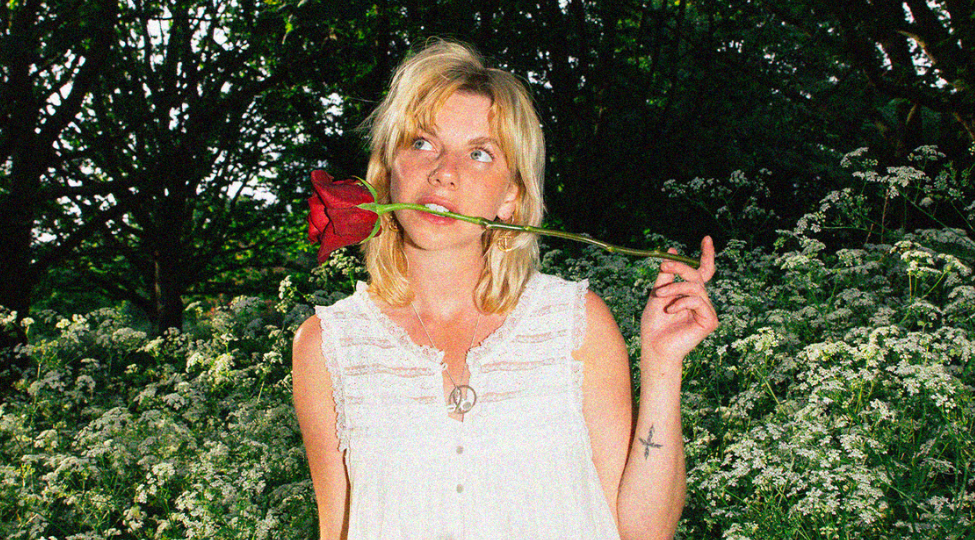
Modern indie music tends to inhabit two key ideals: lyrically diaretic, yet otherwise directly inspired by clipped post-punk. While musicians are constantly pulling from the more calloused works of The Velvet Underground-esque stylings, as do they from the works of Joni Mitchell - whose tell-all songwriting philosophy often sits at the helm of their lyrical approach by default. The emotional excavation from the songwriter is a commendable effort, but the prepackaged instrumental series of ‘alt-dissaffection’ can create too much scarring around the valuable emotional marrow for the piece to fully actualize.
In an attempt to free themselves from the stylistic straightjacket that modern indie music conventions can reinforce, sometimes an artist will rely upon shorthand ‘vintage’ or ‘nostalgic’ clichés to compel otherwise bored listeners toward their work and lose their contemporary instincts along the way. London-based Alice SK escapes both clichés, managing class and a tinge of old-school without the stuffiness or pretension of jazz revival solo artists. Rather, her songs flit with a spirited, invigorated energy: crumbly edges, nocturnal piano, auroral melodic tumble, and the thrill of a potential lyrical double-bluff are frequently lifted from the woefully undercited blues madonnas of the 50s and 60s in her fresh EP, ‘Hollywood Boulevard’.
As proved by the enthusiastic crowd at her Great Escape Showcase performance, her music mines this under-excavated sweet spot: on top of being an individual powerhouse, she may be a harbinger of a growing hunger to turn the page past the indie essentials handbook. I chatted with her pre-show on avoiding modern conventions, the art of balancing diversity with a clear sonic throughline, and varying audience reception in the offshoots of London’s independent music scene.
Your music feels quite removed from the modern indie scene. Are there any genre conventions that you consciously try to avoid to achieve that sound?
Interesting; I definitely do try to keep away from like super heavy fall-to-the-floor indie rock. I do love that kind of music as well, don’t get me wrong, I’m very influenced by blues and jazz music, especially vocally.
I do love pop music, too. Indie music; indie rock; indie folk; I love it all. But I’m very conscious not to lean into those too much. I think especially as a female artist, you do want to bring something a bit different to the table. I basically always want to make sure I get that bluesy, jazzy sort of vibe.
Do you ever feel like you’re kind of straying towards that four on the floor indie rock vibe, and then have to rein yourself back in?
Definitely, yeah. I write on piano or guitar, and I think it can be very easy to fall back into those cliches - especially because they’re very ‘in’ right now. I really do feel like indie rock is one of those things where it’s a constant in the industry. I don’t see it fading away anytime soon.
If I’m working on an EP or an album, I make sure there’s real movement across the songs. I quite like taking people by surprise, to be honest. I spoke to a guy from a label, and he said, ‘You’ve got a love ballad, and then a rock song, followed by a more jazzy song. No label is going to sign you like that’; and I was like, ‘Dude, watch me.’
Now, a couple of years on, the industry is really proving him wrong. People love albums with loads of different genres, thankfully, because you need to keep it interesting for your listeners, yourself, and your band. That’s my biggest thing: I can definitely do a four-on-the-floor track, but you need both consistency and flow in your music.
Yeah - you’re taking your listeners on a journey, but it’s still coherent. I wanted to talk a bit about your songwriting process, because your piano rhythms sound really quite inspired and original to me, but your lyrics are connected enough that they don’t sound negotiated around a pre-written melody. How does your songwriting process typically work?
I always love that question, because it makes me actually think critically about my process. With the piano side of it, I started playing classical piano when I was about eight years old, and that’s how I started writing my songs.
With lyrics, it’s usually one or the other. I’ll be lying in bed at midnight, something will come into my head, and I’ll try to pitch it and then write the piano around it. The piano just comes. I think it’s one of those things where if you overthink it, it won’t connect with an audience. So with keys, it’s usually the heartbreak stuff - the really intimate stuff. For me, piano is a complete release, like therapy.
So you’ve got that side, and then you bring in the lyricism - writing a song is almost like writing a diary entry. Whereas guitar is more methodical - you’re thinking structure A, B, C. But the biggest thing for me is that songwriting comes randomly - on the tube, in bed, in the shower. And then you’re like, ‘Oh my gosh, I’ve got to go sit at my keyboard.’ It’s always when your body is relaxed. And that’s what I love, because that’s when I know I might write something good. If I sit down to write a song, it never happens. That’s my songwriting method.
Which creative scenes or pockets in London do you find receive you best when you play live, and why might that be?
That’s an interesting question. If I can get people in a room with me in a folkish scene, then I know it worked. And it’s not to sound arrogant, but I know I can capture people live.
But also the indie scene. It’s what we were talking about - the indie rock, four-on-the-floor stuff - it really drives the scene at the moment, so I love being in those spaces. I also like performances that are a bit different. The biggest challenge for me is if I can get a room to go silent and be present and connected - not just with me, but with everyone else in the room - then that’s the goal. So I’d say folk and indie scenes. I feel like people sometimes underestimate you - especially because I’m small, and I’m a woman - and then you get on stage and start belting it out. People say, ‘I don’t understand where your voice comes from.’ And it comes from your soul. So I love being in every scene and taking people by surprise. It’s a challenge, but that’s what I love. Honestly, I’d play everywhere.
But those are the two spaces that I’m trying to move around at the moment.
Okay, so put aside production, budget or any time restraints. What would your like dream record to create sound like - even in terms of like a producer you would want to work with?
Have you listened to RAYE’s new album? That album is a masterpiece in my mind, because it goes against any genre restriction. The lyricism is as well. I mean, you’re being taken through this complete journey and story of heartbreak and love and hope. And the album is called This May Contain Hope. And the reason I’m saying that is I was listening to this the other day, like for the 100th time.
She does a track with Hans Zimmer, and I’d want to do something like that. I love classical music. I think orchestral music is just stunning. So you know, throw that in there, but still keep it folky and rocky. And also just get some amazing jazz players on there; so, you know, basically just have an album that has about five different genres in it, while keeping that sense of consistency and flow.
The way I see music and artistry in general is like a piece of string. You can be going up and down, and you can be all over the place so long as this little piece of string is still a consistent throughline. Anyway, back to the album thing; at the moment I’m working on a project that’s leaning more into the folk side of my music - more mellow, more chilled. But my ‘perfect album’ is what I just described: jazz, soul, blues, and classical all entwined into one.
Who would you not recommend your music to, if anybody?
Very interesting. Obviously, as an artist, you’re supposed to promote to everyone, but I guess I wouldn’t promote to people who love rap music - I’m not a rapper.
I’m also a gardener, and I had a client once, an 80-year-old woman. She’s a legend, but she came up to me one day and said, ‘Alice, I’ve listened to your music, and I hate it.’ I was like, ‘Carol, what don’t you like about it?’ And she said my voice goes all over the place, she can’t pin it down, and she doesn’t know what’s going on. So I guess if you’re looking for something to sit in the background and work to, maybe it’s not that. It’s not ambient jazz.
For me, lyrics are the most important thing - so if someone isn’t too fussed about lyrics and just wants a dance or ambient jazz track, I’d say they’d probably find a better rhythm somewhere else.
What is a sonic risk you took on your EP that you feel paid off?
It’s slightly like what we were talking about earlier with ‘Hollywood Boulevard,’ where it starts with this quite intense rock intro and then turns into a more indie song; and then straight after that, it goes into a completely stripped-back piano ballad where there’s not even any bass. I think I was nervous about how that would be received - because it does, genre-wise and instrumentally, jump around a lot. But for me, the whole point of making the EP was just to tell a story. And then it’s literally just pianos and vocals, and you are baring your soul lyrically and musically because there’s nothing you can hide behind anything - as I said earlier, it’s basically a diary entry.
The different energies in the tracks really reflected how I was feeling when I wrote them, hence the energy in some tracks and the sense of slowness and melancholy in others. That kind of movement of instrumentation and melody really reflected what I was hoping to express in the music, and so I was a bit nervous about how it would all be received.