
Start Listening To: Blow Dry
Blow Dry frontwoman Genevieve talks murderous bosses, Australian road trips, finding freedom on stage and building a world where music, fashion and film collide.
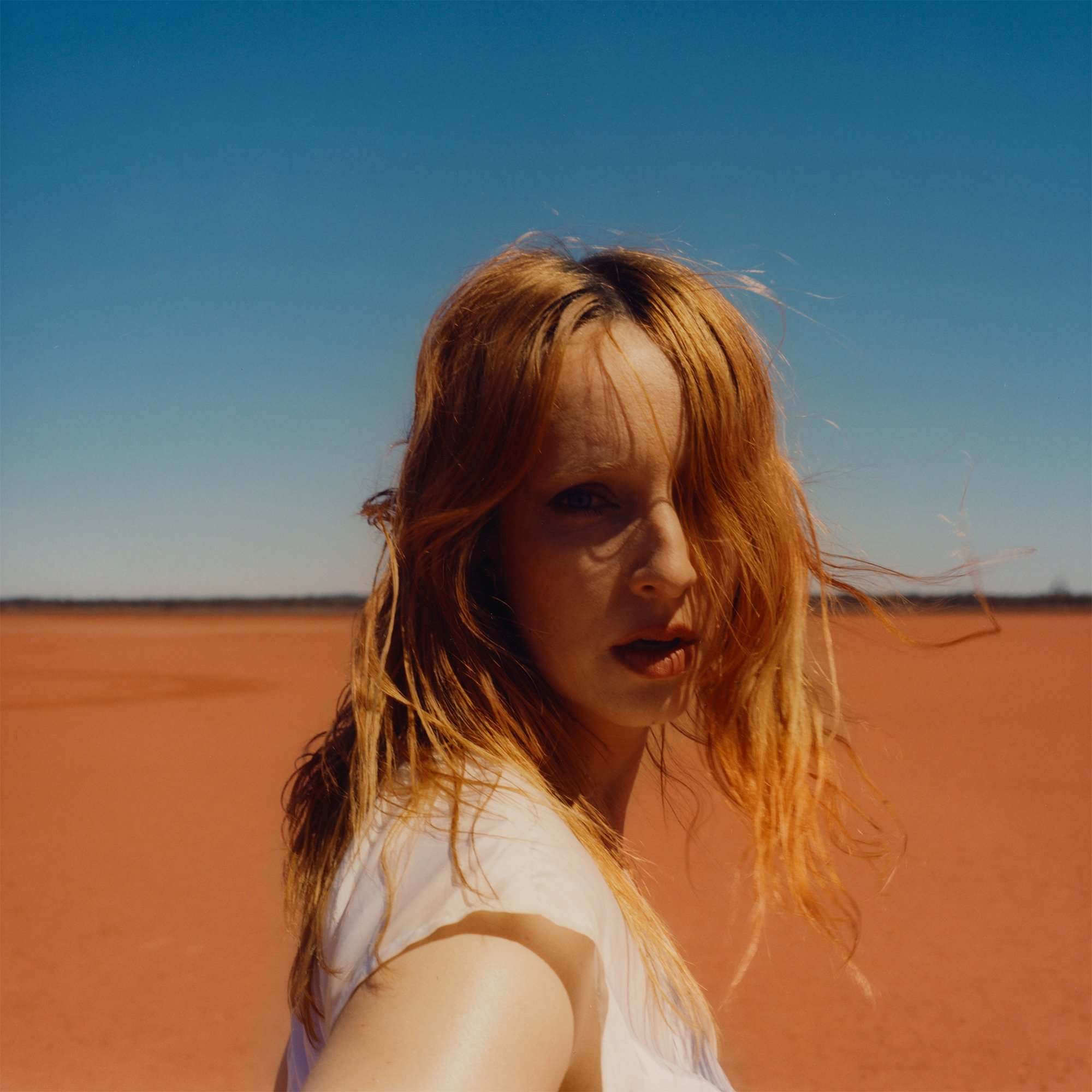
Blow Dry started with a flicker of an idea during lockdown. Back in Sydney after her life had “gone left”, Genevieve found herself playing the lead singer of a band on a photoshoot and wondering whether she’d missed her calling. She had never sung or stepped inside a studio, but a move back to London and a chance meeting with producer Jorge Elbrecht eventually turned that thought into something real.
Now fronting the London-based post-punk band, Genevieve has built Blow Dry into a world of its own, pulling together music, fashion, film and the tongue-in-cheek Australianness that has become increasingly important to the project. Their latest single ‘Mighty Crimes’ takes things further, following a woman who murders her boss and hits the road against a backdrop inspired by the vast Australian outback.
We caught up with Genevieve to talk ‘Mighty Crimes’, starting a band from scratch, embracing her Australian identity, escaping the social media content machine and why musicians could stand to take themselves a little less seriously.
For those unfamiliar with your music, can you tell us who you are, where you’re from and about the music you make?
I'm Genevieve - the frontwoman of Blow Dry. I’m from Sydney, Australia and now based in London, where the rest of the band live as well. Blow Dry is raw and theatrical - post-punk is probably the closest genre I’d describe us as - though I’m not a huge fan of labels, so we take from all over depending on the mood.
You’re originally from Australia but now based in London. How did Blow Dry begin, and what was happening in your life when you first started the project?
Blow Dry was humming in the back of my head for a while. I'd gone back to Sydney during Covid and basically everything in my life had gone left. But one day I was on a photoshoot where they had me playing the lead singer of a band - and I had this flicker of "I think I missed my calling," which I just put aside. A few weeks later a musician friend asked if I'd ever thought about being in a band, said he thought I'd make a great frontwoman, and since I had the time thanks to lockdown, I got to explore it -and it grew from there.
I'd never sung or set foot in a studio, so I was nervous about it all and very green. A lot of my friends are brilliant musicians and I felt shy toe-dipping into their waters - but I absolutely loved it. I ended up mucking around on and off for a few years, taking vocal lessons whenever I could to build my range
and my nerve. Then when I came back to London I had a serendipitous meeting with Jorge, and after picking his brain on a few things we did some writing together - the first solid tracks I had - and I built the band out from there. A slow unfolding, following little hints from the universe… to be all woo woo for a min.
‘Mighty Crimes’ came together in just a couple of hours with Jorge Elbrecht. What was it about that initial drum beat that immediately unlocked the song for you?
I really feel like Jorge's a genius. You'll be talking an idea through and he'll just go "yep, I can hear it, let's go"- just like that! Elements of a track I’d probably pore over for hours or days he gets in an instant. He’s one of the most open and respectful collaborators I’ve ever worked with which is infectious and makes things flow effortlessly between us.
For ‘Mighty Crimes’, we'd been doing back-to-back sessions for days; I came over one afternoon and he already had this drumbeat. It was fast, danceable, a funk vibe to it. It just stuck under your skin and that was it.
The song follows a woman who kills her boss and goes on the run. What did writing from the perspective of a fictional character allow you to do that writing directly about yourself perhaps wouldn’t?
It's quite freeing, really - it let me detach and have more fun. When it's more personal, more vulnerable, I can get stuck in the lyrics, agonising over how to 'best' express the feeling or nail what I'm trying to say. Whereas this felt more unserious and off the cuff, so it just flowed - none of the self-imposed pressure.
There’s a lot of humour in ‘Mighty Crimes’, but underneath it are ideas about freedom, anxiety and convincing yourself you’ve made the right decision. How important is that balance between darkness and humour to Blow Dry?
It's instinctual - both live strongly in me and in the rest of the band, so it's not something we sit around chatting about. It just is what it is. I feel like the freer we are emotionally, in a track and during a live show, the more the audience feels free to do the same. It's almost giving them permission to find their own version of expressiveness which is important to me.
Often the humour and darkness live in the same song, or play out visually - my pain and frustration right alongside the more jovial side of me. The duality of self, bleeding into the music. That anger has nowhere to go in normal life; on stage, in the lyrics, in the studio, it has a place to release and, hopefully, touch others too.
Some songs are too tender for humour to be woven in - Wait 'Til Dawn is one - and on those I just sit in the uncomfortable heaviness, so the feeling can be felt rather than run from. But most of the time, I feel like humour is the thing that opens you up to have the harder conversation. I get bored of bands who take themselves deadly seriously. We don't need any more "I'm so dark and moody, don't talk to me" band boys. It's conceited. Musicians are entertainers too, and humour is greatly underused in the pursuit of being taken seriously.
You’ve described the visual world of ‘Mighty Crimes’ as Thelma & Louise meets Tarantino meets Priscilla, Queen of the Desert. Did you already have a strong visual identity for Blow Dry when you started making music, or has that developed alongside the songs?
A bit of both really. I came from fashion and have always had a love of cinema, so the aesthetic instinct was already there - I always wanted Blow Dry to be a vehicle for film, fashion and art with music at its core. Once we started recording and thinking about promo, I built a world around each single depending on the themes of the song - which was creatively far more fun than posting for the sake of feeding the algorithm, something I have absolutely no interest in. That's just how you make more mediocrity.
Your Australian background seems particularly important to the imagery around ‘Mighty Crimes’. Has moving away from Australia changed the way you think about or represent your homeland in your work?
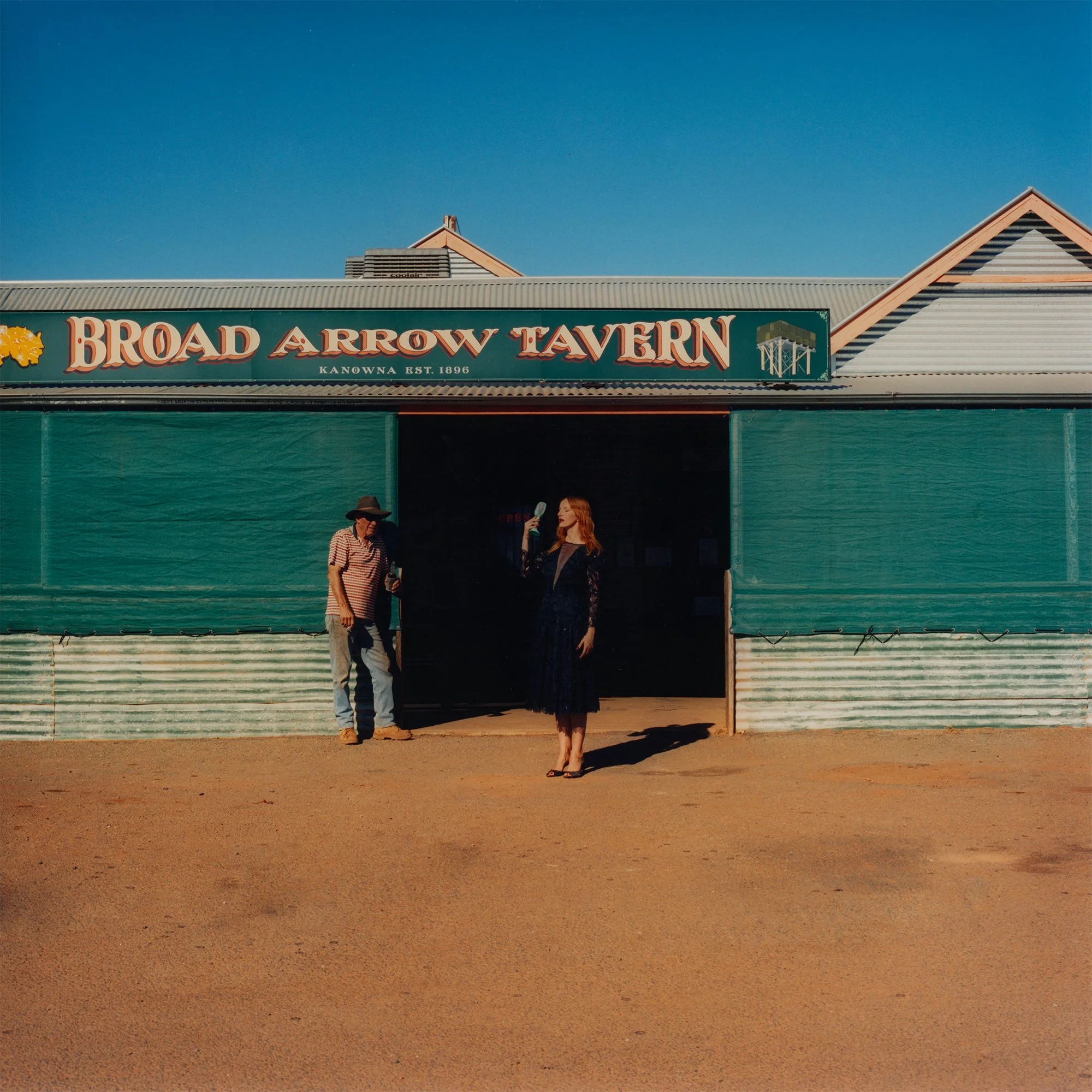
As soon as we wrote 'Mighty Crimes' I could see the visuals for the video - the 'on the run' road trip. But I wanted it in Australia. I wanted that vast red desert. Everyone does the American road trip - it's the classic. The Australian outback, though, is so unique, just as cinematic and, like a lot of Australiana, wildly underrated. I wanted to show its natural beauty alongside the quirks - the skimpy bars, the meat pies, the Bunnings hat, the nostalgic Australian iconography. All of it melts my heart a little.
There were just three of us shooting around Kalgoorlie, WA. No permissions, a rough plan, and the rest we were winging - turning up and asking on the spot. Everyone we met was so accommodating, generous and game, lots of banter and getting involved. It made the whole thing unforgettable.
I think I embrace my Australianness more now than when I first moved away, and naturally it flows into the work. My bandmates will tell you I'm blunt, which is Australiana to a tee, and the Aussie
tongue-in-cheek humour has become very Blow Dry. My accent isn't strong naturally, but when I record vocals I make a conscious choice to keep the Australian pronunciation where I can.
You came into Blow Dry from the fashion world. How has your experience in fashion influenced the way you approach music, performance and the wider identity of the band?
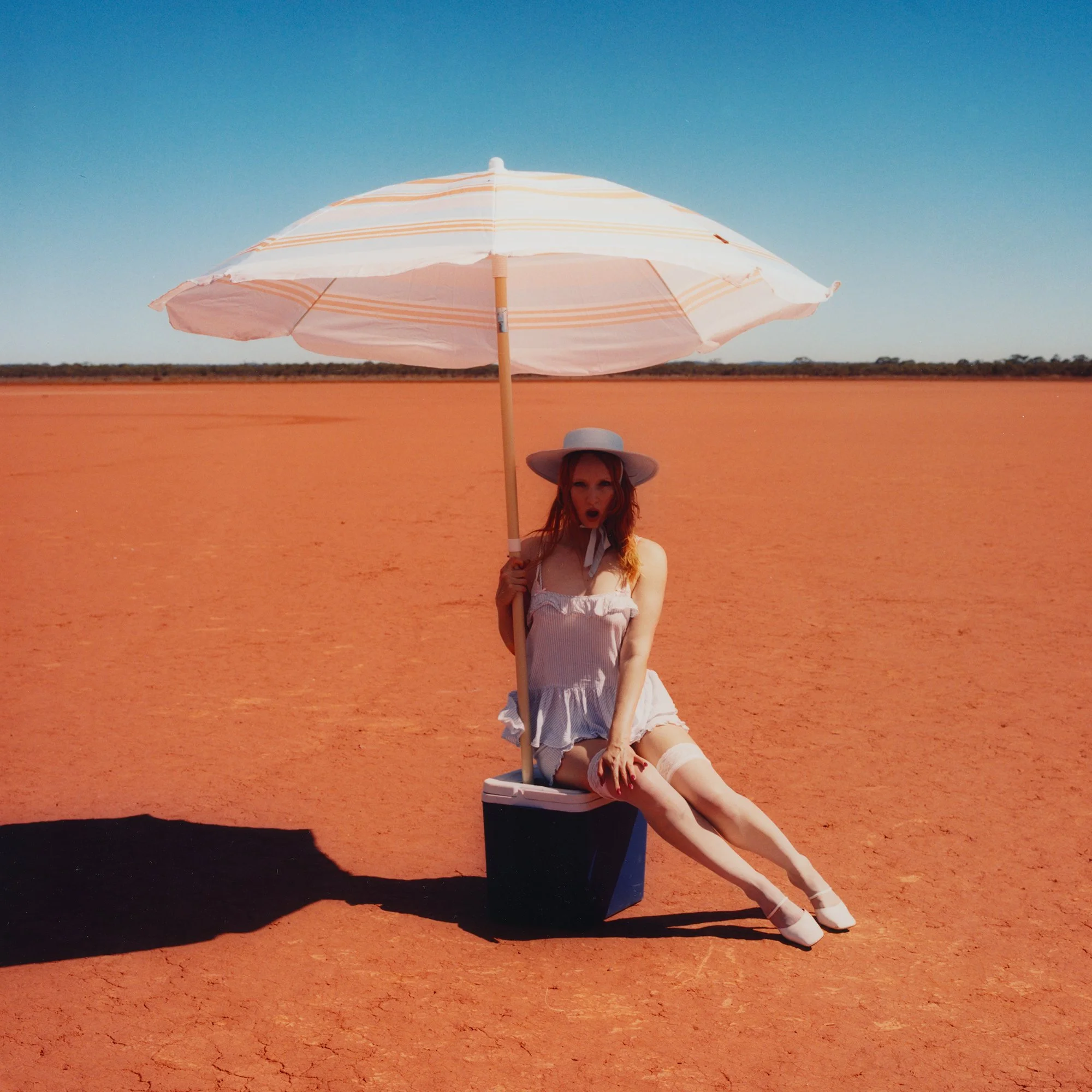
It probably sharpened our visual identity more than anything. To me, fashion and visuals are an extension of the music rather than a separate entity - it's all another creative outlet, another way to cement a message. As a model I was often booked for the more theatrical, performance-based work, so stepping onto a stage felt like stepping into where I was always meant to be - but this time I’m the one calling the shots on how I’m portrayed. Everyone in the band has a strong individual identity too - personality and style-wise -which makes it a blast to play with visually and pull together. The more we play live, the stronger a 'Blow Dry' identity has emerged.
Blow Dry’s live shows seem designed to be as visual as they are musical. What do you want somebody to experience when they see you live for the first time?
Unleashed. I want people to let loose and let rip - to take the raucous energy we throw off the stage and channel it into their own lives. Society tells everyone, women especially, to stay inside the lines and tick the boxes to keep other people comfortable. I want people to feel like "you know what, fuck it, I can do whatever I want when I want."
‘MR. BIG’ and ‘Mighty Crimes’ both introduce quite strong characters and ideas. Are you interested in building a larger world around Blow Dry where songs, characters, fashion and visuals all connect?
Definitely. These are our first two videos and the tracks are so different they could read as two projects - but they're two sides of one coin. ‘MR. BIG’ is our most straight-up, aggressive punk track; on its own it could potentially pigeonhole us. Then the video is totally us - our raw, in-your-face energy in a dance-based video, probably not what you'd expect of a punk song like ‘MR. BIG’.
‘Mighty Crimes’ is visually the opposite: narrative-led, built around a character. What ties them together is the boldness - the colour, the humour, the lack of self-consciousness. I'm excited to keep making videos and seeing where they take us.
With Blow Dry still relatively new, what feels most exciting to you about where you can take the project next?
I feel like we've done quite a lot in a short time, but we're still new which means there's freedom to keep moving the sound, playing with different things and seeing what else we can bring to it without the pressure of keeping a suit or a fanbase appeased. Our next track is softer, slower, quieter - a new frontier for us - and I'm intrigued about what happens when we take our very in-your-face live show and intertwine it with something that's more subdued and heartfelt. Same intensity, aimed completely differently. It feels more exposing, and that's slightly terrifying - which is exactly where I want to be next.
What do you love right now?
I just went to my first ever bingo night with some gorgeous oldies at a Working Men's Club in London… totally obsessed. Also re-obsessed with all the IG 'good news' pages - I'm not crying, you're crying.
What do you hate right now?
People running for public transport… the second-hand embarrassment kills me.
Name an album you’re still listening to from when you were younger and why it’s still important to you?
Garbage's self-titled debut and Beautiful Garbage. It was the first time I remember a female lead fronting a rock band rather than pop. Shirley Manson's vocal delivery was so unique - this gnarly, cool voice rather than the cute, perfect 'girly' one… I was totally taken. She's such an icon, fierce, cool, sexy, and still outspoken about the music industry and how women are treated within it. The boldness of their themes and the way they kept experimenting with sound across those records is something I really admire and resonate with.
When someone hears your music for the first time, what do you hope sticks with them?
I think that’s up for them to decide.