
Start Listening To: BLUAI
The Antwerp trio discuss family memories, the uncertainty of approaching thirty and recording their second album live in just five days.
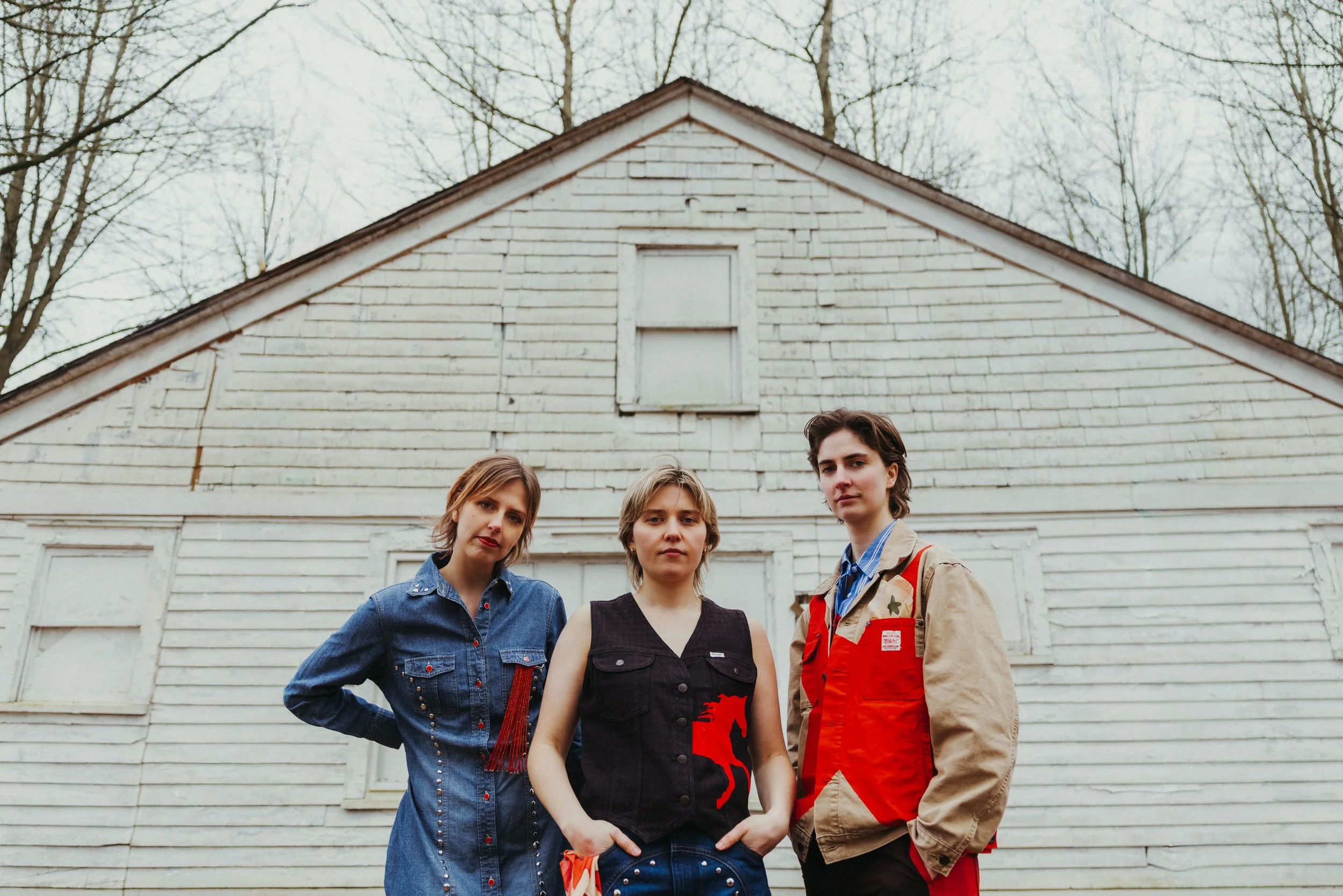
For BLUAI, home can be found in someone’s accent, an afternoon with old friends or the relief of getting back to your cat. The Antwerp trio’s second album, The Way You Talk Reminds Me Of Home, follows those everyday connections into more complicated territory, from grief and family tensions to the expectations that arrive as you approach thirty. Following their 2024 debut, Save It For Later, Cath, Caitlin and Mo headed to London’s RAK Studios with producer Isabel Gracefield, returning collaborator Willem Ardui and musician Juyane Kaya, recording the whole thing live in five days. Here, they reflect on the conversations behind the songs, trusting their instincts in the studio and giving themselves room to improvise onstage.
For those unfamiliar with your music, can you tell us who you are, where you’re from and about the music you make?
We are BLUAI, an Antwerp-based indie-pop trio. We blend indie folk influences with alternative rock and Americana.
How did the three of you first come together, and what do you remember about the point when you started finding a sound that felt like your own?
The project first took shape in Cath’s bedroom, where the earliest songs were written when she was seventeen. BLUAI officially emerged in 2021 as a full band when Caitlin and Mo joined, translating those intimate beginnings into a collective sound defined by shared musical influences and a strong sense of connection on stage. The fact that we really clicked as friends defined the journey of the band. With our first album we found a shared love for Americana sounds like pedal steel and banjo. For our sophomore album we took a different approach. We kept these influences but challenged ourselves to live-track as much as possible, which transformed our sound into something even more intimate and raw.
Your debut, Save It For Later, came out in 2024. What did making and touring that record teach you about the band, and what did you want to explore differently on this one?
Making our debut album was a process we’ll never forget as we hold it very dear to our hearts. We worked with Willem Ardui, who produced it. He took the approach of kind of working with us as a fourth member while writing and recording. In this newfound friendship we found a lot of love for the same kind of music. While we wrote arrangements, we were also becoming great friends, which made sure we felt safe and understood in the process of recording. Touring with this record was an adventure that took us to many places. Our international adventure kept expanding.
For our second album we decided to go to London. We recorded in the legendary RAK Studios. We brought Willem back to write with us and to perform as a guitar player in the studio. Our eye landed on Isabel Gracefield to produce. She’s a fantastic recording engineer and mixing engineer as well. We asked her to record everything as live as possible. And so we live-tracked every song, Cath singing the whole thing along with the band. No comping. Isabel sometimes only used one or two mics for the more intimate songs, really capturing the atmosphere of the room. We also invited a new face. Juyane Kaya came along to record banjo and acoustic guitar. With a background as a harp player, her style of guitar playing really added an extra dimension. Isabel challenged us to record as much as possible in a short amount of time. We booked two weeks but we recorded the whole album in only five days and surprised ourselves really. Everything happened at such a high tempo that we made decisions very swiftly and there was no room for doubt.
The Way You Talk Reminds Me Of Home is such an evocative title. Where did that phrase come from, and what does ‘home’ mean to each of you now?
The title is actually a lyric from one of the songs on the album called ‘Sober’. This particular lyric is about how someone’s specific accent reminds me of my hometown. It captures what the album is about. There are so many memories we live with and they can be brought back by small things. The way someone talks, a certain smell, a person you haven’t seen in a while. It might sound cheesy but home is where the heart is. It doesn’t necessarily mean a place but more the people. For me (Cath), ‘home’ is seeing my parents and feeling loved or seeing old friends and feeling understood. It’s coming home to my cat and feeling the weight being lifted off my shoulders when I’m in the comfort of my safe haven.
These songs began in conversations with family, friends, partners and people returning after years away. Can you take us through one conversation that stayed with you and eventually became a song?
I remember walking around a town at the seaside with Mo. I was talking about how I felt like my younger self was such a self-centred asshole sometimes because I missed out on a lot of moments with my late grandmothers. They both died in the same year and I didn’t visit them nearly as much as I should have because I was young and dumb and experiencing a lot of things for the first time, like going to college and falling in love. I still beat myself up about it and so I wrote ‘Alive’. It’s about missing them and at the same time having the feeling that I should live life to the fullest.
When you’re writing about people close to you, how do you decide what to share? Have you ever written something that felt important to the song but difficult to let the person involved hear?
I’ve written songs about a lot of people close to me. One song on this album is about my aunt, for example. It’s a sketch of what it felt like to stay over at her house when I was a kid. I absolutely loved it over there and she was an absolute idol to me when I was little (still is now) but I also sing about my observation of that household now that I’m an adult. It’s about how I observe the dynamic with her husband and my disdain for how he treats her sometimes. I must confess that I’m a bit worried someone from the family will have something to say about it but I couldn’t not write it.
‘It’s Gotta Be Me’ is about recognising that leaving can be the kindest thing to do. What did you want to capture about that moment, and how did you arrive at its quiet, fingerpicked arrangement?
The arrangement came about very naturally but we switched it up a little, putting Willem behind the drums and Mo, our actual drummer, on guitar. We all played very quietly, capturing a magical moment. It’s a difficult message to deliver so the arrangement had to follow this fragile feeling.
The album explores the uncertainty of approaching thirty. What expectations about adulthood have you found yourselves questioning, and how has that come through in the songs?
The song ‘Killing Time’ kind of sums it up in a nutshell. I’m scared of falling into the regular patterns of becoming an adult, afraid I don’t have a motherly instinct, afraid of having responsibilities. I think turning thirty is scary but on the other hand this era is way better than being in your early twenties, not knowing anything yet, making mistake after mistake. You learn to see things in a different light. I guess that only becomes better as you get older.
You also write about the patterns we repeat in relationships. Did working on the record help you recognise anything about yourselves that you hadn’t quite put into words before?
The entire record is a way of putting things into words and sharing whatever I’m feeling. After making the record I actually took the step of going to therapy because only putting things into song can confuse things, as sometimes you only see the entire meaning of a song long after it’s made. And sometimes then it’s too late.
You recorded the album live at RAK Studios over just five days. What did that pace bring out in your playing, and was there a moment when a song took on a life you hadn’t expected?
It made us act way more on intuition instead of overthinking things too much. ‘Runner Up’ was a song that ended up way smaller, slower and more intimate than we thought it would be. That just happened to be the vibe when we started playing in the room together. In the moment we didn’t really think about it that much. It was only after all the recordings were done that we were a little surprised to hear it back and realise it sounded so different from the demo we had. We thought about re-recording it, but then decided to just keep it that way.
What did Isabel Gracefield bring to the sessions? Was there a suggestion or decision from her that changed how you heard one of the songs?
She made us trust the process and not question too much what we were doing all the time. At the same time she never pushed or pressured us into choices we didn’t stand for. ‘Rosanne’ was one of those songs where she suggested just putting us all together around one mic, surrounding Cath who was singing and playing the song. We were all improvising a kind of ambient vibe together in that moment on different instruments, almost creating a bed of little sounds for Cath to sit on and play the song to. It felt so great to capture that moment.
You’re heading out with The Clockworks ahead of the album’s release. What are you looking forward to discovering about these songs onstage, especially when playing them to people who haven’t heard the record yet?
Instead of copying the songs to a live set, we tried to implement especially the vibe from the studio into the live set. There are some songs with intros, outros or other instrumental parts that we try to create in the moment, with more improvisation and freedom than we ever had before on stage. With an audience it becomes something different from the little bubble in the studio, because you get a reaction and it becomes an even more collective experience.
What do you love right now?
Tuxedo cats and crea nights.
What do you hate right now?
Genocide (not just right now).
Name an album you’re still listening to from when you were younger and why it’s still important to you.
Cath: I always come back to Break Mirrors by Blake Mills. To me it’s timeless and it’s a great album from start to finish.
Caitlin: Nick Drake’s Pink Moon. I too feel it’s timeless and it’s intertwined with my early twenties in such a way that I have a piece of the album cover tattooed on my arm.
When someone hears your music for the first time, what do you hope sticks with them?
Hopefully people can recognise stuff from their own lives in the lyrics and that the songs can offer some comfort. But we also hope they just feel happy and warm when they leave the venue after hearing our music.