
Start Listening To: Formal Sppeedwear
Formal Sppeedwear discuss the happy accidents behind Punch Card, creative instinct, early computer aesthetics and why uncertainty is one of the most rewarding feelings music can leave behind.
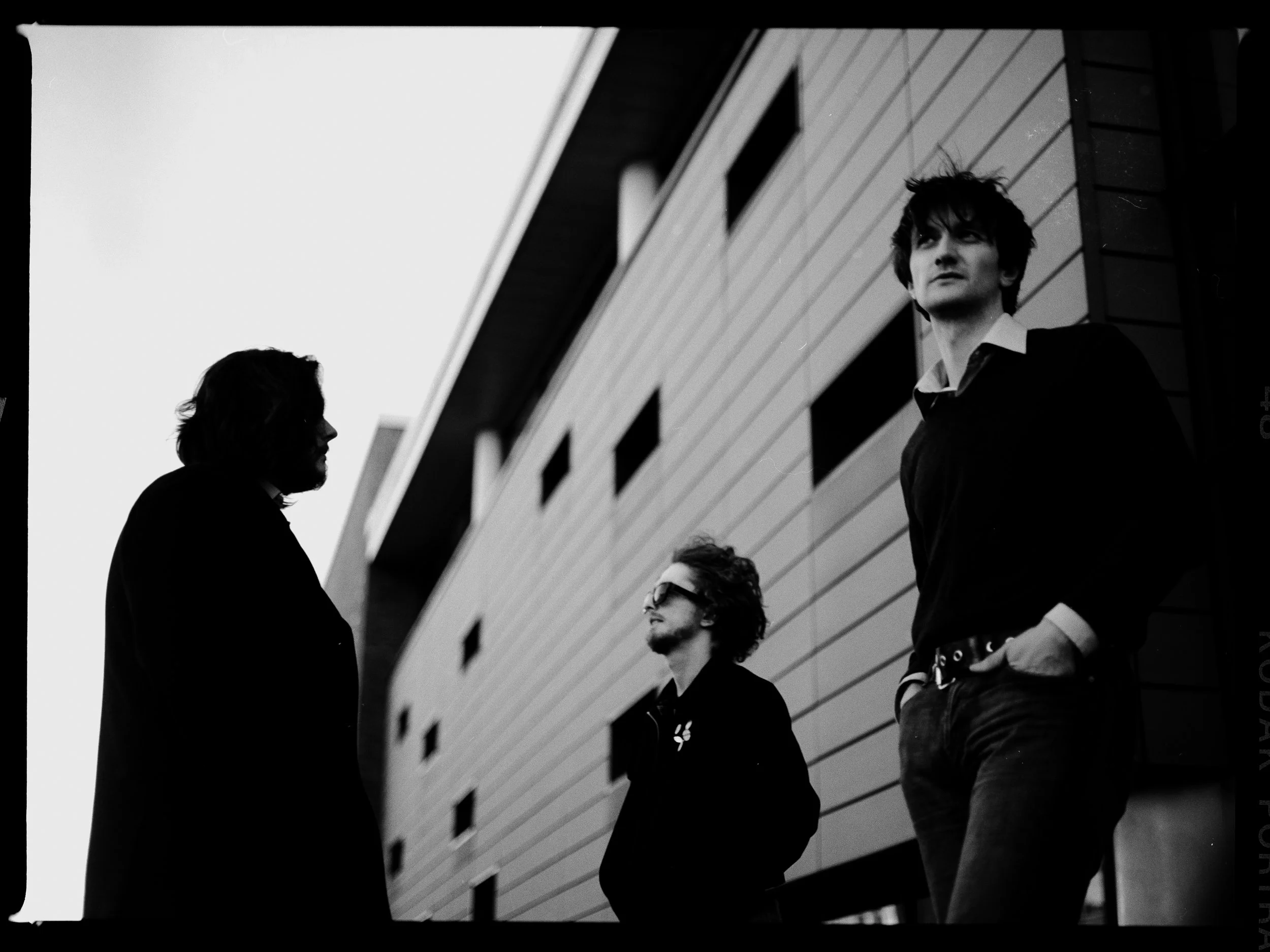
Few bands occupy quite the same space as Formal Sppeedwear. The Stoke-on-Trent trio build songs from improvised collisions, digital experiments and an instinct for following ideas wherever they lead, creating music that feels meticulously assembled without ever losing its unpredictability. With their new album Punch Card, they continue to blur the line between analogue and digital, precision and chaos. We caught up with the band to talk about the record's visual identity, embracing mistakes, the chemistry that's developed over years of making music together and why the best songs don't always reveal themselves straight away.
For those unfamiliar with your music, can you tell us who you are, where you’re from and about the music you make?
Charlie: Formal Sppeedwear. We are from Stoke and we make music with computers.
Connor: We make music that is sometimes easy to listen to and sometimes not so easy to listen to and we seem to make it exceedingly slowly.
Beck: The tracks more often than not start at my place on a mad spree of desperately smashing bits and parts together digitally. These sessions can proceed deep into the early morning and I can usually tell I’m onto something once I start pacing maniacally.
The album title and artwork both revolve around the idea of punch cards. What was it about that imagery that felt connected to the music you were making?
Beck: It’s funny. I actually produced a piece of music for my partner - she lives on a longboat in Glasgow where she has laid the floor with an ex sports hall - producing an uncanny resemblance to piano roll cards. I actually transcribed these markings to a piece of music and perhaps that visual motif was fresh in my head when me and Connor were banging out some concepts for the cover. We landed on a Punch Card as a perfect visual interpretation of the album's subject matter. The Punch Card title is thereby a nod to P.I.L’s Metal Box album actually.
Connor: I think it just felt right visually. The motif of the rectangle is something we’ve used in quite a lot of our design work (You’ll see it if you go back through our record covers, music videos or even some staging for shows). We often opt for as little text as possible with our designs in an effort to communicate through shape and form. I liked the idea that a punch card also works in a similar fashion even if the context is different - the punched holes are used to tell early computers to execute a task or command. There’s also something about the period in which these cards existed which I think serves as something of an analogy for our music: They’re essentially a meeting point between two different eras of technology; a more archaic, analogue component communicating with a newer, digital counterpart. Both elements are required to make the whole system work.
Your music often sounds meticulously assembled while also feeling slightly chaotic. How much of Punch Card was carefully planned and how much came from following accidents and instinct?
Connor: Actually a fair amount from each camp - the tracks were very deliberately put together and arranged, but a lot of the initial idea generation came from happy accidents, improvisation (from either a musical or a production standpoint) or from smashing ideas together until they erode each other and fit more consistently. It seems to usually be a very collage-like approach. John Cale said it much more efficiently than me: ‘Plotting, planning for perfection is a valid strategy - allowing room for the unplanned is crucial’.
The typo in Formal Sppeedwear's name has become part of the band's identity. Do you think that accidental quality says something about your wider approach to creativity?
Beck: I think this mistake is a personal reflection on how I work, definitely. My M.O. is to return to writing and creating as immediately as possible. Once a creative decision (or blunder) is made I detest the deliberation element which usually follows, so much so I usually attempt to bypass it entirely. The pulp for me is realising the interior vigour in something or other - if this surfaces as a typo - so be it. It’s actually come to work massively in our favour!
Charlie: accidents are good because you can't make them on purpose. They just come out as a little surprise and they're always more natural and interesting than the thing you've been chasing forever.
You've spoken about wanting all the different elements of a song to blend into a single whole. What does a successful Formal Sppeedwear song sound like to you when it's finished?
Beck: The greatest compliment I ever hope to receive is that our output has a novel quality. Although we mindlessly find ourselves harkening back to influences 40 years our senior, I ultimately want our resemblance to mimic contemporary feelings and unfamiliar combinations.
Charlie: It sounds like us 3 had a good time making it.
Tracks like 'Indecent' came together through improvisation, while others seem to have evolved over a much longer period. Do your favourite songs tend to arrive quickly or require more patience?
Connor: I haven’t noticed there to be a correlation with how quickly we work and how much I like a song - but I typically work quite slowly so It’s always exciting when something arrives at a state that I like early on in the recording process. ‘The Ballad Of DCB’ is one of those from this record; Beck put down a really deliberate outline of the song, and the only real things I added were the guitar parts, drums and a bridge section. I actually really liked the drum machine part that Beck had already recorded on the demo and he had to convince me to put a live drum part on it, but I’m glad we did. I think it was probably the quickest tracks to come together in terms of the amount of time we spent on it.
Charlie: I usually know pretty quickly if a song is clicking with me, and if it doesn't, it takes a fair bit of convincing to win me over. Even when I am eventually onside, it's the songs that grabbed me straight away that always end up being my favourites.
The three of you have been making music together since college and communicate through endless voice notes and shared references. Has that chemistry reached a point where you can almost predict each other's decisions?
Connor: Sort of. I think we’re aware of each others’ different styles and tastes when it comes to writing, and we know when a track needs a little more of one of those styles. We’re usually able to identify that a track needs a little more beck, or charlie, or me. I find it really quite pleasant to write in that way - if I’m ever stuck with where to take a song then one of the other two will likely have an idea that I might not have considered at all.
Charlie: No - if it did we wouldn't need one another.
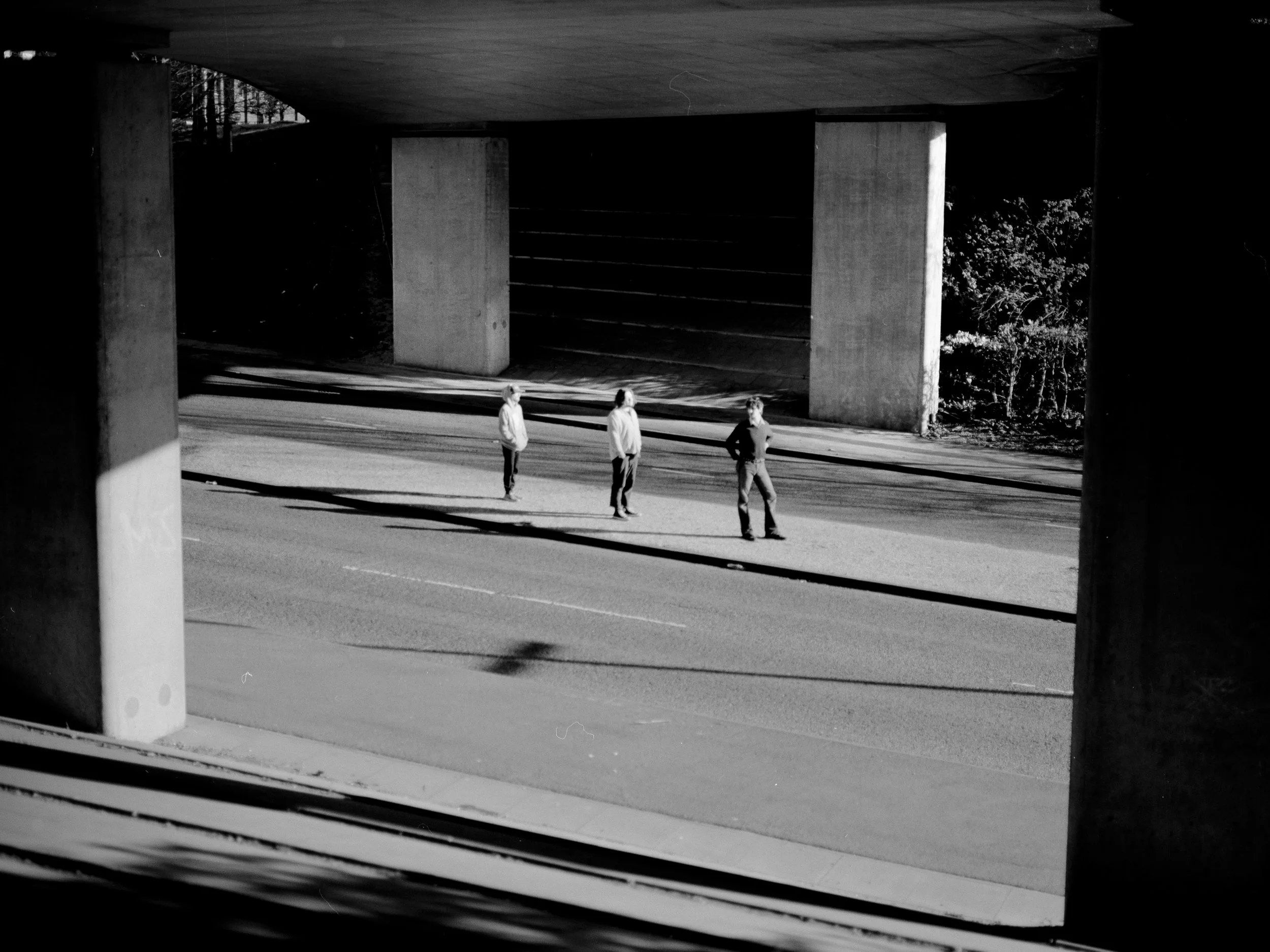
XTC, Neu! and Yellow Magic Orchestra are all pretty different influences. What do you think connects those artists in the context of Formal Sppeedwear?
Beck: The connection for me which threads those artists I think is their priority over which sonic qualities a sound has. These are artists where I always find myself asking ‘How was it they arrived at that noise? What combination of instrumentation, performance and treatment could surmount in such a remarkable and mesmerising sound?’ I love to study sound and its means - I want to learn my means like the helm of a creative vehicle. This practice is so crucial in the work of my favorite artists and you can hear it in the final product, like a big sonic question mark.
Charlie: They made me want to know how and why they did it the way they did. Neu! did it with basically one chord and YMO did it with loads of chords and they still both sound so dense and intricate. The idea that you can run with one steady beat and one repeating note for 10 minutes without getting boring is fascinating. As is a pop song with so many layers and countermelodies and the likes.
Neu! and YMO are polar in their composition, but with each there's always something new to pick out when you listen. I would hope that for our music.
Connor: What I love about those records is that I found it really tricky initially to pin down when they were made. There’s an oblique, timeless quality to their production and musical choices. Those 3 Neu records in particular sound like they don’t really belong to that era and they exhibit almost none of the recording conventions and styles of the decade in which they were made; instead they seem to sit inside their own little sonic bubble. Another band that absolutely knocks my socks off in that regard is This Heat. Their first two records are so insanely forward thinking - almost as if they were beamed down from space. If we can be even slightly as hard to pin down as any of those bands I would be super pleased.
You've built a dedicated following partly because people are trying to decipher your lyrics. Do you enjoy the mystery, or are fans sometimes reading more into things than you intended?
Beck: I think when writing indirectly, it is impossible not to impart something desperate waiting to be expressed. The difference I feel as a person after an elongated session of writing what appears to be gibberish is remarkable, like I’ve regained some greater perspective. Should the lyrics stray too far from the lateral and nearer the comprehensive, I feel it could be to a great detriment. Knowing my lyrics incite further reading at all is wild to me - but very welcome. I wish them the very best of luck.
Charlie: I am yet to decipher and therefore cannot comment.
You discarded three songs from the album because they fit too well. That's not something many bands would say. What made those tracks feel unnecessary?
Beck: This was purely an act of refinement. We have limited space and some songs just outshone the others.
Connor: We wanted songs that felt cohesive as a collection, but still had some level of variety in terms of form and tone within the album. The tracklisting we eventually decided on just seemed to be the best of those two camps - there’s sonic variety there but ultimately the songs feel like they belong together. We’re often trying not to repeat ourselves. We’ll undoubtedly cut out our favourite chunks from them and fashion them into something on the next record. Our working method can be sort of brutal in that sense, but the songs are usually better for it. We’re often trying not to repeat ourselves.
'Friedrich Backs Up Nothing' sounds like an important moment on the record, both musically and lyrically. What role does that song play within the wider story of Punch Card?
Connor: Friedrich divulges nothing.
What do you love right now?
Beck: Wingbing
Connor: Me and Beck ate quite a lot of Magic Stars during the production of the album. I’m really into those at the minute. The slightly bigger bags cause the little ones only have about 5 stars in them.
Charlie: Crossword
What do you hate right now?
Charlie: Howie Mandel on Deal or No Deal USA because he talks to the contestants like they're 5 years old and don't know what anything is like a million dollars being more than a hundred thousand dollars when anyone who goes on the show surely must know that otherwise they wouldn't get past the cast auditions because if you don't understand the concept of money then you're not going to fare very well on a gameshow that requires you to know that.
Beck: Oliver Duffy.
Connor: The little bags of magic stars.
Name an album you’re still listening to from when you were younger and why it’s still important to you?
Beck: Justice - Cross
Charlie: Raw Power by The Stooges is still the nastiest sounding shit there is.
Connor: ‘The Nightfly’ by Donald Fagen. I think it’s a perfect record. My dad would play Steely Dan and Donald’s solo stuff in the car constantly when I was little and it really rubbed off on me. Apparently as a kid I knew all of the words to ‘Walk Between Raindrops’ and would pester him to play it all the time.
When someone hears your music for the first time, what do you hope sticks with them?
Beck: I think I disliked most of my favourite songs the first time I ever heard them. Maybe not dislike… but there is a whole lot of uncertainty on first impressions before massively overplaying most of my favorite songs. I’d say a strong degree of uncertainty is all I’d like people to take away from Sppeedwear's output.
Charlie: I'm more interested in what does stick.
Connor: A guy told me one time: ‘Don’t let yourself get attached to anything you are not willing to walk out on in 30 seconds flat if you feel the heat around the corner.’