
Start Listening To: Good Health Good Wealth
London duo Good Health Good Wealth bring family, friendship and unstable living into the stories behind their album, The Disco Never Ends.
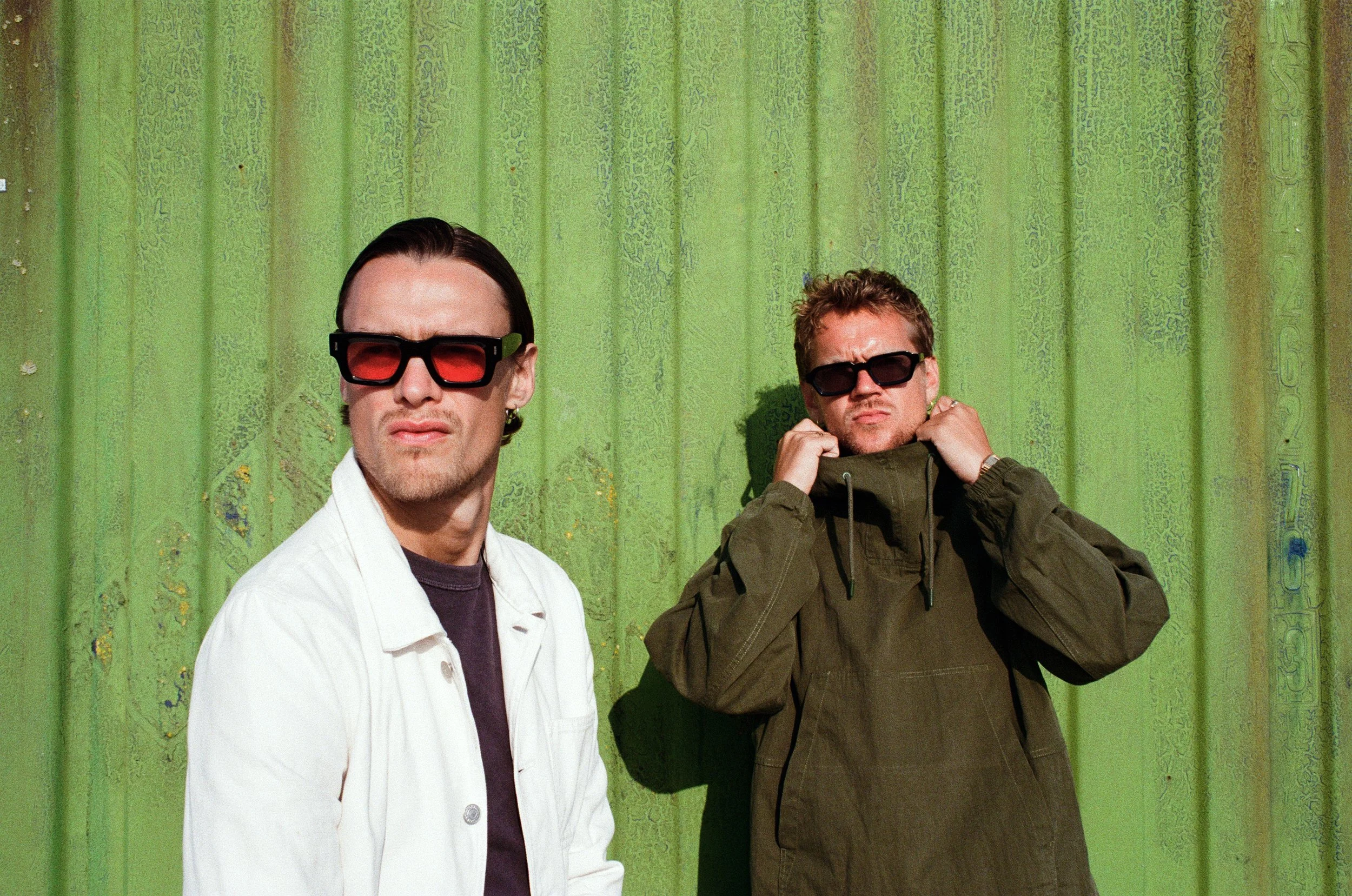
Good Health Good Wealth’s songs come from the lives they’re still figuring out how to live. On The Disco Never Ends, the London duo’s indie spoken word finds room for infatuation, grief, nights out and the small comforts that can turn a day around, with humour that sometimes helps the difficult stuff go down and sometimes has to give way to it. Written against a backdrop of touring, money worries and sleeping on mates’ sofas, the album draws on family and friends, including an auntie remembered in ‘Leftovers’. We caught up with the pair to talk about writing from experience, exchanging demos over email and knowing when a song needs a joke.
For those unfamiliar with your music, can you tell us who you are, where you’re from and about the music you make?
We are Good Health Good Wealth, from London, and we make our own brand of indie spoken word.
With The Disco Never Ends, what did you want people to understand about Good Health Good Wealth that they might not have got from the singles?
We always just want people to get authenticity from us, be it the singles or the album as a whole. We’re real people and the songs come from a very real place. Speaking personally, these ain’t stories about someone else I’ve made up, they’re about me and my family and friends.
How did you two first get talking about making music together, and what made you think it would work?
We met through a mate in the pub because one day I had the bright idea to start a band. I don’t think we went into it with any sort of expectations. We were just a couple of young kids white-knuckling through life. Things have evolved a lot since then.
The album title comes from the idea that life keeps moving, with people coming and going. Was there a particular moment when that started to feel like the thread connecting these songs?
When we confirmed that ‘Leftovers’ was on the album, that song is for my auntie who unfortunately left us too soon. It sort of opened my eyes to the fact a lot of these songs come from a similar place of nostalgia and longing.
You’re writing about jobs, relationships, nights out and getting older. What makes an everyday experience worth turning into a song for you?
Absolutely no idea! I honestly don’t know why half the stuff I write about comes out, but I just know if it does, it must have moved me enough that hopefully it will do the same for someone else.
How much of yourself do you recognise in the person replying to his own messages in ‘Susanna’, and how much freedom do you give yourself to exaggerate when you’re writing?
That is definitely the most exaggerated version of me on the record. I can definitely see myself in there though. Have you never been that obsessed with someone!?
You’ve said the album has a darker mood overall. What was happening in your lives that found its way into the record?
A lot of stuff in both our personal lives I won’t get into, alongside a hectic touring schedule as well as trying to make enough money to keep everything afloat. I was sleeping on various different mates’ sofas for the entirety of the experience, so that lack of stability may have affected it, looking back on times and how things may have played out differently.
There’s humour in the way you write about messy situations. Are there subjects on this album where you had to resist making a joke and let something uncomfortable sit there?
Yes, for sure, the jokes have always been a bit of a coping mechanism for me in real life, so it makes sense that it bleeds into the songs. But I’ve really tried to let the songs land on this album even if it’s hard.
How does a song usually take shape between the two of you? Could you talk us through one from this record, from its first idea to the finished version?
It’s always different, but take ‘The Disco Never Ends’ as an example. I had made a demo which sounded totally different. Simon then made a totally different instrumental which totally changed the mood of the song. I then rejigged my demo to fit that, and it often goes like that till we land somewhere. GHGW was born out of lockdown, so that email back-and-forth approach has always been what we do, especially because over the last few years I had just written such a large amount of words/songs, so I sometimes need to just get them out in any way even if it isn’t exactly what the finished product sounds like. Next record, maybe we do it all from scratch together.
You wanted ‘Susanna’ to be a proper stomper, and said its first outing at Boomtown made the tent rattle. How much did imagining a crowd’s reaction influence the making of this album?
You try not to let that affect you in the writing process, but with some songs you just know they’re gonna be straight in the live set. That was always one of those.
You’ve supported The Streets, whose songs also find a lot in the details of everyday life. What did you take away from watching those shows, particularly how Mike Skinner connects with a crowd?
I’ve always found Mike a huge influence and I’ve seen him a good few times, so I already knew his game. It was very inspiring to see the theatrical approach to the A Grand Don’t Come for Free part of the show though, as he couldn’t rely on any of that classic crowd work, just the songs.
What do you love right now?
The algo when it loves us.
What do you hate right now?
The algo when it hates us.
Name an album you’re still listening to from when you were younger and why it’s still important to you.
OutKast’s Speakerboxxx/The Love Below. It’s gotta be my most played album and I love how it’s still an OutKast album but in many ways such a departure. I mean, it’s literally in two halves. It’s one of those really special pieces of art that you can’t quite put your finger on, which I think plays into GHGW. People always ask what we are and there’s no one-word answer (which can prove tricky for some people), but I think that’s what makes us what we are.
The album ends with ‘Call My Mates Up’. What made that the right place to leave things, and what do you hope people are feeling by the time they get there?
We wanted to end the album on something uplifting. You go through all the ups and downs on the record that you would in a lifetime, but that ending is that little moment when you’re feeling down that changes things, that piece of music, that smell of your mum’s cooking, that phone call from a mate.
Photography By: @hypemari