
Start Listening To: Jordan Sand
The double bassist and vocalist discusses the improvised world of Baby Ghost, learning to hear differently in Norway and the collective focus of playing solo.
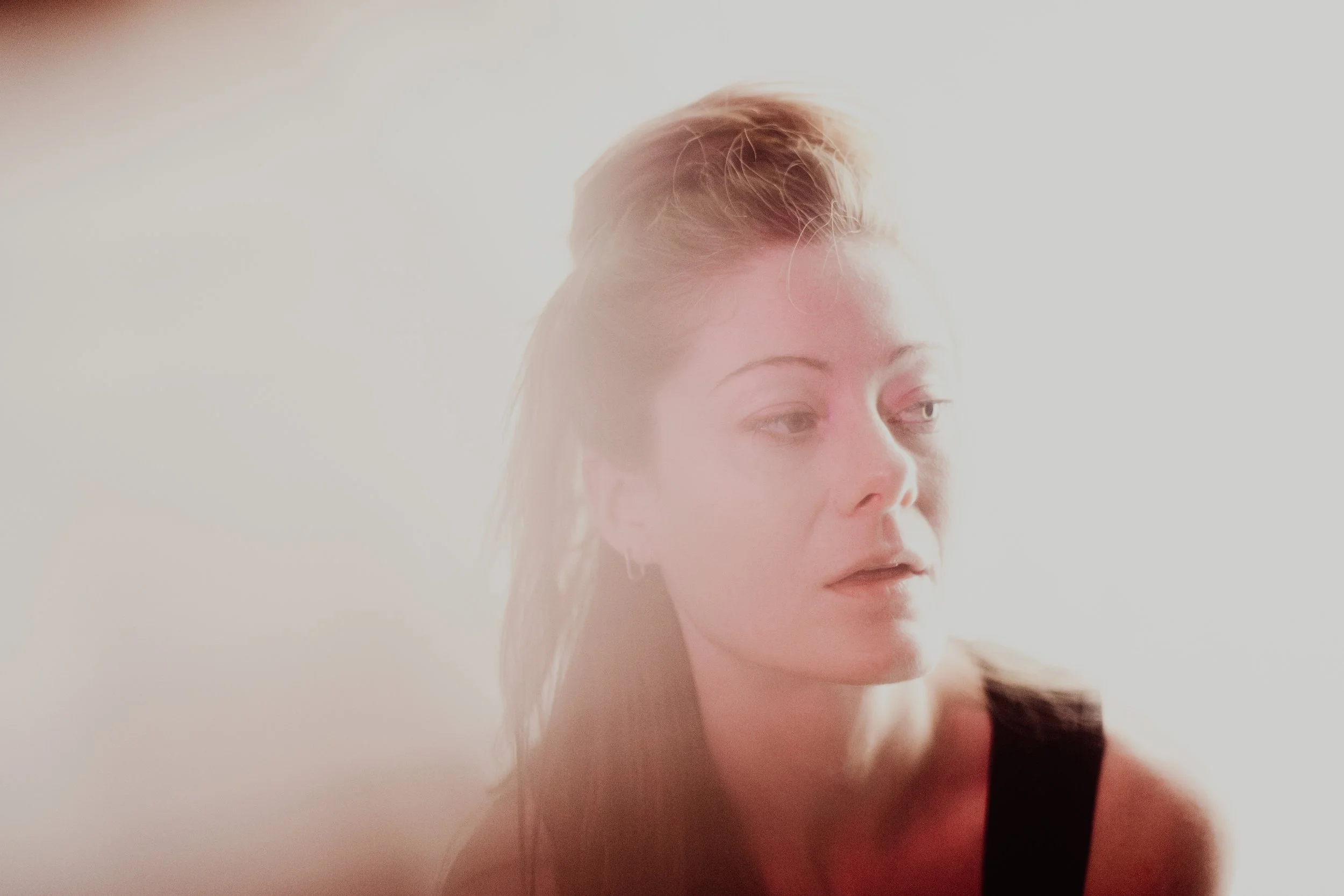
Jordan Sand’s relationship with the double bass began when her younger brother brought one home from school. Years of classical training and freelance work in New York followed, but moving to Trondheim in 2020 interrupted that life, leaving her without the appetite to play and newly attentive to the sounds around her. On Baby Ghost, her voice and bowed bass become difficult to tell apart across eleven improvisations exploring death and dissolution. The church hymns of her childhood still shape her ear, but her understanding of the instrument has changed. ‘I may have been a better player in the past,’ she tells us, ‘but I’m a better artist now.’
For those unfamiliar with your music, can you tell us who you are, where you’re from and about the music you make?
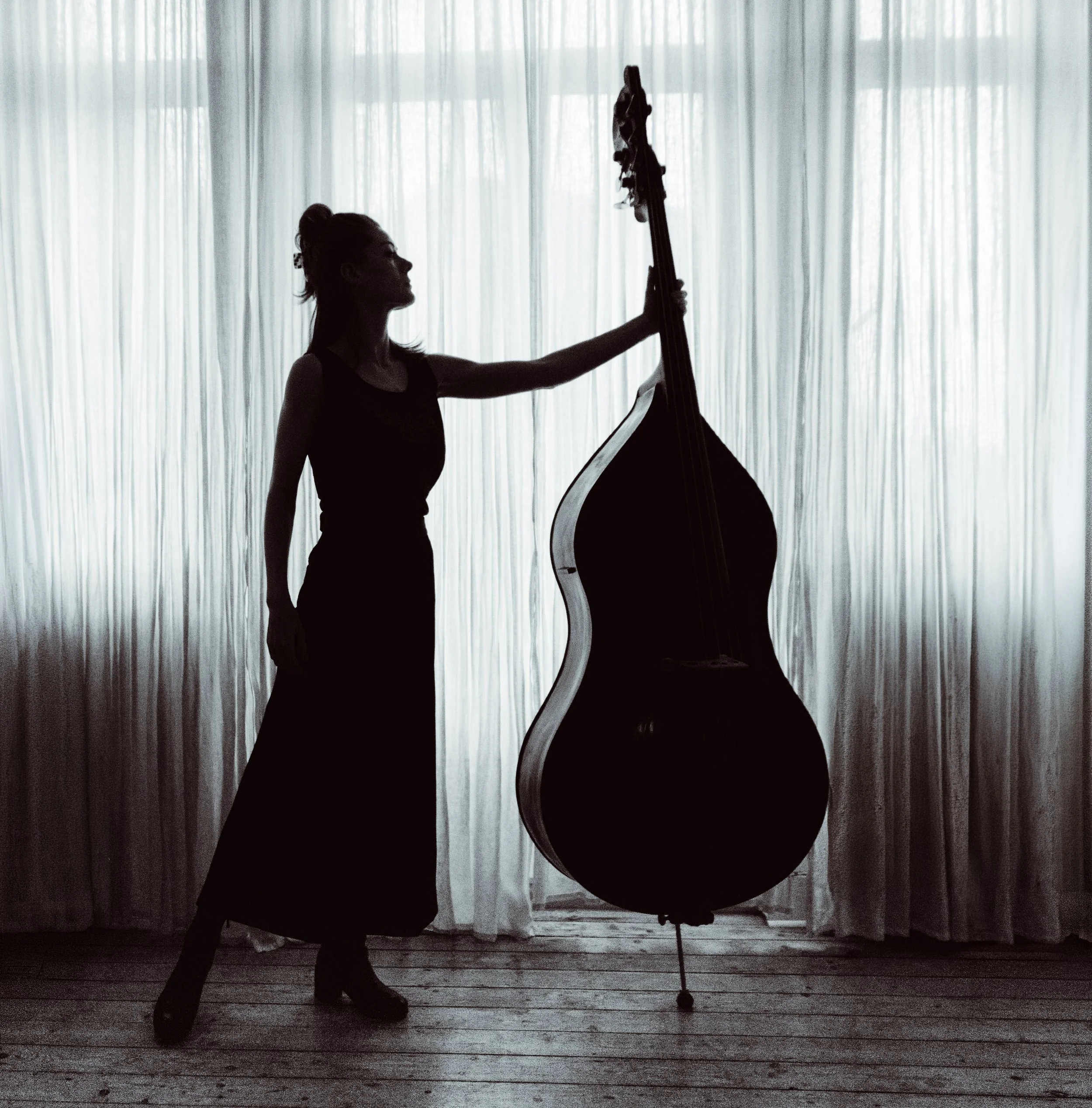
I’m a string player, writer, singer, improviser, composer. I grew up in Syracuse, New York. Perhaps I got a double dose of the restless gene. I’ve lived in four countries, ten cities and toured widely, always with my pear-shaped double bass in tow. It’s an odd-looking instrument that seems to be getting a reputation. Right now I’m based in Trondheim, Norway.
I blend my singing voice with the harmonics and overtones of bowed double bass. The sounds have such an affinity that it’s sometimes indiscernible where one ends and the other begins. I have a song catalogue, but right now I’m committed to free improvisation, using wordless voice to augment and modulate the dense frequencies of my instrument. The music vacillates between melodic, ethereal and hauntingly beautiful, and visceral, dissonant, some would say downright edgy.
You grew up playing folk and church music before training classically. What first drew you to the double bass, and which parts of that early musical life still find their way into your playing?
One day a double bass suddenly materialised in the house. My younger brother brought it home from school for the weekend. Ours was not a musical family, but we lived in a public school district with a great string programme. It looked so lovely and mysterious leaning up in the corner. I wondered if my violin skills would transfer, and gave it a try. I was about 13.
My early musical life centred on singing group hymns in church, accompanied by pipe organ. I still live inside this sound. The timbre, resonance, density, voice leading and melodic hooks are the bedrock of my ear. Bowed double bass has this same resonant, layered quality. Adding my singing voice always seemed like the natural next step, and I do so with the same reverence and hush as a hymn would require.
I also grew up learning fiddle tunes by ear from a fiddler named Joe Davoli. Great folk musicians have a certain self-sufficiency and sense of joy. I’ve tried to hold onto that. I’ve also retained the rhythmic language of the bow, and those aged melodies contoured by relaxed hands. Folk music comes from the instrument, cultivates a love and respect for its intrinsic tunes and shapes – which certainly informs how I convene with the double bass today.
You spent your twenties working across all kinds of sessions and performances in New York. What did you enjoy about serving other people’s musical visions, and when did you begin wanting to give your own ideas more space?
When you spend years, electrolytes, dollars, and life-points honing a craft, it’s gratifying to be called upon to deliver as a professional. Time is such a crunch in New York. One to zero rehearsals was the norm, so you had to be able to show up and play the thing down accurately, musically, do the gig, get paid, go home. I enjoyed working with such precision while surrounded by chaos and variety. It fed my brain.
Although by nature I’m a bit of a hermit, I also loved the sense of belonging that came with freelancing. It can be competitive, but the solidarity is real. You’re hurtling through space together toward the next gig, talking shop, animating huge rooms of dancers or relying on each other to survive that one harrowing passage. Although I haven’t lived in New York for ten years, it’s still my largest musical and professional network and I miss it dearly.
However, New York is loud. Space and time are cost prohibitive. I couldn’t hear my own inner music, much less afford the conditions needed to work on it, and life was flying by. So when the opportunity arose, I did something drastic. I moved to Norway.
After moving to Trondheim in 2020, you spent an extended period away from music. What drew you back to the instrument, and what surprised you about the sounds you wanted to make when you returned?
My move to Trondheim coincided with the pandemic. Suddenly there was quiet, space and time; unfortunately in much too high a dose. Solo music isn’t really solo, it craves context, community, performance. And everyone needs a familiar face or anchor point to stay sane.
In that vacuum I lost all appetite for playing. My ears changed, my eyes changed, my body changed. Recorded music was overstimulating and upsetting. I started looking for ways to situate myself in a new reality. Environmental, ambient sound became a lifeline. The birds and weather patterns, the wind, the shapes of the Norwegian language… not a shocker, Trondheim sounds different than New York.
I started field recording, sampling, playing with sound away from the instrument. I think my ears really became hyper-attuned, not in their musical functionality, but in their raw perception of timbre and space. Ears as a point in space… rather than analytic tools to thread harmonic needles. In the years following the pandemic, I did more sound design than solo playing. Sound for film and VR, electronic music, ambisonic composition in a planetarium, collaborations with poets and researchers, etc. Trondheim allowed me these learning curves, and stretched my creative practice beyond the instrument.
Coming back to the double bass full time has been quite a trip. I sink into single sounds and hear the kaleidoscope therein, hear the note in three dimensions. I’m satisfied with less, can hear more in less, can peel through layers of the instrument I didn’t understand before. I may have been a better player in the past – but I’m a better artist now.
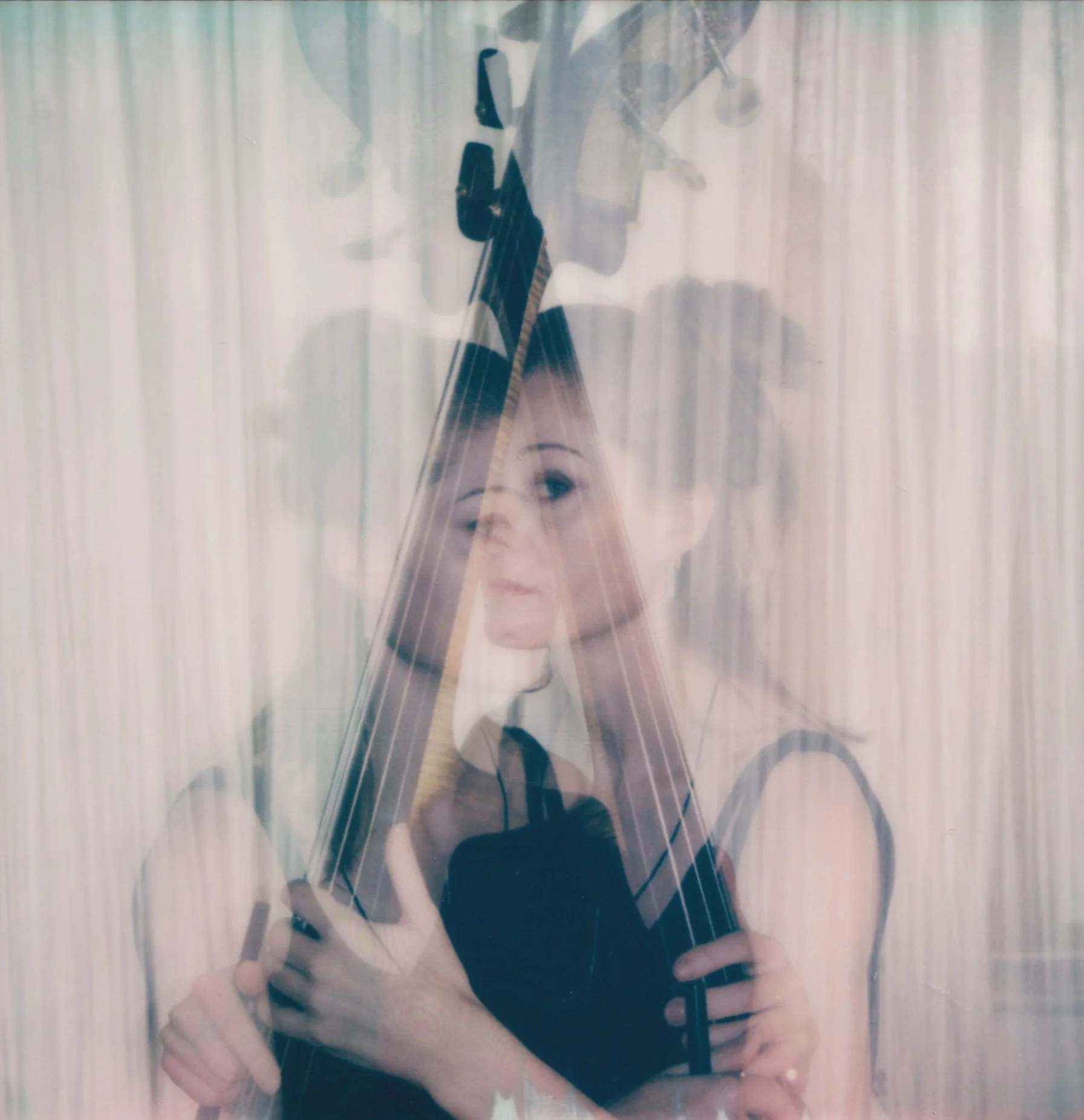
You’ve described hearing what the voice and bass have to say when they have only each other to talk to. How do you experience that relationship while playing, and can one lead the other somewhere unexpected?
The experience is holistic. I feel whole. Sometimes even I lose track of what sound is which, voice or bass, they merge so completely. My attention is fully gathered into the body of the sound. I’m hyper awake, flexible, receptive to sonic phenomena as they happen.
From a technical standpoint, if we consider the kaleidoscope inside a single note on the bass, then the voice, used carefully, can shine a light on a distinct colour, or draw out a hidden layer. It can serve as the unplayable third harmonic, or amplify and modulate an overtone the audience might not have perceived yet. It can move in counterpoint or in parallel to a melodic line, it can create dissonance or consonance.
Something unexpected happens every time, without fail. I expect the unexpected, have come to rely on it, get a bit bored without it. We can sculpt as we go, as long as there’s a complete trust in the instrument. An important note, the bass usually leads the voice, and not vice versa.
Your approach involves finding sounds within the bass that go beyond the roles you were trained to play. Can you take us through a discovery on the instrument that changed how you understood its possibilities?
I remember the first time layering together a low note, a harmonic, and a vocal note. I was 22 living in Paris, practising, exploring. I heard these three notes merging into one sound and felt a PING in my heart. It sounded like a hymn, like the monophonic stack of organ and voice. I was looking down at my bow. The carpet was maroon with little white dots.
Sophomore year of high school, 8 am orchestra class. Bill Mercer asked each section leader to bow an open string and let it ring. We counted how long it took for the sound to die out. Violin, viola, cello… as the instrument got lower, each note had a progressively longer life. Finally it came to me: bow an open string on the bass. 70 kids counted in silence and surprise. Almost 20 seconds…
We’re taught to play the double bass dry, punchy, with short linear gestures in its lowest register, as the bedrock of a larger ensemble. But the double bass is designed to ring, it’s a bell that rings with a vengeance, and there’s harmony and polyphony hiding in plain sight under the left hand. Spooky stuff.
Baby Ghost takes its name from a children’s book about a ghost arriving at a museum. How did you encounter the book, and what about that image stayed with you?
A few weeks after naming the record, I remembered this bizarre book from my childhood: Gus and the Baby Ghost, by Jane Thayer. It was published in 1972, and was my mother’s so by the time I came around it was quite the vintage specimen. It was tucked away in my subconscious.
Gus is a ghost living at a museum with the museum’s human caretaker, Mr. Frizzle, and a cat named Cora. One night a baby ghost gets dropped off in a bassinet screaming and crying and scares away the museum visitors. Mr. Frizzle is enraged. Gus has to figure out how to both care for a baby ghost and win over his annoying, impatient human friend to the role of ghost parenthood.
When the baby finally begins to coo with happiness, it becomes the museum’s main attraction. All the human visitors gather around the baby ghost, who they can hear, but not see. It struck me as poignant that sound could move between realms, causing both havoc and delight, and that even in death there might be a progression, a need to start small and grow into it – that dying has an infancy.
The album imagines a journey between death and dissolution. What gave you a way into that subject musically, and how did the individual scenes begin to take shape?
Here’s how the record happened. I booked some days in a studio on a visit home to the US and told myself, make no plan, no premeditations, just improvise until you run out of steam. I didn’t expect to make a record on death and dissolution. Later I listened back and understood what was taking place. I heard myself dissolving into the sound of the instrument. I heard myself struggling, rejecting, accepting, dialoguing with something.
At that time, the impermanence and brevity of my own life had been crowding my mind rather intensely for some months. I don’t know why. I’m healthy, relatively young. Maybe it was just time to gradually digest the fact.
To answer more directly, my own playing and singing led me down the tunnel of the subject. Each take was so self-contained, so clear – so scenographic. Listening back I immediately knew the name, saw an image. I heard the questions, the topics, the characters in my voice, or lack thereof, for example in ‘Bird’ and ‘Second Bird’. These beings approach, retreat. For this process, it’s hard to describe ‘how’ rather than ‘from where’. Maybe a hint of Revelations at play in my subconscious, or the Tibetan Book of the Dead.
You recorded each piece in a single take, without overdubs or edits. What helped you recognise a take you wanted to keep, particularly when there was no fixed structure to measure it against?
Aura – pure aura, a haunting quality, and compositional clarity, albeit accidental.
Across the eleven movements, there’s a larger arc connecting the improvisations. How did you arrive at that sequence, and what were you listening for in the transitions between pieces?
The tracks were improvised, but the album sequencing was carefully, deliberately composed. I wanted the record to feel like one of my live sets, where each new improvisational idea is allowed to develop and culminate, with silences in between. My attention and presence in those silences hold back applause. The audience understands we’re all in a longer arc together.
Translating that to a record, and a somewhat programmatic record at that, was a challenge. It took many months to get the sequence right. I was looking for changes of light and tonality, juxtapositions between melodicism and noise, and pockets of tension that gave way to rest or familiarity. When the music is challenging, as this music certainly can be, it’s nice to allow the ear moments of reset, intrigue, surprise and repose. I also took a hint from a friend and constructed seamless transitions of room noise between tracks, to preserve a sense of location and flow. I want the listener to stay in the room with me.
I’m happy with the result. There’s a certain roll, the attention sustains even across high contrasts, and the arc still makes sense to me. There’s something Baroque to it. I was likely also influenced by the seasonal extremes of light in the far north.
On ‘Let’s Go Home’, what does the idea of home mean within the album’s journey? Did the title guide the performance, or emerge from what you heard afterwards?
The title emerged from a first listen back to the take (as with all the tracks). I’ve lived abroad for almost seven years now, and I’m homesick. Maybe there are some wires crossed about what home even means.
But within the journey of the album, ‘home’ means something else. After the turbulent cry of the opening track, ‘The Wet Sheet’, ‘Let’s Go Home’ signals that the body is done, the worldly senses are blending, smearing and transforming, and the spirit is mobile again. If dying has an infancy, and a progression, maybe it also has agency. Maybe life is like being out on the end of a kite string. Maybe dying is a chance to return to ground, to come home; and in doing so, actually transcend death.
There’s a parable in Buddhism about a quail. A hawk circles above, embodying the endless circle of life and death. The quail, feathery little fool, finds itself above ground, exposed to the hawk. It should be underground, burying itself in the overturned clod of dirt, but it has wandered too far from its native domain, and death will gain access.
‘Let’s Go Home’ is very still and focused, deep in tone. The voice buries itself into the layers of the bass…
You chose an October release as a tribute to a close friend who died after the album had been recorded. If you’re comfortable discussing it, how has your relationship with these recordings changed since his death?
Yes. He died suddenly in October, last year. And he was born in October. He was a wild guy, my high school sweetheart, lifelong friend, a philosopher, guitarist and the absolute catapult behind my life in music. We used to blast Graceland while speeding down the highway in his purple van, windows rolled down. There’s a line in there about grief… ‘Everybody hears the wind blow…’
It’s a baffling experience to lose that type of person. His story is complex, profound, both his living and his passing were unlike any other. He fought for life for a long time. But I know him, and know that, meanwhile, he was cosy with the other side … that the membranes between life and death were more porous for him than for others, not in a macabre fashion, but out of curiosity, reverence, adventure.
My memory of him, love for him, and frankly, my confusion at what life dealt him, have found a home in this music. I also feel a responsibility to carry something forward for us both. To get my hands on strings every day and chase the muse. That was taken from him so young, but it’s who he was completely. It was a joy to behold. And I could be wrong, but I think he’d be amused, beguiled, to see me making something rather occult like Baby Ghost.
As you take Baby Ghost on tour, how do you approach returning to these scenes through fresh improvisations? What can the room and the people listening bring into the performance?
The room and the people bring… everything! All attention comes down to a point. Like a chisel. And that brings me alive. I really cannot do at home what I do on stage, and vice versa, I need to convene with this collective focus. In that way, playing solo is a social practice, and a spiritual practice as well. The audience always seems to go there with me, and I’m grateful. After the show, often the word ‘hypnotising’. Recently, a new one: ‘there was a nerve in the room.’
As for the material, each set is still improvised, but the arc of these release shows is patterned after the arc of the record. Baby Ghost’s themes are so stark, such living kernels. So many ways back inside, and ways to expand. But with each performance, I find myself sinking deeper and deeper into the idea of blend, the bizarre chimeric quality of this music. At any rate, the touring so far has been incredibly rewarding, the response invigorating, and people take the record home with them.
What do you love right now?
I’m really loving Brussels lately. I’ve visited for years but now I’ve been spending more time here getting to know the music scene, the patchwork of cultures, the history, and the possibilities. Brussels is a beautiful, scrappy city, with a rare balance of elegance, openness and DIY spirit. People think I’m crazy but it gives me the feeling of New York.
What do you hate right now?
Hate hearing the blast of someone’s algorithm in public space. Use headphones. And I’m enraged by Christofascism. The cognitive dissonance in there drowns out everything that it comes into contact with.
Name an album you’re still listening to from when you were younger and why it’s still important to you?
Modest Mouse’s Good News For People Who Love Bad News still gets me. My brother and I both love this record. He has memories of building hot air balloons with tissue paper and setting them alight while listening to it. That record also lifts me into the air somehow.
When someone hears your music for the first time, what do you hope sticks with them?
Memory is so subjective, hard to direct. I could perhaps better answer what I hope they feel: confusion and beauty. Curiosity. And a certain closeness to oneself, peace with oneself.