
Bristol-based songwriter Kathleen Frances discusses the personal experiences behind new single ‘Kitchen Sink’, finding intimacy in home recordings and the things we carry into our relationships.
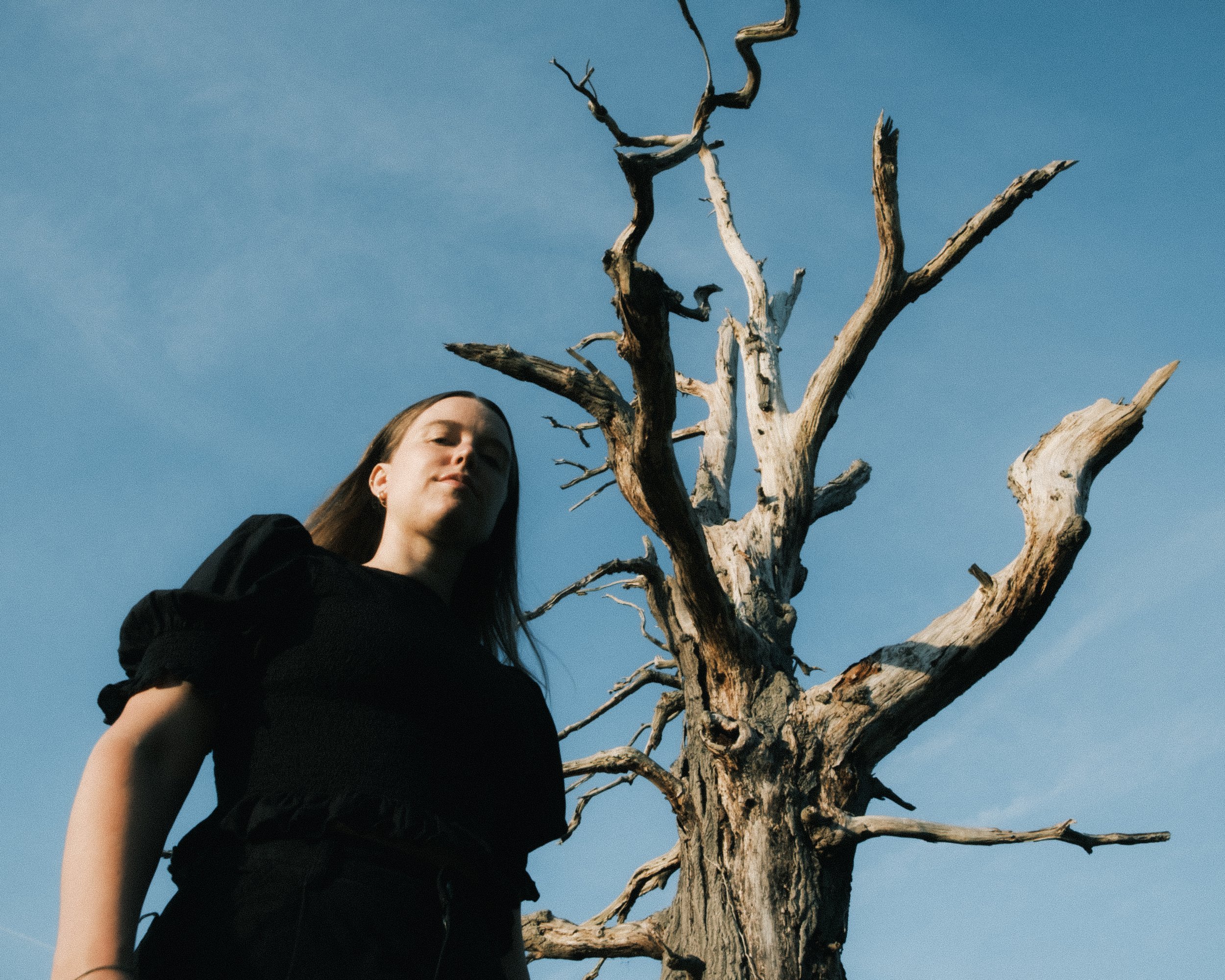
Bristol-based songwriter Kathleen Frances makes intimate, introspective music that finds hope in the more complicated parts of everyday life. Her latest single, ‘Kitchen Sink’, takes its inspiration from a conversation beside the kitchen sink, exploring the habits we inherit from previous generations and the ways we learn to communicate with one another. Built around a rolling piano part sent over by collaborator Benji, the song came together in a single evening, with its melody and lyrics emerging almost instinctively. We caught up with her to discuss the ideas behind the track, her approach to recording vocals at home and why sometimes the first take is the best one.
For those unfamiliar with your music, can you tell us who you are, where you’re from and about the music you make?
I’m a musical artist from Bristol. I make introspective yet hopeful songs. People often say there's a melancholy and depth to my voice that takes them by surprise.
What came first with ‘Kitchen Sink’: a particular moment you wanted to write about, a lyric, or something musical?
The music tends to come first. My collaborator Benji had sent me through a piano part and I just fell in love with it. There’s a rolling feel to the piano that’s like a stream of consciousness, which made the melody and lyrics come very naturally. I wrote the melody and lyrics all in a night. At the time, I’d been contemplating a lot about a relationship I was in, questioning what are the natural ups and downs of a relationship vs the things that should change, and what are the things that keep us coming back to each other.
You’ve connected the song to things we inherit from previous generations about how relationships work. Did writing it bring any of those learned habits into focus for you?
There’s a lot of therapy ideas and jargon that I was logically learning about at the time, but the tangible feeling and exploring the emotion of it, I felt through writing ‘Kitchen Sink’. It helped me realise that we can make more informed choices in how we communicate in relationships now. However, the beautiful successes in previous generations are the bids for connection, especially using humour as a bid. Making each other laugh is a joyous way to come back to each other and one I want to continue doing.
What drew you to the idea of a ‘kitchen sink drama’? Were there particular films, programmes or domestic scenes you had in mind?
I think I like the idea because it's associated with older generations and it’s a genre known for exploring societal issues. I guess it’s also suggestive that maybe there are roles we choose to play in life and that we have more autonomy and room for change than we think. It was less inspired by a particular scene or movie and more by a moment in my real life of a dramatic conversation I had next to the kitchen sink.
When you’re writing from your own life, how do you decide which details belong in a song and which you want to keep for yourself?
I like when a lyric that’s from my real life gives more poetic imagery or meaning. What is being said with the line on a bigger scale, or in what interesting ways can it be interpreted, rather than being too on the nose or feeling like a diary entry? Not that I think diary entries can’t make great songs, they definitely can!

You became more involved in production after studying music. What was the first thing you wanted to be able to do with your recordings that you couldn’t quite achieve at that point?
Capturing a more intimate sound. I love recording quiet vocals close up to the mic and keeping those vocals at the forefront of the song. The delicate introduction of instrumentation which serves the songs and doesn’t distract from the vocal.
Does being responsible for the recording change the way you sing? Are there things you feel able to try when you’re working alone that might be harder with someone else in the room?
I think it’s just the feel of the space and even the time of day. I love doing vocals in the evening at home and I think there's something in your subconscious that leans into the quietness of doing something at that time of night and in a space you feel so comfortable in.
You experiment with recording techniques and setups to capture the nuances of a performance. What’s an experiment that gave you a result you couldn’t have planned?
I only got experimental at the beginning of my recording journey. For me, I'm pretty set with how I record vocals now. I like being quite close to the mic, it helps capture the depth in my voice and gets me to deliver a gentler performance, which I like. I have an Aston Origin at home, which is a very affordable condenser mic and works like a charm. It's the microphone that I used for this record. It's great at capturing the detail and highs in my voice.
How do you know when a vocal take has what the song needs? Is there a performance you’ve kept where a technically imperfect moment became your favourite part?
The vocal draws you in, you feel like you're hanging on every word. That's when I know. There are so many times I've tried to rerecord parts because maybe it's a teeny bit pitchy or I want it with a slightly different rhythm, only to revert to the original. Sometimes the first take really is the best.
What does Bristol give you as a place to make music, whether that’s people you work with, things you hear, or simply the space to get on with it?
Bristol is a very creative place. Lots of independent shops, streets decorated with artwork and graffiti, lots of alternative art and music being made. It's a little rough around the edges, which brings even more charm. There's plenty of inspiration. People here are also super supportive; there's a sense of excitement around new work and a love for pushing boundaries.
What do you love right now?
Right now, Cameron Winter's Live at Carnegie Hall album, travel (next on my list is Japan), chilli peanut tofu noodles, lie-ins, Miriam Tinberg's Substacks.
What do you hate right now?
That it gets darker earlier. I need blue sky.
Name an album you’re still listening to from when you were younger and why it’s still important to you.
Peter Gabriel's So. That was always playing in the car or around the house. It's dramatic, moving and beautifully produced. I love the depth in his voice. I also saw Peter Gabriel perform at WOMAD, which was my first festival experience. It's nice to relive those experiences through relistening.
When someone hears your music for the first time, what do you hope sticks with them?
I hope it evokes a memory for them, of a moment that's important to them. A way of translating a memory into a feeling. It doesn't need to be a fully formed, tangible memory, but it could be a place or a person or a flash of something. A way of the song interweaving into their life in some small way.