
Start Listening To: Lemongrab
The Montréal-born, Berlin-based band explore the cost of making music, the politics of relationships and the freedom to imagine something different on their EP Another Kind of Freedom.
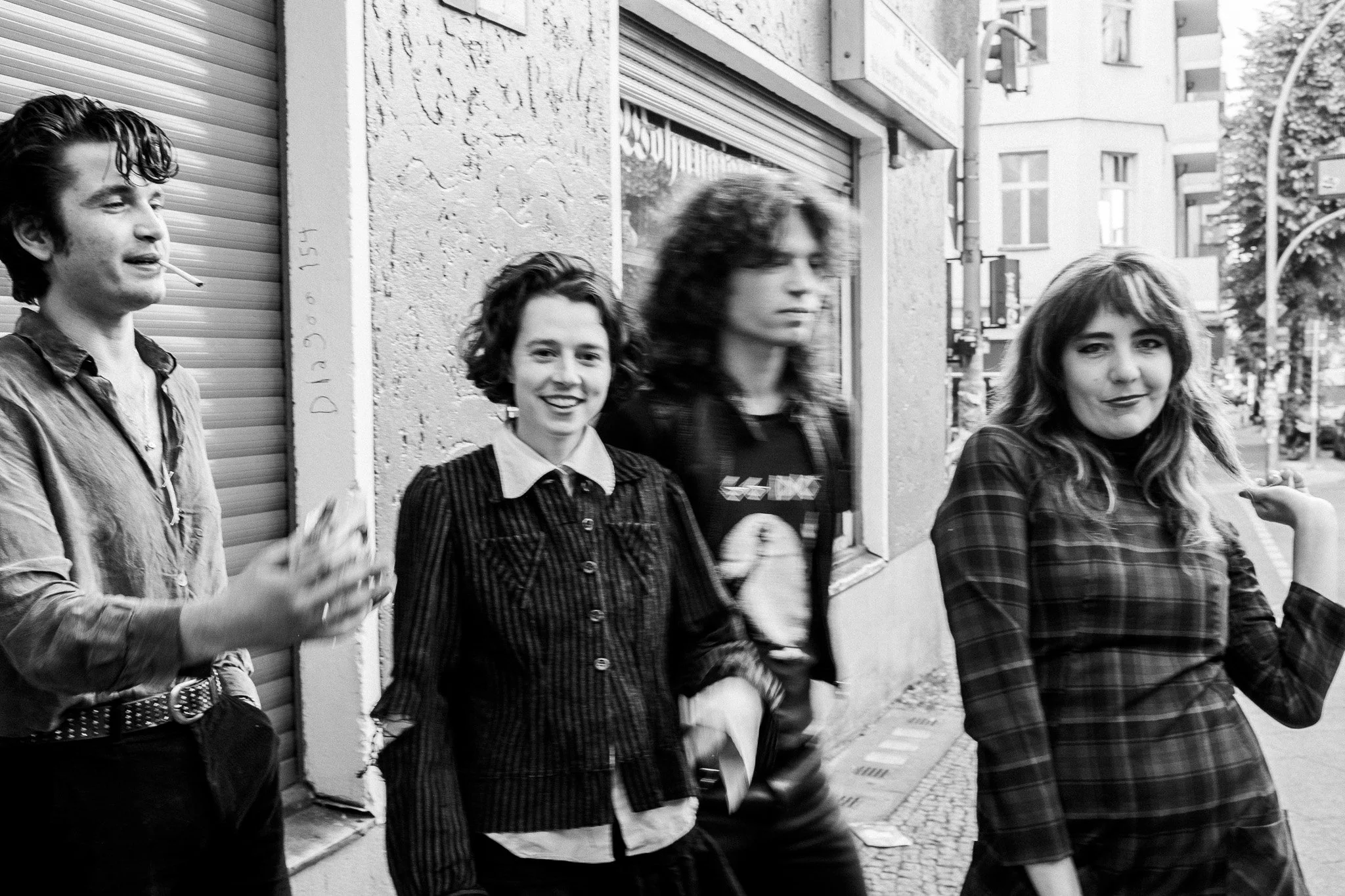
Lemongrab’s beginnings involved borrowed instruments, a rented rehearsal room and two friends finding something to do during a Montréal winter. Now based in Berlin, the four-piece have kept that willingness to experiment, with their EP Another Kind of Freedom taking in the economics of making music, the language we use to describe relationships and the treatment of Yoko Ono in music history. Those subjects leave plenty of room for humour, including a country-punk turn partly owed to a hungover drummer. Gaëlle and Léonie join us to discuss the EP, finding community away from home and the importance of somewhere you can sit with cheap wine without being asked to leave.
For those unfamiliar with your music, can you tell us who you are, where you’re from and about the music you make?
Léonie: We are Lemongrab, a garage-punk/post-punk/weirdo band. We are originally from Montréal, Canada, where we enjoyed a childhood filled with joyful memories of maple syrup and smoked meat sandwiches, and we are now based in Berlin, the city of sausage dogs, nightclubbing and smoking bars.
Gaëlle and Léonie, you were friends long before you started writing songs together. What do you remember about the first time you tried it, and what made you want to keep going?
Gaëlle: I remember we borrowed instruments from friends and rented this by-the-hour jam space on the corner of Parc and Beaubien. Our friend Ben from Australia was visiting at the time and he played with us. We just switched from instrument to instrument to see what we liked best. What kept us going was how much fun it was and how good it felt just to meet up and experiment together. It was during winter as well, so there was not much to do.
You’ve spoken about the freedom of starting without any musical training. Ten years on, how do you keep that willingness to try things you don’t necessarily know how to do?
Léonie: It’s the only way to keep life interesting. For example, we are now working on a Black Eyed Peas cover band for Halloween and so we need to expand our horizons on sound and potentially learn how to play trumpet.
What took you from Montréal to Berlin, and how has living there changed your experience of being in a band?
Gaëlle: Montréal has an amazing music scene, but since we were born there we were curious to experience something new that felt unfamiliar. We are a DIY band and that comes with certain limitations. We had already toured across Canada and toured the US briefly, and we were very interested in touring Europe, but didn’t have the money to pay for everyone’s ticket. So we asked ourselves, why not move there? We had nothing going on at the time and heard something cool was happening in Berlin.
It changed our experience as musicians by exposing us to a wider musical repertoire. I feel like Berlin’s scene is more international, but also more multigenerational, and hanging out with people coming from different backgrounds has definitely widened our music taste. Also, having to search for our community made us realise how central it is to our practice and our space and made us more conscious of the importance of participating in it.
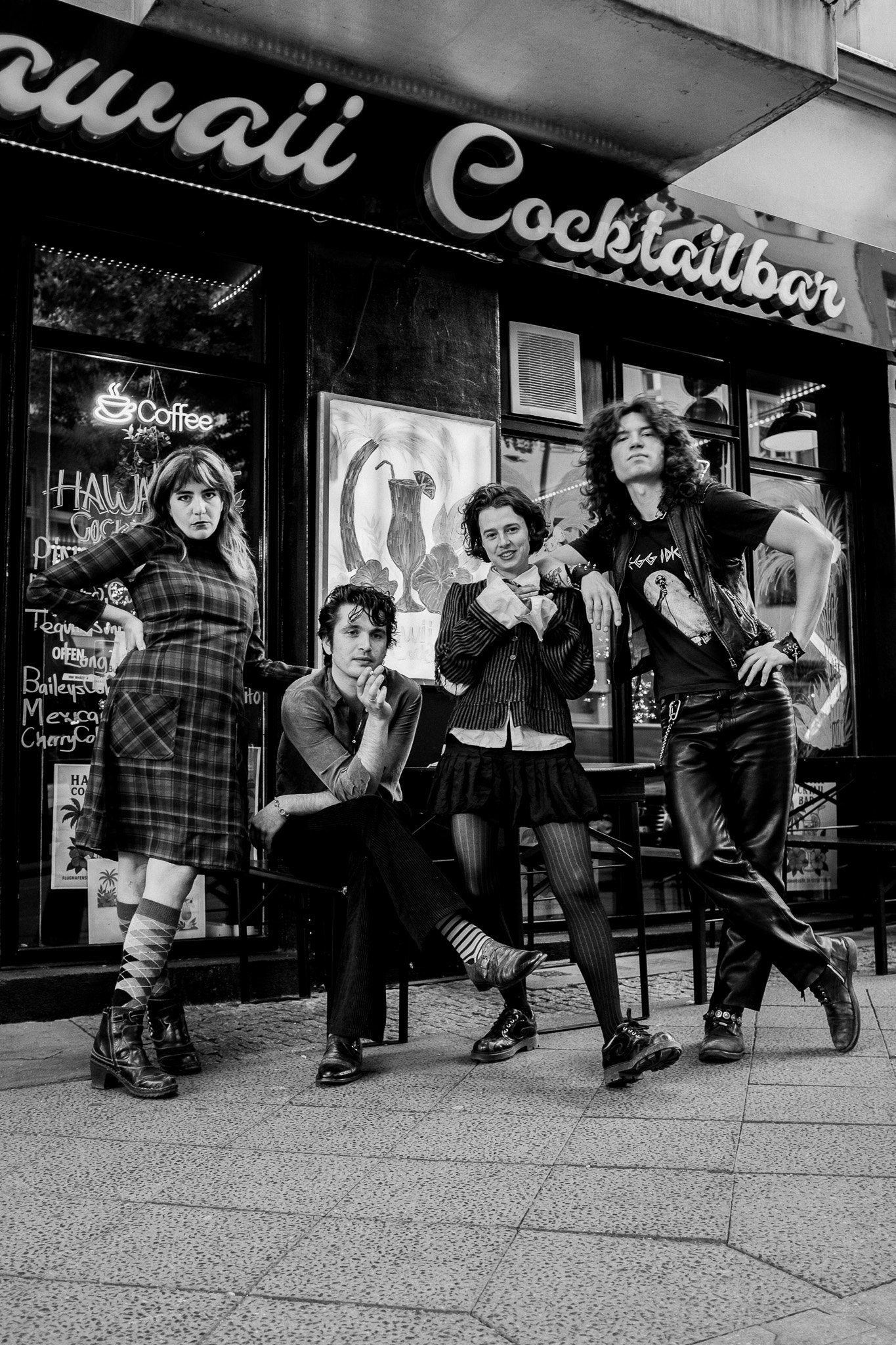
What does Another Kind of Freedom mean to you, and how did it become the title for these four songs?
Gaëlle: Freedom is of course really different from being able to do as you want. The first thing is that most of the time you are not the person who desires and chooses, but something else inside you can do the desiring. It can be your subconscious, it can be ads you see, it can be your social circle, etc. Freedom in this sense has roots in the material, but also in the psychological. I guess with the title Another Kind of Freedom we wanted to address how small the scope of what we imagine freedom looks like and feels like is. And we’d like to have ‘another kind of freedom’ from what we have been offered, which is basically freedom to consume. Each song focuses on a different kind of freedom. ‘Pay to Play’ is definitely economic, but I would say the three others are consistent with this idea of the freedom to imagine and believe in an alternative.
‘Pay to Play’ addresses the difficulty of making a living from music. Was there a particular experience that set it off, and what would you most like to see change?
Gaëlle: We understood pretty quickly it would not be possible to make a living from music just from looking around us and learning that musicians who were very successful in our eyes still had to have a café job to make ends meet. It was a sad realisation but that was many years ago, although we keep occasionally getting outraged by more discoveries about how the industry works. For us, making music is ‘worth it’ because it still brings us joy to do it even though you have to struggle for it. What we would like to see change is manifold. It goes from streaming services actually paying a decent amount to artists to more financial support for small and mid-sized venues that make it possible for bands to tour. We are also looking to basic income and more grants for artists.
‘Necessary Condition’ looks at the ways we distract ourselves when things are falling apart. What were you noticing in yourselves or the people around you when you wrote it?
Gaëlle: We were noticing how people (and sometimes we) are in denial of the condition they are in, either regarding how society leans more and more into fascism and will be facing ecological catastrophe or how we are in denial in our own lives.
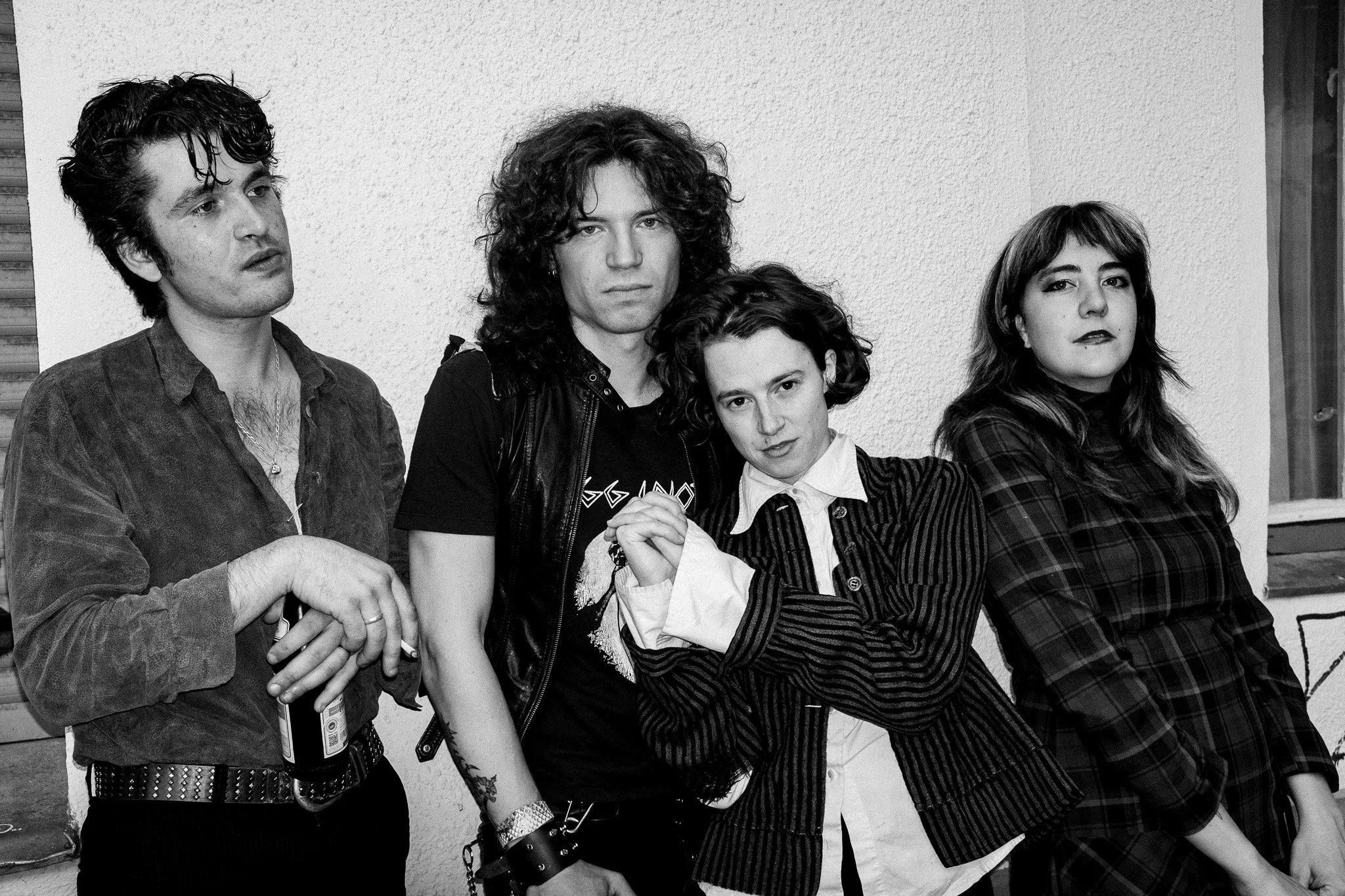
What was the starting point for ‘Yoko’, and how did you find the right voice for what you wanted to say?
Gaëlle: The starting point for ‘Yoko’ was this discussion we had with multiple men in our scene about how Yoko Ono broke up the Beatles and how hilarious it was that they cut her mic during her appearance with Chuck Berry. Our song was aiming to challenge the way Yoko Ono has repeatedly been defined through John Lennon and portrayed in a story largely written around men. We feel music history has a problem with complicated women because it has a problem with women as subjects.
For the voice of the song, we played with this idea of lead vocals/backing vocals and had them compete with each other to illustrate this kind of narrative dynamic.
‘No Receipt’ connects romantic relationships with capitalism. How did that idea come about, and what led you towards a country-punk sound for it?
Gaëlle: In lots of different ways, romantic relationships connect to capitalism, if we look at them as a way to preserve ideology because they’re at the centre of the nuclear family or when they’re being used to sell stuff (how to make oneself more desirable, etc.). I think the song was pointing out that we lack ways of talking about relationships in general (monogamous or non-monogamous) and how it makes us fall back on economic vocabulary (what we ‘owe’ someone when in a couple, for example, or the ‘value’ of a partner). It can feel safer to talk about relationships this way because when you assign a value then you can ask for some kind of justice for how you are feeling, because you can have proof, calculate what is going on. The truth is of course more complicated.
The country-punk sound came from the fact we’ve been listening to a lot of Country Teasers at the moment and felt really inspired by it. Also, our drummer at the time came in with a hangover and had little energy, so making a country beat with soft drum rolls was perfect for him!
You’ve described the EP as ‘ironic, existential punk’. How does humour enter the writing, and do you ever disagree about whether a joke belongs in a song?
Gaëlle: I think humour has always been attached to the punk genre. I was listening to Chumbawamba’s album Kentish Town Time Box and it’s apparent that irony and humour are good tools to talk about politics without making it preachy. We’ve never disagreed on whether a joke belongs in a song.
Before working with Fritz and Joris, you exchange music and art that you’ve been enjoying. What were you sharing while making this EP, and where can we hear its influence?
Gaëlle: I guess every song of this EP was a small experiment and drew from different inspirations. As we said before, the influence of Country Teasers you can hear in ‘No Receipt’, as well as Silver Jews. ‘Pay to Play’ was born from the energy of live shows we got to experience in Berlin, like Die Anstalt or the Tarts and others which are not necessarily punk, but have incredible energy, like Das Beat. ‘Yoko’ would be more Pylon and Algebra Suicide, and ‘Necessary Condition’, I guess, has a bit of a krautrock flavour, which would come from Can! A classic.
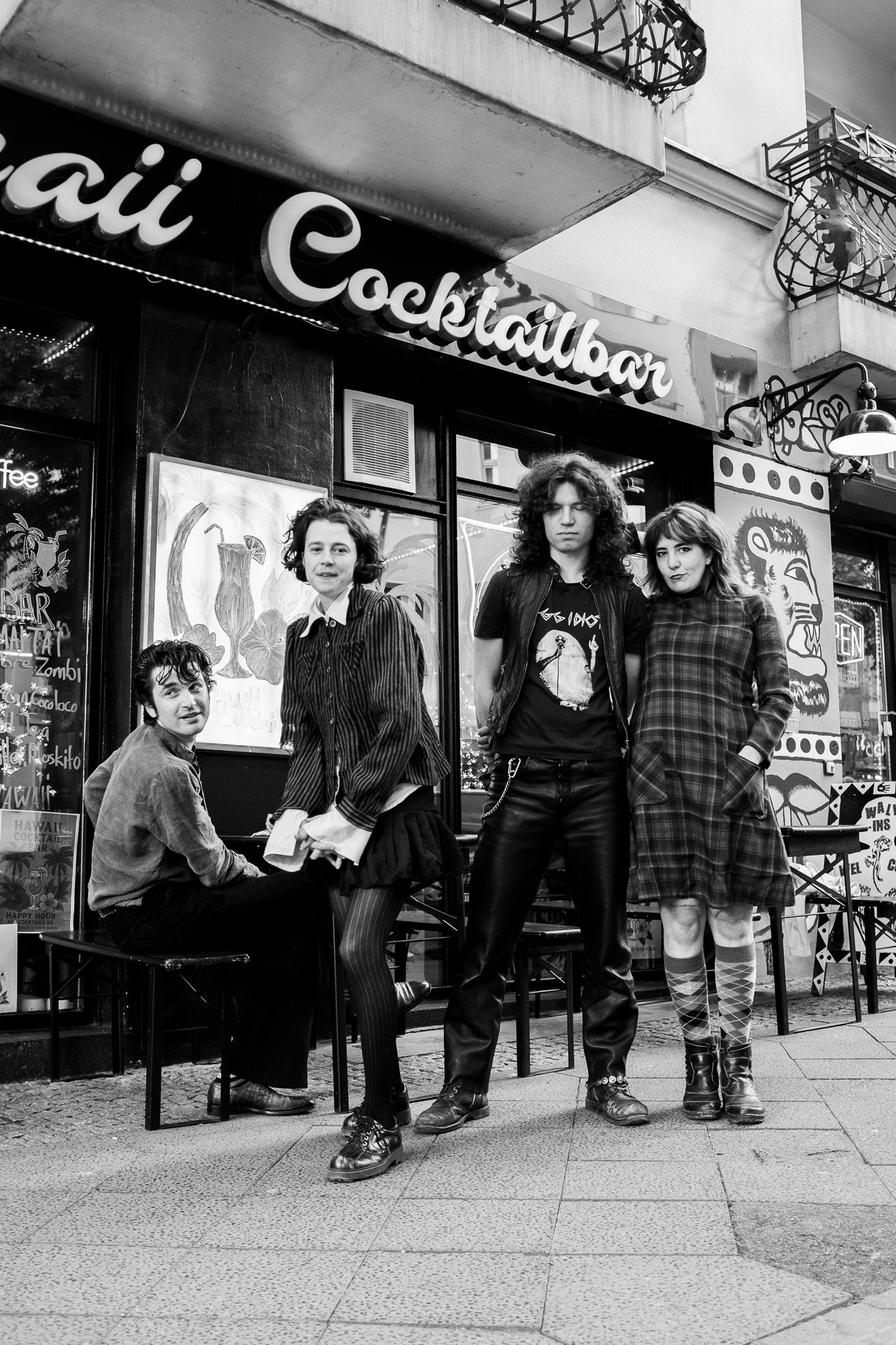
You returned to Leo Marchand for these sessions, this time at his studio in Leipzig. What did having a few days away allow you to try, and was there an experiment that ended up changing a song?
Léonie: For one, we stayed at our friends Fritz and Lukas’ house in Leipzig that they call the Ranch (RIP), so spending a few days all together, cooking after the sessions and listening to tapes all night adds to the sense of making something meaningful together. In the studio, it meant having more time to listen to what we were doing and play around with the mics and the amps and properly layer vocals. We did accidentally record a vocal track through a guitar amp and we liked it a lot. Pretty sure it’s part of the vocal take on ‘Pay to Play’!
What do you love right now?
Léonie: My roommate’s cat Luna eating croquettes.
What do you hate right now?
Léonie: My landlord.
Name an album you’re still listening to from when you were younger and why it’s still important to you?
Léonie: I’m gonna say Taking Tiger Mountain by Brian Eno because he is, was and will be one of the coolest out there. We danced a lot to this album in our old apartment and it’s just still so inspiring to be crazy with sounds and deep all at once.
The artwork includes an old pizza box from a favourite spot by the Landwehrkanal. What makes somewhere feel like home to you, and how important are those places to keeping the band going?
Gaëlle: What we love about this pizza place (Il Casalore) is that 1. It’s cheap and 2. You can just chill there without being pressured to buy something to have the right to stay. They bring you cheap wine in a carafe and they let you be. It’s a place to socialise. Afterwards, you can go have a beer on the canal and enjoy people playing music. It’s these kinds of places that are important to create community. If people aren’t allowed or offered the opportunity to regroup without having to pay, then we are locked in our apartments or in the social contexts of our jobs, under surveillance.