
Start Listening To: LIA LIA
Berlin's LIA LIA discusses embracing chaos, leaving her babypunk era behind and finding freedom in the uncompromising world of her forthcoming debut album.
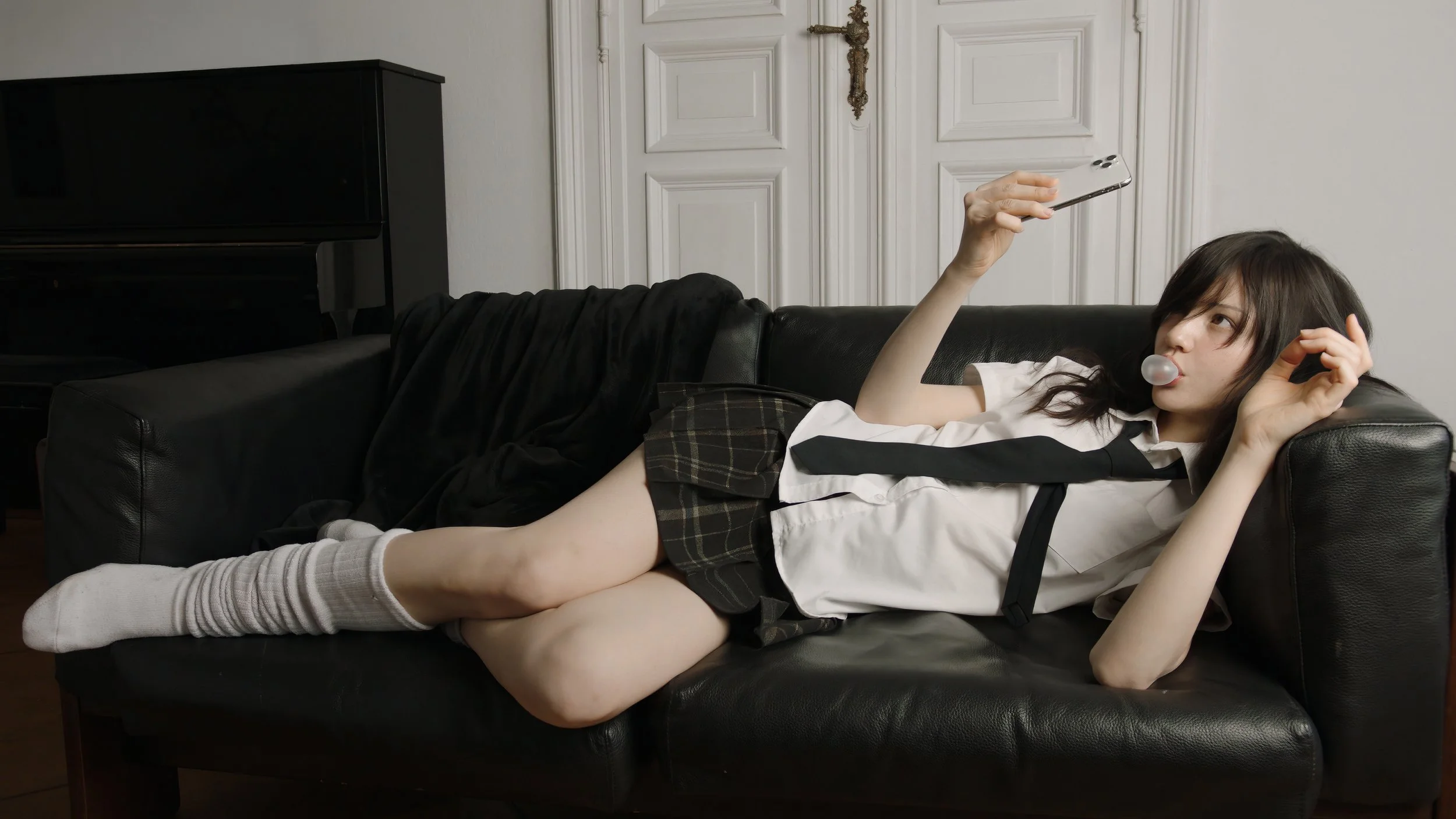
LIA LIA has never been interested in staying in one lane. Across a catalogue that shifts between punk, shoegaze, alternative pop and electronic experimentation, the Berlin-based artist has built a creative world that extends far beyond music, with photography, fashion and visual art all feeding into her singular vision. Her latest single, the brilliantly titled 'Boogiepop Blitzkrieg Blob', marks both the culmination of her self-described babypunk era and the beginning of something altogether bolder.
We caught up with LIA LIA to discuss the stories behind her unforgettable song titles, collaborating with guitarist Luke Knight and producer Jonathan Visger, the life-changing experience of performing in Anne Imhof's DOOM, and why her forthcoming debut album became a document of personal transformation, self-acceptance and rediscovering a love of life.
For those unfamiliar with your music, can you tell us who you are, where you’re from, and about the music you make?
Hi, I’m LIA LIA! I’m half Chinese, half German, currently based in Berlin, and I make guitar music which I write mostly in my head. Since my guitar skills are pretty mid, my guitarist is Luke Knight. Writing together with him feels like dancing with your eyes closed; I feel so lucky we found each other because somehow we get to tap into the same stream of consciousness. The production usually follows the “soul” of the song. I imagine it’s like raising a baby: nobody comes into the world like a blank slate, we come here with our own personalities already imprinted. It’s the same with my songs. I only try to guide them, listen to them, and follow their lead so they can grow to their full potential. Also, I’m a Gemini, so I never really committed myself fully to one genre. Because of that, you can hear elements ranging from sparkling guitar melodies to shoegazey sound walls, live drums, punk riffs, thick bass, modular synths, and even classical grand piano and contrabass.
'Boogiepop Blitzkrieg Blob' is one of the most memorable song titles I've come across this year. Where did that phrase come from, and when did you know it had to be the title?
I write songs really quickly and almost aggressively. Most are written within 20 to 40 minutes, including all vocal melodies, lyrics, verses, choruses, bridges, and hooks. During this time, I’m unable to communicate with anyone since I’m so locked into my stream of consciousness. I don’t really realize what I’m doing until the song already exists; it’s Dionysus, chaos extracted from pure feelings. Since "Boogiepop Blitzkrieg Blob", like most punk songs, doesn’t even try to make sense, I can only guess where it came from. Boogiepop is an anime series I watched a while ago. If I remember correctly, it’s about trauma and mental health struggles but in a more fantastical mythology setting. The Boogiepop character is basically a manifestation of the subconscious, an urban legend, shinigami, or even a split personality. "Blitzkrieg Bop" is obviously also a song by the Ramones. I honestly never really listened to it, but I must have referenced it unconsciously. Also, I went to school in Germany and took an advanced history class where we learned a lot about the world wars. Blitzkrieg is a military tactic designed to create psychological shock and massive disorganization in enemy forces through surprise, speed, and an overwhelming concentration of firepower. I obviously hate war; evilness and inflicting pain on others are pretty unrelatable to me. But yeah, I’d like to attack and conquer people's hearts. And Blob? Probably because I felt like a blob that day. The years 2021 until the beginning of 2025 were my blob years.
You've described this single as the beginning of a new chapter and the end of your babypunk era. What made you feel it was time to move on from that phase of your music?
I think "Boogiepop Blitzkrieg Blob" is the peak of the babypunk era. It’s everything I wanted babypunk to sound and feel like: having fun, taking up space, being unapologetic, and a bit unhinged. Basically, it’s funmaxxing. While writing the album, so much happened in my personal life. Besides meeting and starting to write with Luke (finding someone you truly connect with is harder than finding a bf/gf, lmao), my whole life basically turned upside down, and I had to grow a lot in a short amount of time. I guess the songs are the friends I met along the way. I fell in love with life and love again, stopped apologizing for existing, and stopped making myself smaller. I think you can hear that in the music.
The track feels bigger and more band-oriented, with live drums and bass sitting alongside all the electronic elements. What excited you about pushing your sound in that direction?
I’ve always wanted a band, but it’s kinda a boy thing that boys do after school, like playing football, and they sometimes see girls as a different species. I never succeeded at being a bro because I don’t have a dick, and that was pretty frustrating to me. Also, I don’t make compromises in my art, and my style of writing is pretty unique, so I could never work with three or four egos in the room. I can’t do democracy in art. But when I met Luke, it changed everything, and the rest followed naturally. I have a live band now, which I always dreamt of, but I still mostly write with just Luke and one producer (in most cases Jonathan Visger, aka Absofacto).
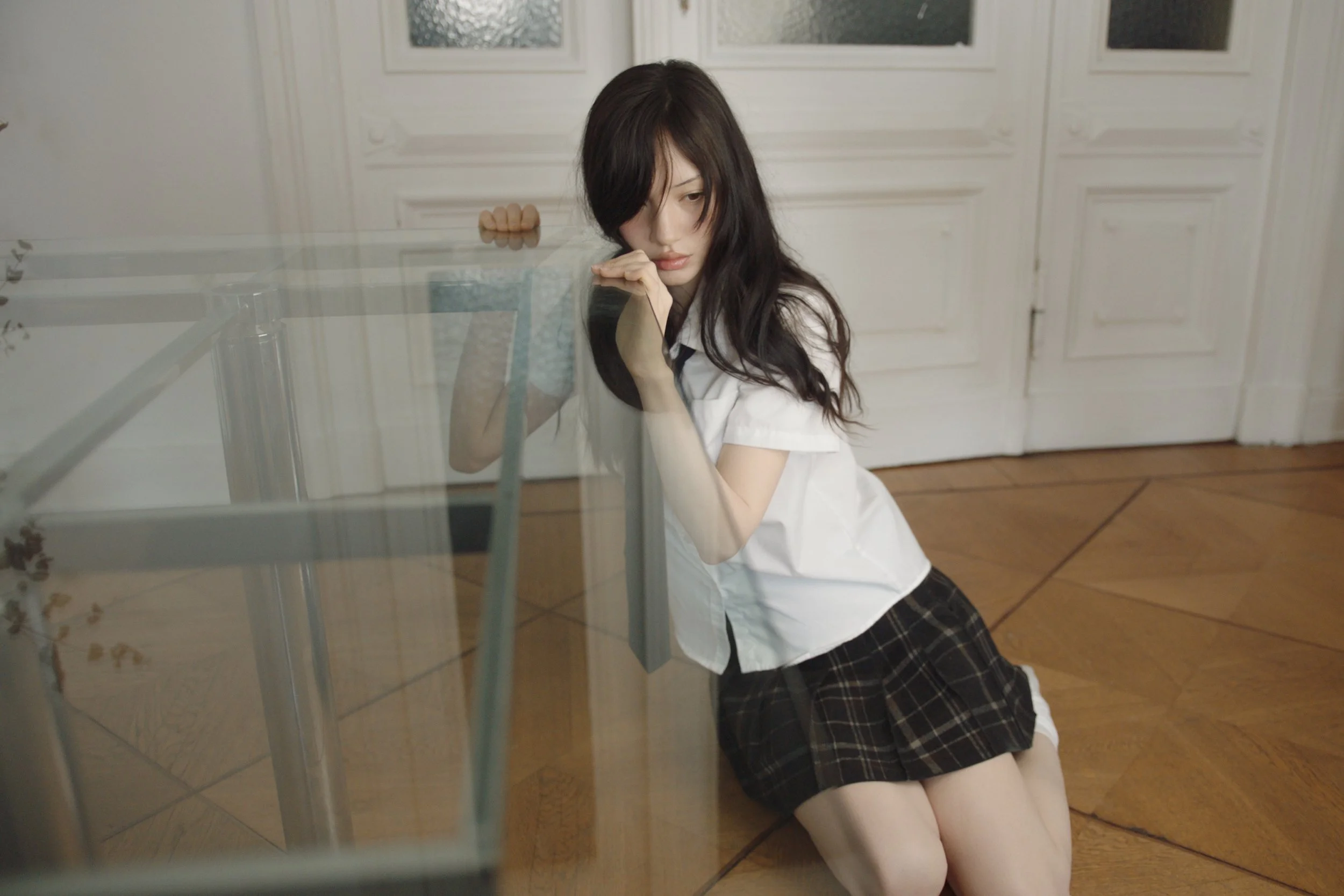
The New York performances as part of Anne Imhof's DOOM seem to have been an important experience for you. What did that project unlock creatively?
DOOM influenced me on a deep level. Anne is amazing; her mind and imagination are limitless. In her world, everything is possible and beautiful. She’s a deep romantic and incredible at world-building. I don’t know anyone else who could bring so many different forms of art together and still make it make sense. I wouldn’t say it influenced my own art or aesthetics, since I was booked as myself-I played my own music and styled the band and myself-but it completely changed my life on a personal level. Anne is a wizard at curating, finding, and bringing together talent from so many different fields. During the long hours we spent together in the dark halls of the Park Avenue Armory, the cast really bonded. Many romances and genuine friendships blossomed between rehearsals, karaoke nights, museum visits, and late-night diners. For the first time, I felt like I didn’t have to change myself to be loved, and I think many others felt the same way. I think most people start making art because they feel lonely and isolated; it’s a way to communicate with the world, something that keeps you from drowning. But somehow, during DOOM, we all found each other, and suddenly we weren’t alone anymore. To this day, a lot of us remain quite close, and we keep inspiring, working, and growing together.
You've spoken a lot about building your own world through music, photography, film, and visual art. Do songs usually arrive first, or do the visuals and ideas sometimes lead the way?
Music is Dionysus (Chaos), Visuals are Apollo (Order)-one is incomplete without the other. You can’t have a heart without the mind. And while I don’t feel I have much control over writing the music besides letting it bloom, visuals are my output for expressing it in a more conscious way. For visuals, I have to think, do pre-production, production, shoot, perform, and edit. I’m very controlling, so I do a lot myself. It still involves collaboration and communication with others, so it feels more like “work” or something I “worked” for. Writing music feels like “receiving” or “channeling”; it’s something given to me, something more spiritual. The actual work and thinking in music happen in the recording and production stages afterwards, which actually take the longest amount of time, patience, and dedication.
Growing up between Chinese and German cultures has been a recurring part of your story as an artist. Has your relationship with identity changed as your audience has grown?
Being alive is being perceived, and ethnicity or looking different is one thing you can’t really hide. My face is my face; I can’t take it off and just blend into a crowd. I’m kinda stuck in this body. Whether I wanted it or not, I always got some sort of attention, and not always in a good way. Before being wasian was a thing, being mixed wasn’t that cool, because if people can’t put you in a box, they can’t put a label on you, and humans don’t like the unknown and unexplored. But I guess 2025–2026 is the year of wasians; we’ve been discovered, approved, and labeled. Suddenly people like my looks, which I guess is nice. I appreciate it, but once it’s not a trend anymore, I’ll still be me, with the same face and all.
You've received support from artists like Doja Cat, Wisp, Duran Duran and Dominik Fike, while also earning praise from publications across music and fashion. Do you ever find yourself looking back at where this all started and feeling surprised by how far it's come?
I love people who are passionate and love what they do, whether it’s music, art, literature, fashion, gardening, ocean life, farming equipment, or breeding pigeons. I myself have a very specific field of interest, but I could listen for hours when people talk about what they love or are passionate about. Everyone I've met who is successful in what they do is so hardworking and usually very kind, and I find that very inspiring. I don’t know how I got so lucky to have always somehow crossed paths with all of these amazing and talented people, but I’m grateful.
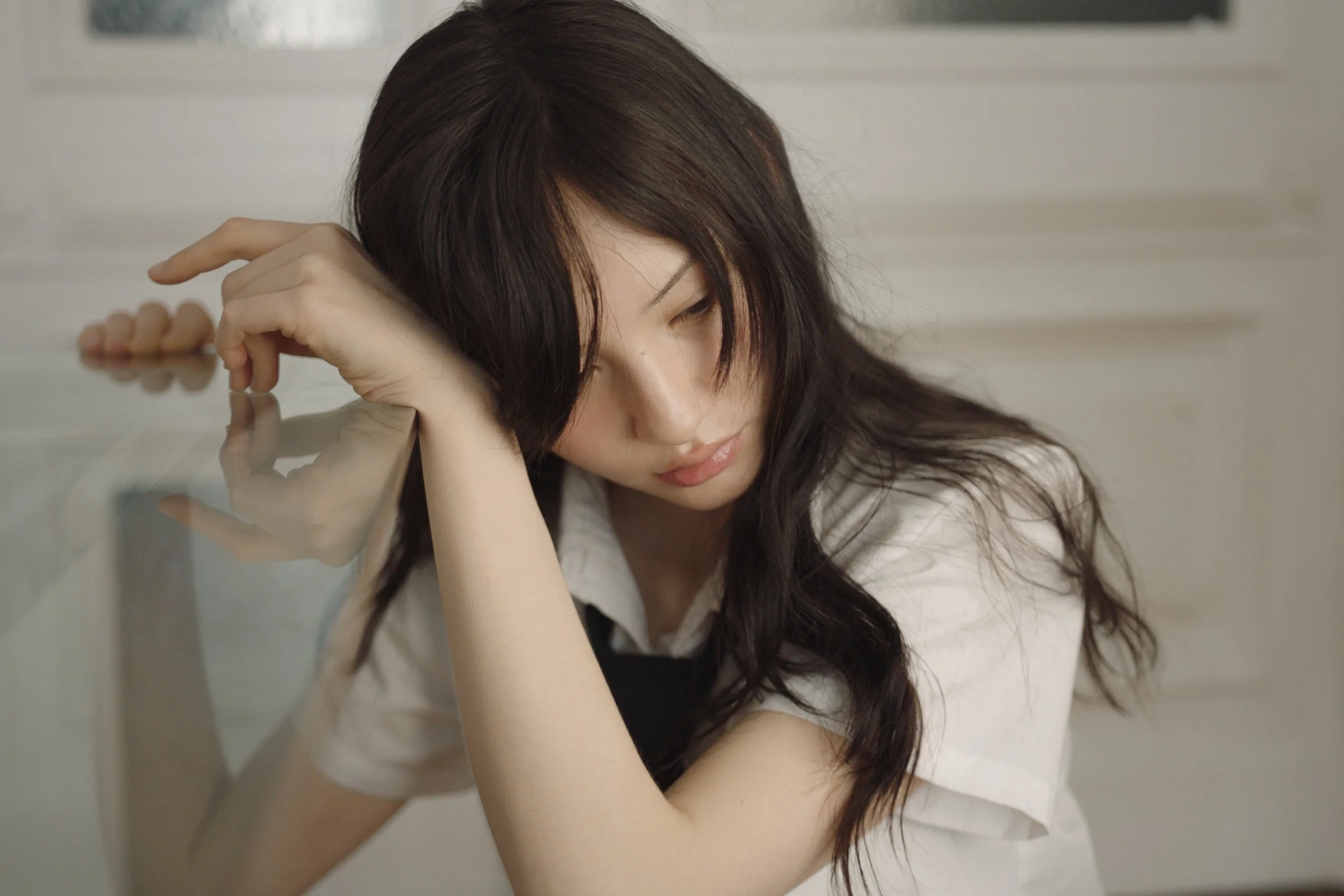
'Am I Human' connected with a huge number of people because of its honesty. Do you feel any pressure to revisit themes that listeners already associate with you?
I think if something is real and authentic, it connects and makes it relatable. If you feel it, other people probably feel it too. The beauty of music is that when you can’t articulate a feeling yet, a song can articulate it for you; it makes you feel understood and less lonely. But if you try to hold onto something that isn’t real and authentic to you anymore, then it’s kinda fake, and I don’t think it would resonate. People can feel it.
Fashion has become a significant part of your creative world, from Paris Fashion Week appearances to the visual identity surrounding your releases. How closely connected are fashion and music in your mind?
The more I do fashion and the more I learn and appreciate it, the less I incorporate it into my art and music. Fashion trend cycles are way shorter than the longevity of art, music, movies, and books. I’ve been wearing the same skirt and tie since 2020; it’s minimalistic and simple. People wore it 50 years ago and will still wear it 50 years from now. My wish is to create something everlasting that won’t expire as soon as a trend does.
Alternative pop feels like an increasingly crowded space, yet your work always feels distinctly yours. What do you think is the one thing that makes a LIA LIA song instantly recognisable?
Even though I never committed fully to one genre and sound, I’ve always written my own song structures, vocal melodies, and lyrics, and I keep the vocals quite raw in recordings. I rarely add vocal effects or Autotune. There are no compromises in my art, and I am quite stubborn-thankfully, my collaborators have always understood that. I guess that somehow ties it all together, but I’m not very conceptual with my music; it’s just something that naturally emerges.
'Boogiepop Blitzkrieg Blob' feels like the start of something bigger. As you enter this new era, what are you most excited for people to discover about the next version of LIA LIA?
I think during the writing and production of my debut album, I became a way better musician (***NOT ANNOUNCED YET***). I kinda took a break from social media and visual content and focused everything solely on making music. I had succeeded in creating viral reels before and built a small following on Instagram thanks to that, but it didn’t translate well into streaming. So, I was thinking maybe the music just wasn’t fully there yet. Thanks to my wonderful producer and mentor Jonathan Visger's (Absofacto) open workflow, I learned a lot during the process. I ended up editing and choosing most of my vocal takes, directing drum, guitar, and bass recording sessions, and I even recorded the guitars and contrabass myself. Everyone let me be in control, and I think it really expanded and defined my sonic identity. Since I come from a church choir background, I was always good with melodies and hooks, but I have to admit I didn’t have many opinions about drums. Now I do. On a personal level, my life took a complete 180. I had been in a relationship and was struggling with chronic sickness for 5 years; I had to mute myself a lot and always felt like I was "too much." I think I ended up pretty depressed. After DOOM, I broke free. The album captures that transition since it was written during my most important moments and turning points. It captures everything in the moment while things were still unfolding. Ultimately, the album is about love - love for others, for life, and also for myself.
What do you love right now?
Life, J, my friends, my band, living alone for the first time in my own flat, my team and collaborators, and having a croissant every day.
What do you hate right now?
War, plotting and people who purposely inflict pain on others.
Name an album you’re still listening to from when you were younger and why it’s still important to you?
Never for Ever by Kate Bush; she’s so whimsical and uncompromisingly herself. I mostly listen to older music, though. I love Slowdive, The Cure, Lou Reed, Crystal Castles, The Pixies, The Stone Roses, The Smiths, Radiohead, The Carpenters, The Cranberries, Air, Suicide, Violent Femmes, Nico, Nirvana, Broadcast, Lesley Gore, Chris Isaak, Julee Cruise, Mazzy Star, Le Tigre, Ichiko Aoba, Tina Nordström, etc. I don’t listen to much contemporary music, but I like Lana Del Rey, Addison Rae, Grimes in her Oblivion era, Yung Lean, Skrillex, Justin Bieber, Fakemink, Wisp, 2hollis, and Ear and the Femcels. I usually like the hits...
When someone hears your music for the first time, what do you hope sticks with them?
I hope they feel less lonely and more understood. I want people to be able to see beauty everywhere. I personally try to find beauty in the mundane and everyday life -the world is already painful enough.