
Start Listening To: Surprise Chef
The Melbourne/Naarm band discuss imaginary film scores, their album’s amphibian anti-hero and the joys of building a village together in Valheim.
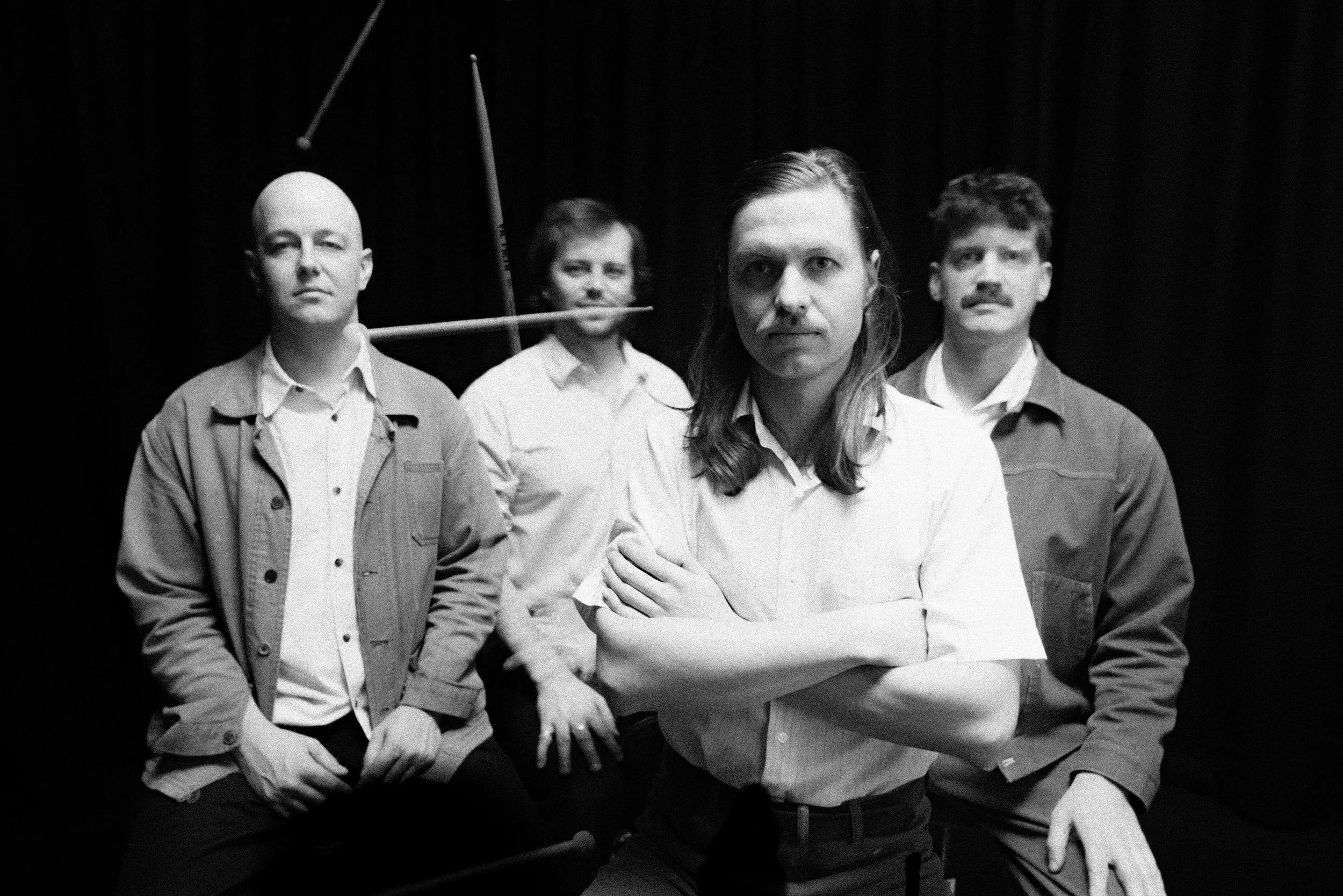
There’s a sneaky frog at the centre of Surprise Chef’s Frogs In A Pond, represented by a rhythmic theme that reappears across the record. Approaching the album as a soundtrack to a film that doesn’t exist, the band draw on their love of soul, funk and European film scores to give that character a world to inhabit. Their account of making it takes in Piero Piccioni, a spontaneous bridge that won over the rest of the band and the perils of recording late into the night. There’s also time for Ghostface Killah, childhood desserts and a suggestion for where to give the record its first listen.
For those unfamiliar with your music, can you tell us who you are, where you’re from and about the music you make?
We’re four good buddies from Melbourne/Naarm, Australia. We make instrumental ‘cinematic soul’ type stuff. Most of the music we make is influenced by ’60s/’70s soul and funk records, soundtracks, you know the deal.
You approached Frogs In A Pond as the soundtrack to a film that doesn’t exist. Did you have scenes or characters in mind, and did everyone imagine the same film?
The frog on the album cover was the main character we were thinking about when we were making the record. He’s represented by a rhythmic theme that pops up across the album. With that said, we were focusing on the moods and overall atmosphere of the compositions more than hypothetical visual aspects.
What’s the story behind the title Frogs In A Pond?
A ‘frog in a pond’ is a classic Australian dessert, so it’s a nod to a culinary delight of our childhoods, but principally the title is emblematic of the experience of occupying space with others.
You’ve drawn inspiration from Italian giallo cinema and European film scores. Is there a particular scene or soundtrack you’d put on to help someone understand what excited you about that music?
We were listening to heaps of Piero Piccioni at the time. Colpo Rovente and Camille 2000 in particular provided a great deal of inspiration. I’d recommend the title sequence of Colpo Rovente. It’s pretty classic stuff.
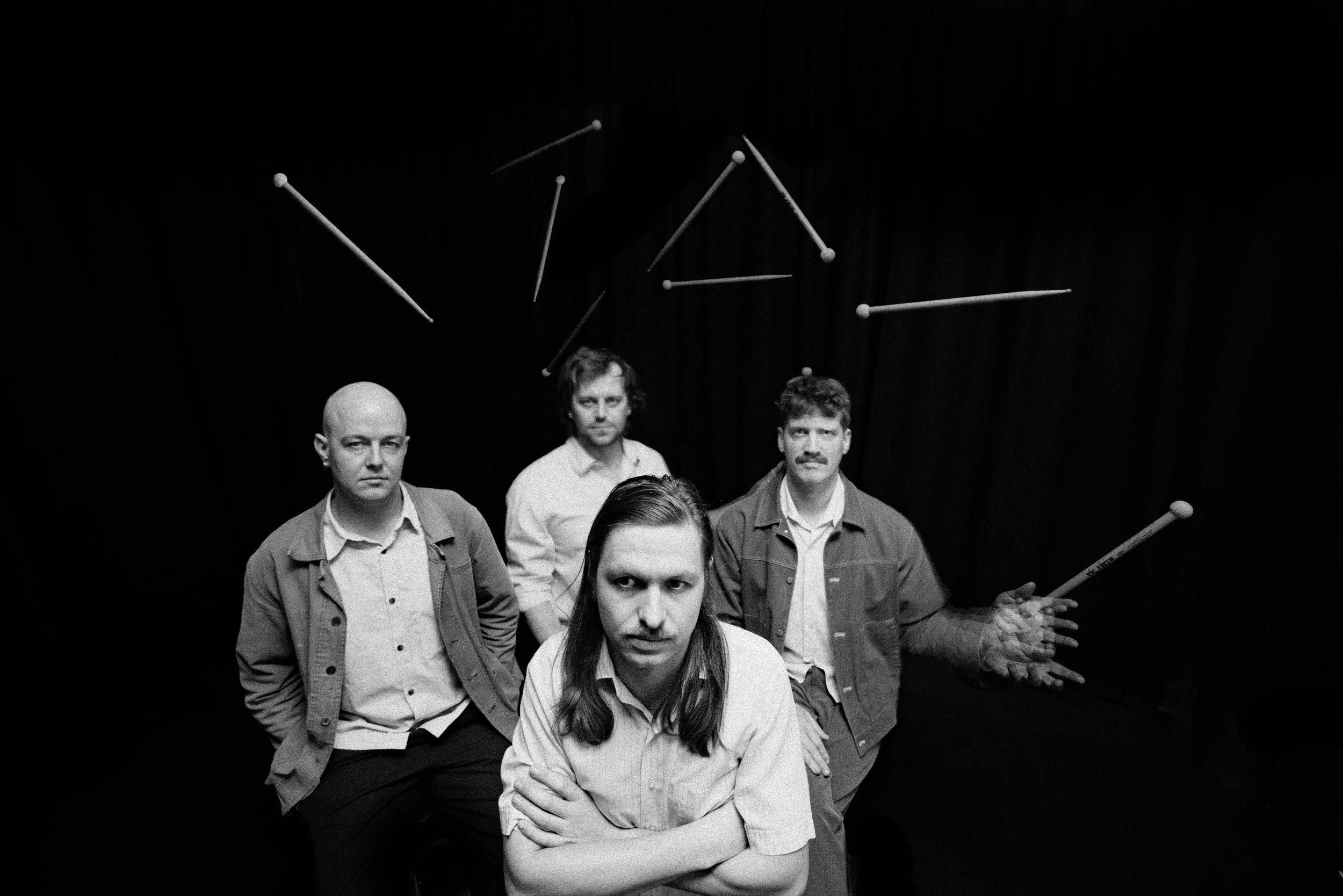
Last year, you created a live score for Wake in Fright. What did working with an actual film teach you that you brought into this record?
We actually wrote the Wake in Fright score right after we made Frogs In A Pond, but we’d already started watching the film and getting our heads into that zone. Making the Wake in Fright project was really challenging. We learnt that it’s one thing to make ‘cinematic’ music on its own, but it’s a whole different kettle of fish when you’re connecting the music to a visual. Specific creative decisions and elements in the music do so much to colour the narrative, so even if something sounds good or works musically, it could be inappropriate for the moment in the film. I suppose that helped us develop more of an intentionality around composition.
‘Inside Voice’ and ‘Outside Voice’ began as one composition. What made you split them, and how did that decision help you work out the rest of the album?
We presented the intro to ‘Outside Voice’ as ‘Inside Voice’, as it allowed ‘Inside Voice’ to function more like a title sequence or opening movement to a film score. ‘Inside Voice’ is reprised at the end of the record, with the addition of different pieces of material from across the album, as a kind of conclusion. Bookending the record in that way was helpful in giving us a beginning and an end, allowing us to plot out what happens between the two.
Melodies and rhythms return on different instruments throughout the record. Could you take us through one of those ideas and how it changes along the way?
The main theme of the record is a one-bar rhythm that represents the sneaky frog that’s on the cover. He’s the anti-hero of the narrative. Any time you hear that theme, that dude is afoot. In its base form, the theme is played on temple blocks. That’s really when the theme is most identifiable. In some tunes, the theme is less prominent in the composition, interpolated onto another instrument like guitar or bass. It’s intended to evoke that character across different scenes or moods as the record plays out.
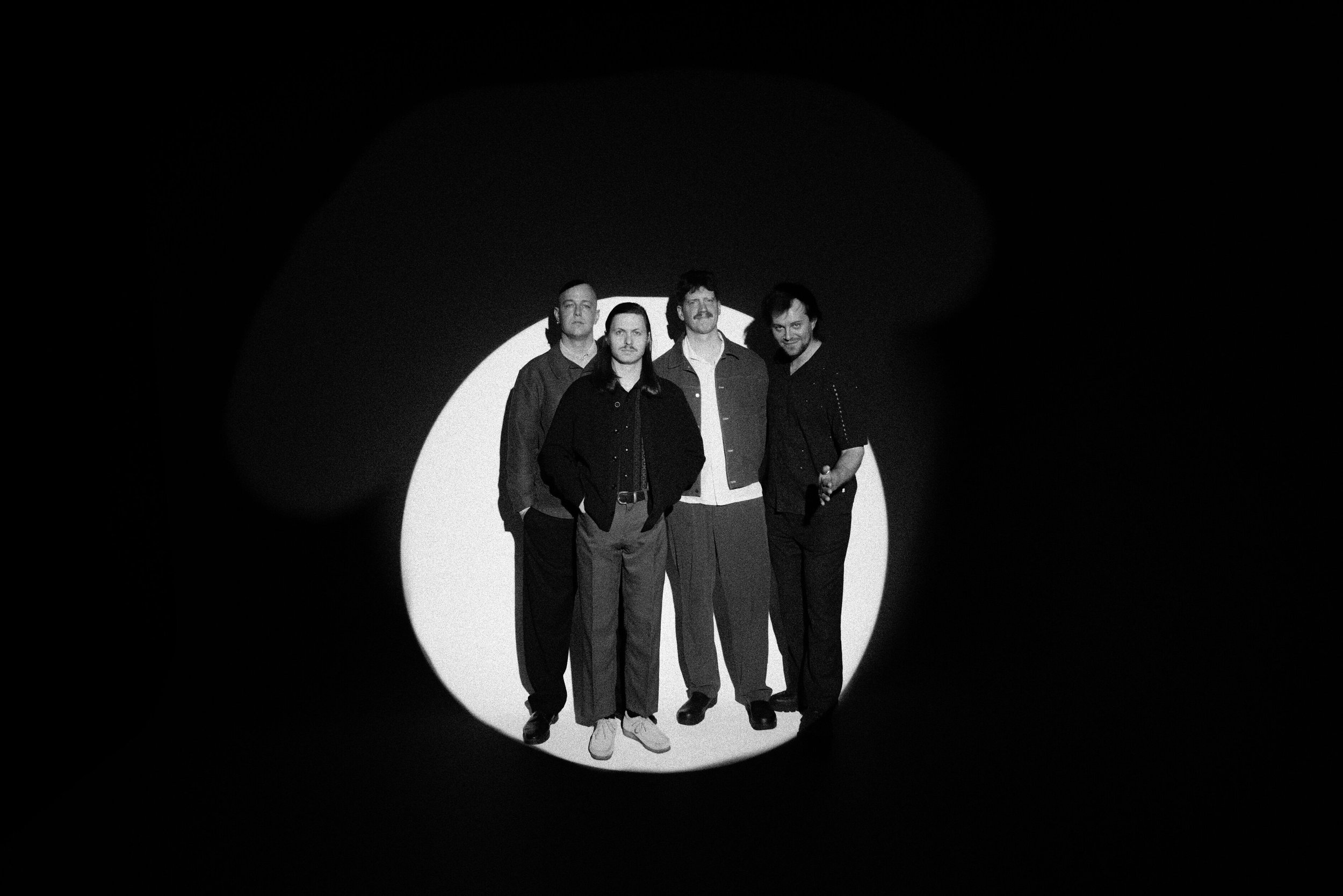
You recorded almost entirely live over nine days. Was there a moment when someone played something unexpected and changed where a track was heading?
Most of the music was fully composed and arranged when we started recording, because that’s the kind of approach we wanted to employ on this record, but there was a moment when we were recording ‘Omnipresence’ when Hudson (vibraphone/percussion) really strongly felt like the tune needed another section. We actually didn’t agree on that; we felt like the tune was finished. But Hudson insisted that it needed more development, and in his crazy creative way he kind of wrote a whole bridge on the spot. In retrospect, I think he was right. The bridge makes the tune better in my view.
Three of you also live at the College of Knowledge studio. What does an ordinary day there look like when you’re making an album, and how do you know when to stop working?
Usually we’re able to identify when we’ve reached such a point that continuing on will diminish the efforts of the next day. We used to record late, late into the night, reaching a state of exhausted delirium that we call ‘The Bone Zone’, which is a magnificent and holy state to be in. However, we understand now that the later you work, the harder it is to get up and work the next day, which is especially important when you’re in a long session like the one we did for Frogs. It’s a marathon, not a sprint.
Your music draws on records that hip-hop producers have sampled, and now your own recordings have been sampled too. What’s it like hearing someone find a completely different song inside yours?
It’s cool. Even when I don’t really love the tune that’s sampled our track, or I don’t love the way it’s been sampled, it’s still a trip to hear how someone repurposes our stuff. There’s a joint by 1999 Write The Future that samples our tune ‘Spiky Boi’. Ghostface Killah features on the track, and I grew up listening to 36 Chambers religiously in high school, so it was particularly wild to hear him on a Chef cut.
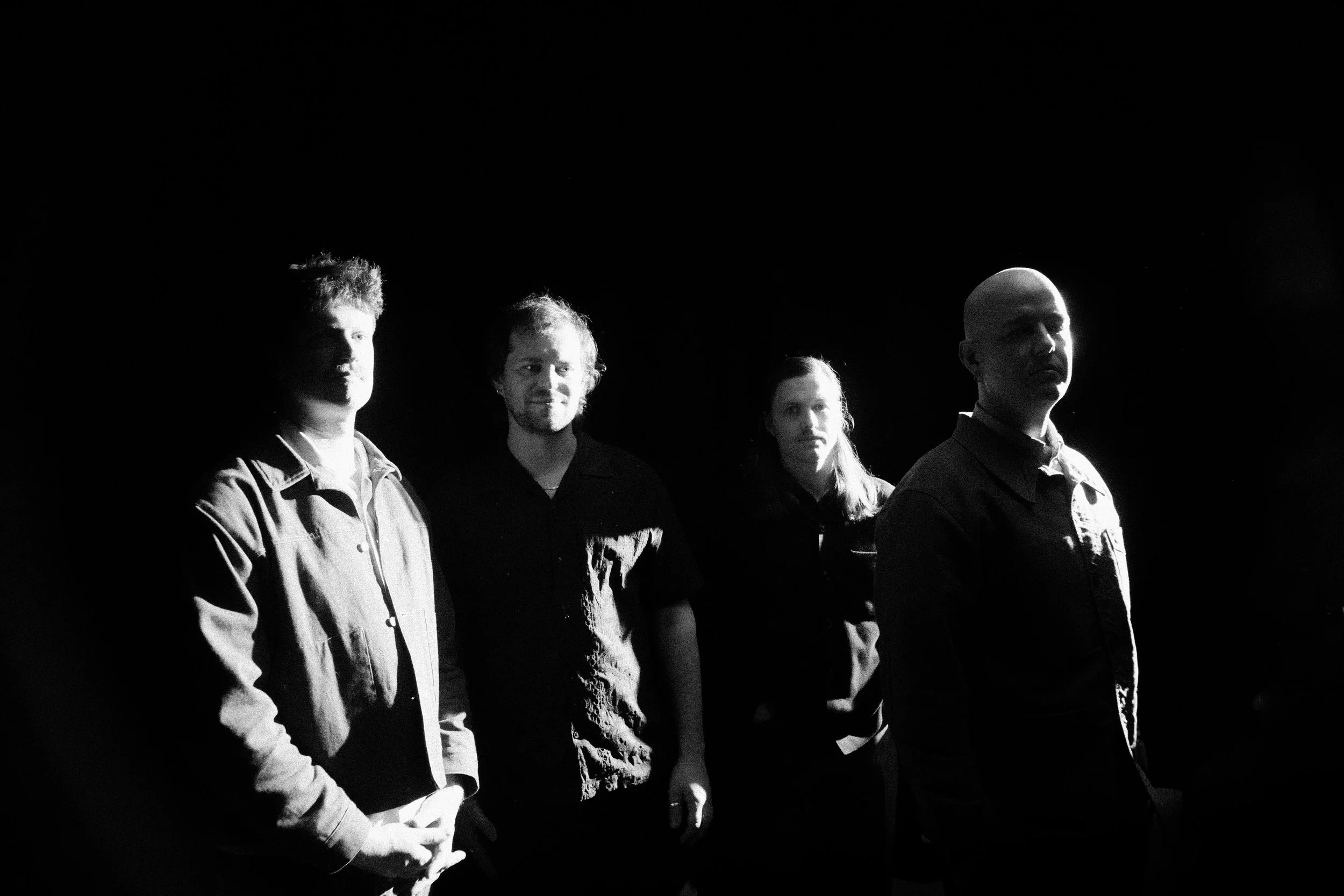
What do you love right now?
We’re super into this video game called Valheim right now. It’s a medieval/fantasy type joint and we’re all on there making a village together and farming and the like. There’s also a wicked Filipino food spot near our house that we’re deeply down with.
What do you hate right now?
I’m trying very hard to be less of a hater!!!!
Name an album you’re still listening to from when you were younger and tell us why it’s still important to you.
Menahan Street Band’s Make the Road by Walking. I first heard it around 2012 when I was studying music. I was only just beginning to discover soul and figure out what I really liked, and that record kind of rewired my brain. That album somehow only feels fresher and more moving than when I first heard it.
Where would you most like someone to be when they hear Frogs In A Pond for the first time?
In the bath, maybe with some kind of scented candle in the mix.