
Start Listening To: Takeshi's Cashew
Takeshi's Cashew discuss crafting the wonderfully weird world of Planet Odyssey 64, where krautrock, medieval folk and Nintendo nostalgia collide in unexpected harmony.
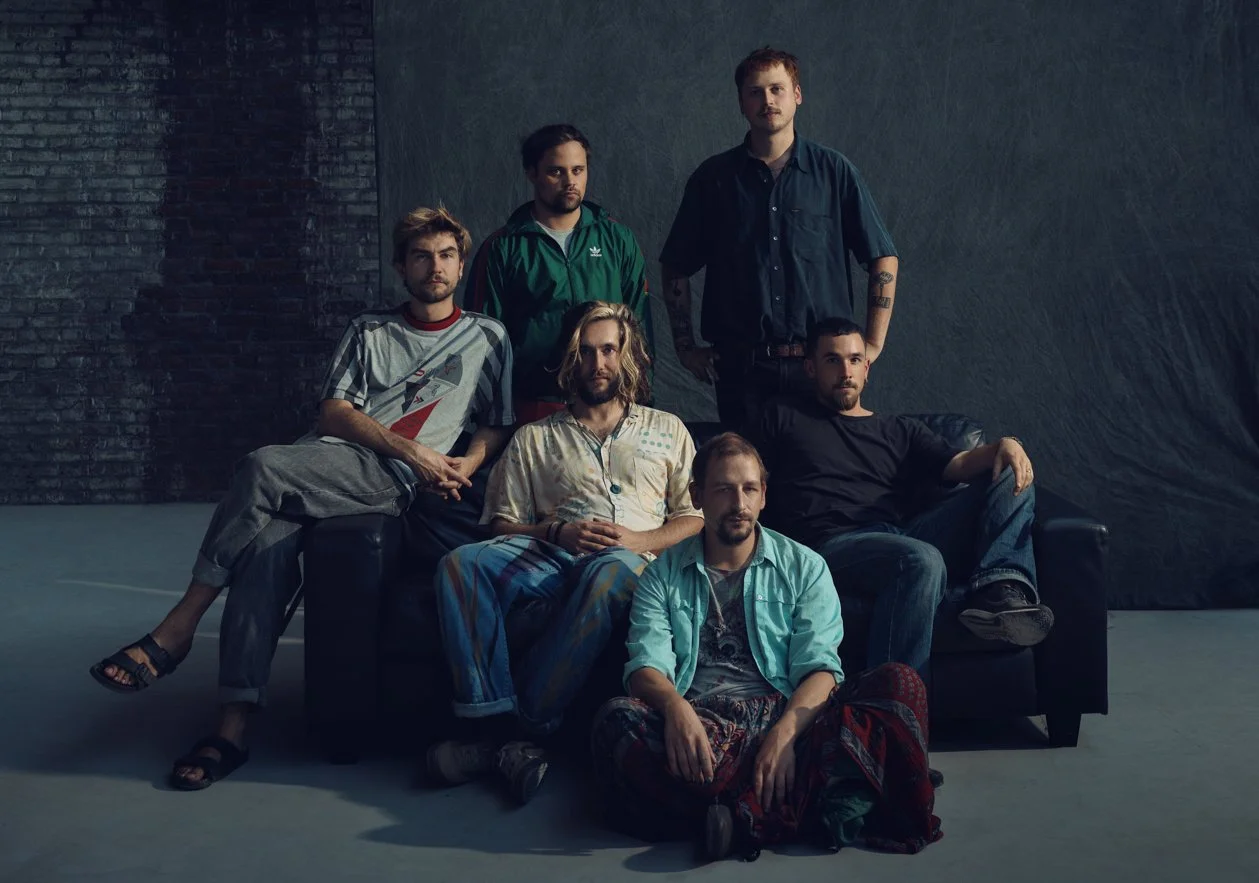
Trying to describe Takeshi's Cashew is almost as much fun as listening to them. The Vienna-based six-piece have built a reputation for folding krautrock, Afrobeat, psychedelia and global grooves into sprawling, transportive jams, but their latest album, Planet Odyssey 64, narrows its focus without sacrificing any of its imagination. Inspired by medieval folk music, vintage video game soundtracks and the immersive magic of fantasy worlds, it's a record that feels both nostalgic and entirely its own.
We caught up with the band to discuss embracing creative limitations, inventing genres with a wink, the influence of Nintendo 64 soundtracks and dungeon synth, and why they believe music can still offer a hopeful vision of the world, even when reality feels anything but.
For those unfamiliar with your music, can you tell us who you are, where you’re from and about the music you make?
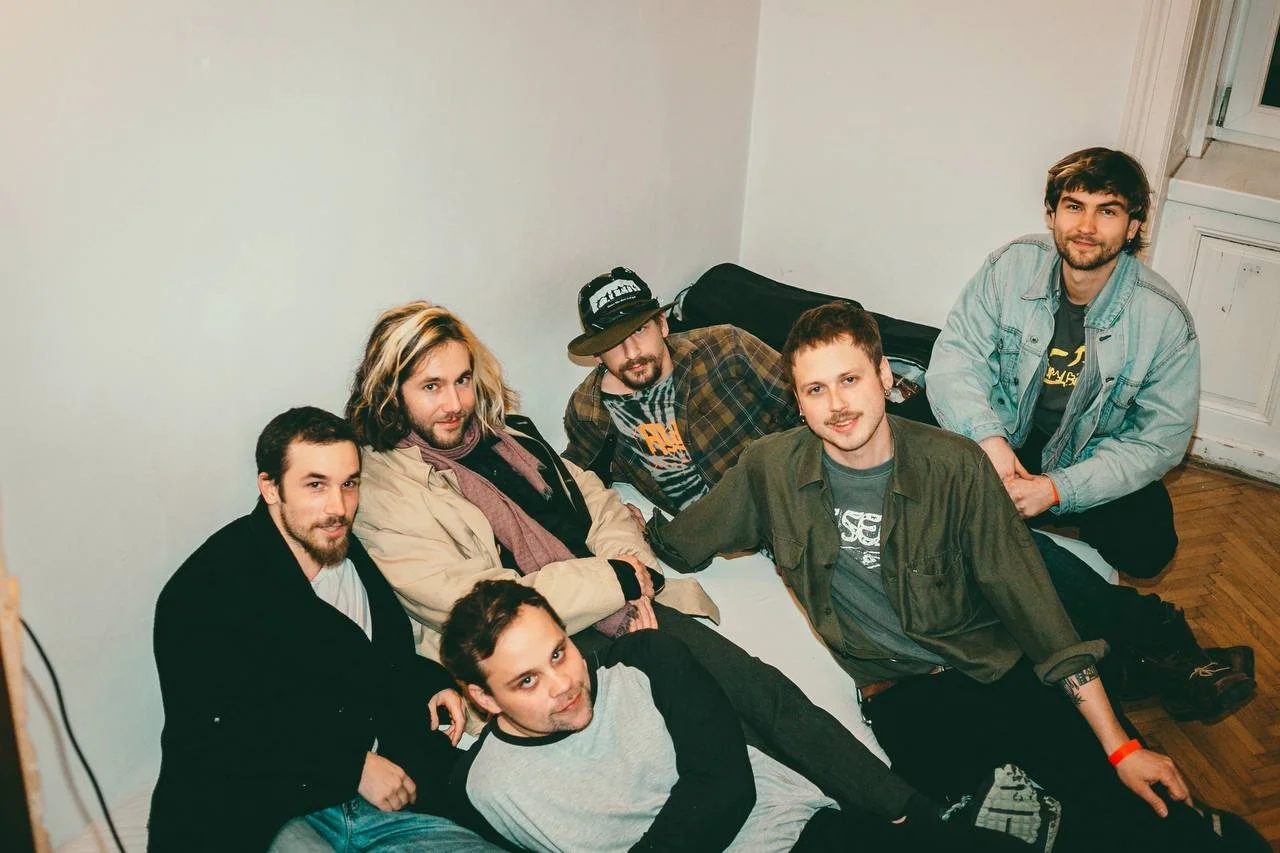
We are Takeshi’s Cashew. We are 6 people who met up in Vienna. Three of our guys are Vienna locals and the rest are from Bavaria, Germany. We are a heavy krautrock based global groove constellation, I guess.
'Planet Odyssey 64' is built around a surprisingly specific collision of ideas: medieval folk music, krautrock and Nintendo 64 soundtracks. Was there a single moment where those influences suddenly clicked together, or did you discover the connections gradually?
We always liked both worlds and in an evolving process we started to realize that old synthesizers and medieval sounding harmonics actually fit quite well together. The old 8 bit sounds for fantasy games always worked out quite well and dungeon synth as a genre is living this concept.
You describe the album as 'psych medieval Nintendo Core', which is probably the most unique genre description I've heard all year. Is that tongue-in-cheek, or does inventing new language help people approach the music with fewer preconceptions?
When we come up with such bold statements of what our genre is, we are actually mocking ourselves and the need for a definition for everything in our society. Our first self created genre label was psychedelic ‘cosmofunk’ because we didn't know what our actual genre was. And we didn't care. So we came up with something that sounded like magic is happening in your ears. If everybody wants a definition of what we do then at least we try to have a little fun with it ;).
Your previous records were intentionally expansive, whereas this one embraces limitation by using a much smaller palette of sounds. Did imposing restrictions actually make the creative process feel more freeing?
In some ways yes, in other ways no. For some of us it was more freeing than for others. I would say some elements became more free and others became more strict. For example with the guitars there was more freedom because the sound was clear. There was room for more courageousness. For other instruments it got more difficult not to leave the idea of the album concept. We gained and we lost freedom at the same time.
Video game music is often designed to loop endlessly without becoming tiring. Did studying those compositions change the way you think about repetition in your own songwriting?
I think we always had this love for repetitive but still exciting music. We all might listen to different genres but the thing we all love is when music creates a swirl where you can lose yourself in it. Videogame music is made to create a swirl in which you can get immersed for hours. The most formative gaming soundtracks of my childhood (for example the ‘Gothic’ soundtrack from Kai Rosenkranz) completely sucked me into the world the music helped to create. It totally formed me as a person and musician in retrospect.
The album feels nostalgic without becoming nostalgic about the '90s. Were you more interested in recreating the feeling of discovering those games as children than recreating their sound?
Thanks, that's a huge compliment for us. I think you're totally right. It was never about recreating the exact sound from the 90s. It was more about recreating the feeling of getting immersed into an unknown world in the 90s. That's what we are really nostalgic about. We love diving into magical worlds hahaha.
You've spoken about wanting to create a concept album. Did Planet Odyssey 64 begin with a narrative in mind, or did the world slowly reveal itself as the music came together?
I think it grew with the process. First there wasn't really a concept, only ideas. Then the ideas became a few songs, and with it, there was a picture of some sort of a journey in our minds. And when the journey got more clear than we just followed the path with the songwriting. It was an evolution, so to speak.
The record invites listeners to imagine their own landscapes rather than presenting one definitive story. Do you think instrumental music gives people more freedom to project themselves into a piece than songs with lyrics?
That's one of the advantages of instrumental music. You are a little more free to create your own story to the music you're listening to.
Across your first two records you pulled from Afrobeat, cumbia, krautrock and psychedelia, yet this album feels much more focused. As a band, how do you know when experimentation is enriching a song and when it's simply becoming excess?
Hahaha I guess we have a lot of experience now with experimenting too much. We had to learn the hard way that at some point the music doesn't profit, but suffers from it. And we tried to integrate what we learned into our songwriting. It's difficult because we also like the chaos and the madness and we don't want to sound too clean. If the music gets too clean then it loses its soul. But pure chaos without any concept isn't a good storyteller. We try to balance it out and I think we're getting better at it, but it's an everlasting process.
There's an optimism running through Planet Odyssey 64 that feels surprisingly refreshing. At a time when so much art reflects anxiety and uncertainty, was creating a joyful escape a conscious response to the world around you?
Absolutely!!! We know the world is a mess right now and we are not closing our eyes to that.
(How can you? it's everywhere!) But we don't need our music to reflect that. There are more than enough great bands that are doing that already. We want to be like an utopian echo of what the world can and could be (and is). It's not about ignoring the bad things. It's more about acknowledging the good things. A lot of people seem to forget these things and focus on the darker sides of the world. But in my experience that didn't make me productive to change something; it just made me angry. And an angry person is more likely to think that everything is hopeless. But the world is full of hope. And it would be a shame to miss it.
What do you love right now?
Humans and our Planet (I know it's cheesy but it's true what can I say?).
What do you hate right now?
If I have to say something, then maybe it's that many people aren't able to understand other perspectives besides their own.
Name an album you’re still listening to from when you were younger and why it’s still important to you?
The black Dahlia Murder Nocturnal. It's a melodic death metal album which is very dark and brutal yet full of opera and light. I loved it as a teenie and still love it now.
When someone hears your music for the first time, what do you hope sticks with them?
The moment he listened to it and the story in his head.