
A Beginner’s Guide to Boards of Canada
From the warped childhood memories of Music Has the Right to Children to the darker corners of Geogaddi, our beginner’s guide finds a way into Boards of Canada’s strange and familiar world.
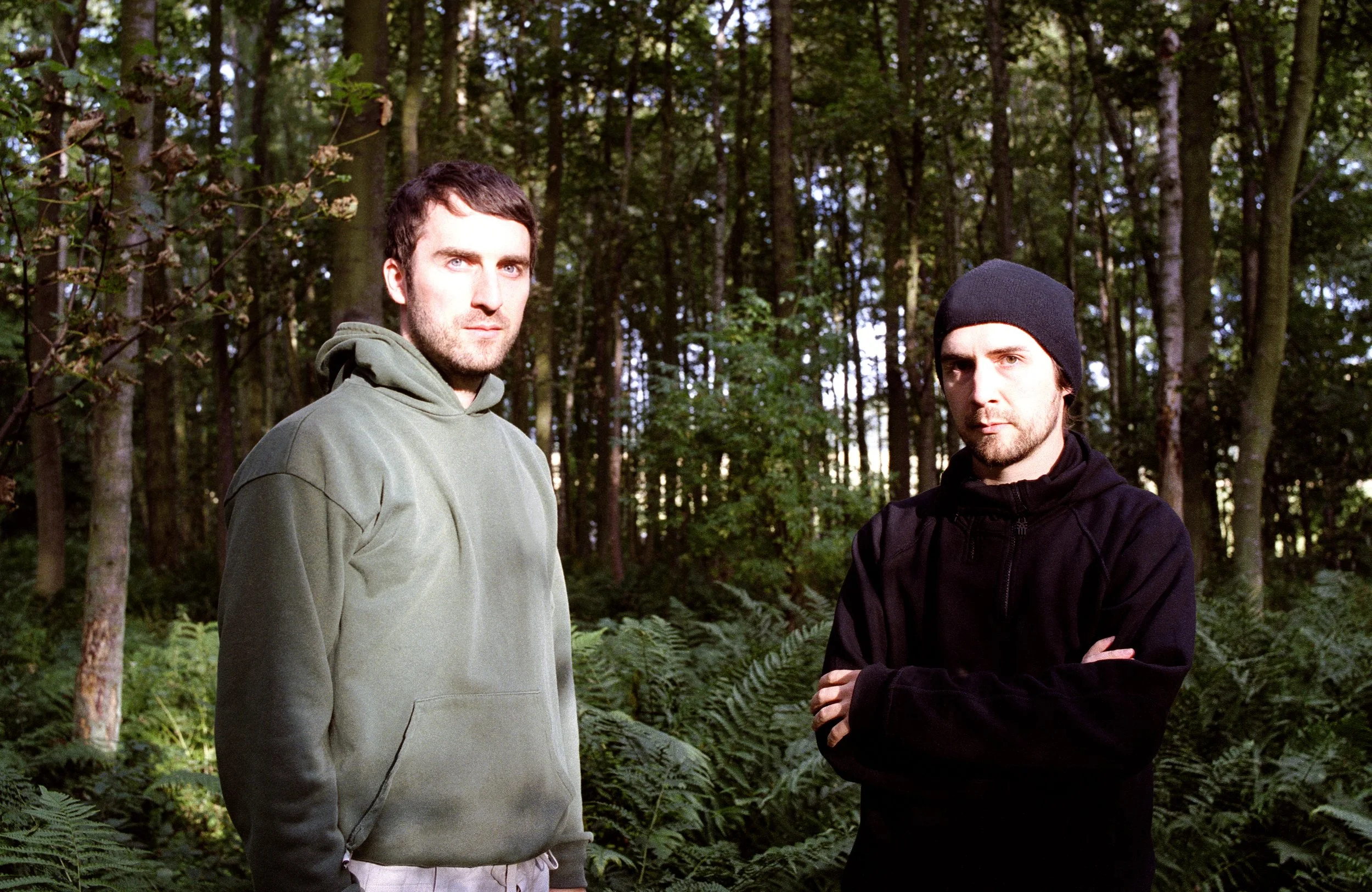
So maybe you saw the hype surrounding the return of the prodigal brothers when their first album in 13 years dropped back in May, but don’t know what the fuss was all about? Or you’ve heard people banging on about Music Has the Right to Children being a seminal album and the genesis of the whole ‘chill beats to study to’ scene. Or maybe you just want to explore the nostalgic sound of electronic music’s most mysterious duo, but don’t know where to start? Whatever the reason, our beginner’s guide to Boards of Canada has got you covered.
Where to start
It may not be the case with every artist that the first full-length album is the best place to start, but with Boards of Canada, I’d argue it is. The Sandison brothers honed their musicianship playing in local bands in the late 80s and early 90s, then began crafting what would become the Boards sound on a few ultra-rare cassettes given out to friends and family. Their music first made contact with the wider electronic music scene when a copy of their early release Twoism found its way to Skam Records, a small but influential electronic label, which then put out the Hi Scores EP in 1996. The instantly recognisable degraded synths, scratchy beats and eerie sense of childhood memories unlocked are already in full effect on both records. But it’s Music Has the Right to Children, released on Warp Records, that makes the best entry point and forms the essential blueprint of the duo’s artistic vision.
Everything from the pacing of the record, with longer pieces interspersed with short vignettes, to the intriguingly suggestive track titles, the snippets of children’s voices and the washed-out colours and erased faces of the album cover: all these elements are present and remain part of Boards’ DNA, to some degree, all the way up to their latest album.
Music Has the Right to Children has become such a touchstone of electronic music, beloved by an entire generation, that it’s generated its own centre of nostalgic gravity. Legions of imitators have orbited its odd mix of comfort and eeriness, and the compelling reminders of long-buried memories that can be mined from this rich seam of analogue synthesisers, grainy textures and queasy harmonics. So even if you’ve somehow never heard the duo’s most well-known tracks, they will likely still sound familiar due to their wide-ranging influence over the last three decades.
Take the resplendent bass chords and the delighted child’s exclamation of ‘hey!’ on ‘Roygbiv’, unquestionably the warmest and most optimistic expression of Boards’ fascination with the past. Or the nodding beat and bassy groove of ‘Aquarius’, where the steady counting of a female voice gradually becomes muddled and nonsensical, and what started as a reverie of childhood memories blurs into a dreamworld.
This carefree silliness is tempered by darker and more abrasive cuts. It’s something that struck me when I returned to the record after a long gap. In the meantime, it had become practically synonymous with the ‘lo-fi beats to chill to’ trope, but on rediscovering it, I realised a decent chunk is very much not chill. On ‘Telephasic Workshop’, syncopated vocal chops are shuffled into a heavy, stuttering beat that builds in layers over six minutes to create an increasingly intense polyrhythm. The heavy boom-bap beat and discordant synth on ‘Sixtyten’ create an atmosphere of deep unease and tension, the closest Boards would ever sound to labelmates Autechre.
These disparate moods are united by one of the most coherent and captivating aesthetics to come out of electronic music. Whether Music Has the Right to Children is Boards of Canada’s best album is something for fans to debate for evermore. But it makes for a logical entry point because it’s where their sound lands most fully formed. And if you can’t find something to enjoy here, then it’s likely Boards of Canada are not going to be for you.
Fan favourite
As stated above, the question of which is the ‘best’ Boards album will be pondered endlessly among fans. But if there were to be a poll, I’d bet Geogaddi would be near the top.
Released in 2002, around the time of ‘peak IDM’, it presents a darker, richer and more cohesive vision than Music Has the Right to Children. As with any act who truly pull off the ‘difficult second album’, the duo stayed true to their original sound while evolving and broadening it in a way that seemed to please fans and win them new ones. Geogaddi takes the original ingredients of distorted synths, languid crunchy beats and harmonically detailed melodies, but swaps out the 1970s playfulness for more sinister undertones.
The ethereal drones on ‘Music Is Math’ and the koan-like phrase ‘the past inside the present’ seem to open a portal that pulls you into another reality. The rest of the record is a constantly shifting kaleidoscope of whispered voices, fragmented melodies and hallucinatory atmospheres, a journey back out of this satanic shadow-world until you reach ‘Magic Window’, the final track of pure silence that brings the album’s full duration to 66 minutes and 6 seconds.
Where to next?
If you found the earthy tones of Geogaddi appealing but want something less oppressive and sinister, then try The Campfire Headphase. Arriving a mere three years later, it’s the black sheep of the Boards discography and considered by some to be their only misstep. The temerity to feature guitars front and centre was too much for some electronic music fans, who saw in ‘Dayvan Cowboy’, a weightless drop through clouds of guitar distortion, warm strings and brushed percussion, an apparent attempt to appeal to the commercialised ‘chill-out’ sound. While The Campfire Headphase may be the Boards of Canada album most likely to be seen sporting a leather bracelet and a soul patch, its electro-agrarian sound is still unmistakably Boards, and the strong feelings it provoked among die-hards now seem quaint in contrast to the torrents of hysteria that greeted Inferno.
If you preferred the electronic elements of Geogaddi and the more angular beats of Music Has the Right to Children, then try Tomorrow’s Harvest. Arriving eight years after its predecessor, influenced by 80s horror film soundtracks and informed by environmental collapse, it paints a bleakly compelling picture. Following their first long hiatus, the brothers’ sound had become more polished and refined, yet at the same time sparser and shorn of the childlike innocence that characterised their earlier work.
If you like everything you’ve heard and want something that brings all the pieces of the Boards of Canada puzzle together, then try Inferno. In case you’ve been living in an off-grid rural community and happened to miss it, Inferno dropped in May 2026. Thirteen years after their last album, and past a point where some fans had given up hope of their return, it was preceded by a typically cryptic marketing campaign, laden with suggestive imagery and clues that sent corners of the internet into a frenzy. Agreed by most (though not all) to be a triumphant return, Inferno is a record for our times, stuffed with apocalyptic and religious end-times references. Boards seem more assured and confident in their sound than ever: guitars and synths shimmer hallucinogenically, beats and bass are locked into a groove, and voices, from cult followers to religious leaders and news anchors, babble and clamour for your attention, each trying to sell you their version of the rapture.
Deep cuts
So you wanna go deeper? Take a trip to where it all began with Twoism, the duo’s early release on their own Music70 imprint in 1995. It’s lo-fi even by Boards standards, but the essence of their sound is here in embryonic form, in the very first bars of wobbly synth that open ‘Sixtyniner’. Most tracks consist of little more than heavily treated synth harmonies (most often the Casio CZ-101) and some muted trip-hoppy beats, but that’s more than enough to instantly unlock an internal slideshow of sepia-tinged childhood memories.
Or if you want to venture further off the beaten track, check out the beloved 2000 EP In a Beautiful Place Out in the Country. A seductive, robotically filtered voice on the title track invites you to join a religious community in a beautiful place out in the country, over gently padding beats and slivers of synth that shimmer and sparkle like sunlight on water. But it’s ‘Amo Bishop Roden’ that finds Boards at their most captivating, an urgent, plaintive synth melody underpinned by a monolithic bass pulse that emerges from the depths of the earth and never fails to send a shiver down my spine.