
Every Song on Frank Ocean’s ‘Blonde’, Ranked from Worst to Best
As the album marks its 10th anniversary, let’s revisit a genre-defining classic (and cry through it together).
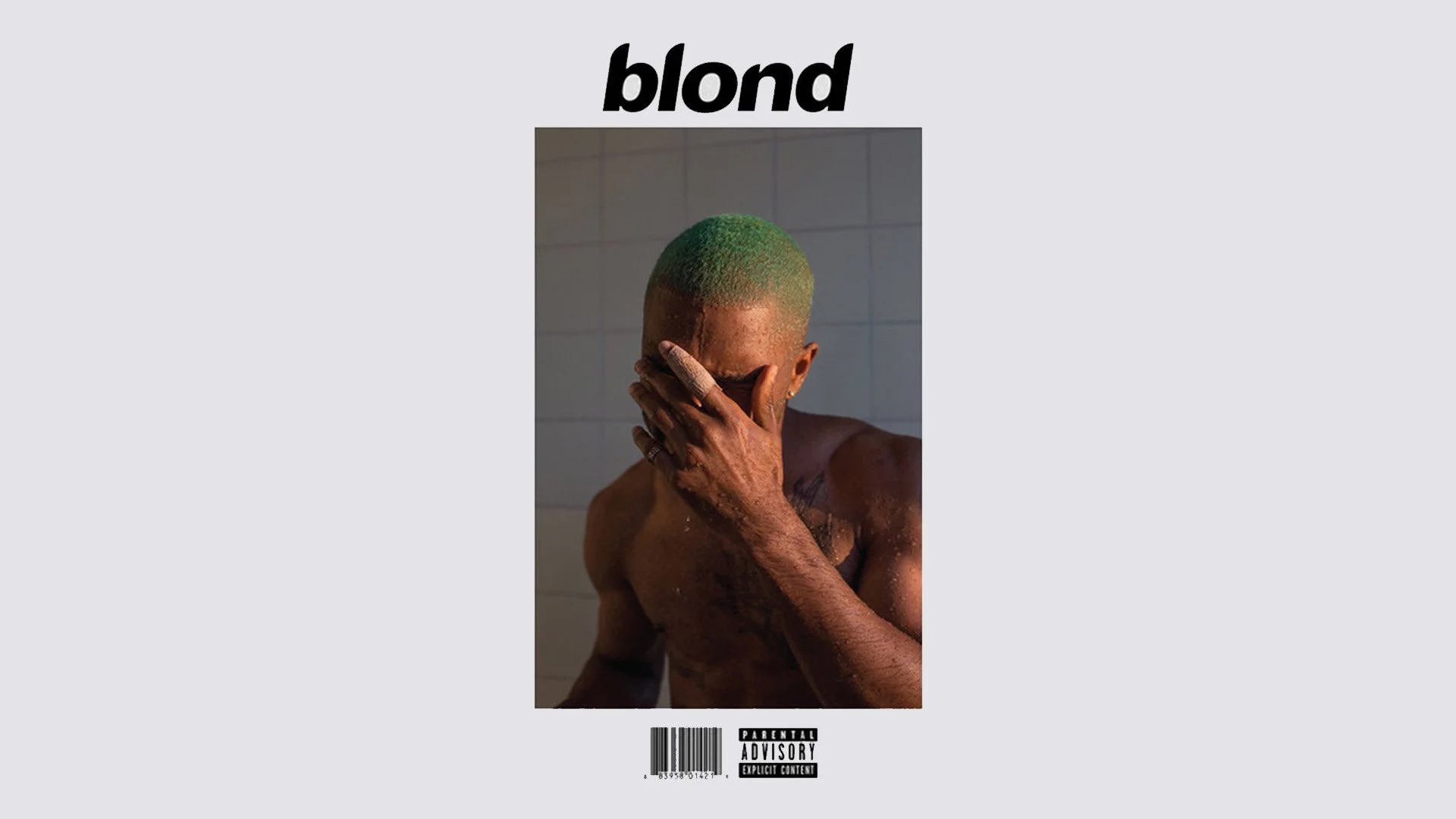
August 20th, 2016. I was 14 years old, my closest experience to heartbreak was my secondary school crush not letting me hold her (yes, her) hand, and I was blissfully unaware that Frank Ocean had just dropped one of the greatest albums of all time. 10 years later, my heart’s been broken by a few hims, and somewhere along the road, I discovered the mastery of Blonde. To call Blonde a heartbreak album would be too simple; it’s a sermon on human experience, our sins and successes, the ways we break and bond, and the storms we weather in between. Like the Miseducation of Lauryn Hill, or Beyoncé’s Lemonade, it’s the kind of project that comes once in a lifetime, and leaves its mark forever.
17) Facebook Story
‘Facebook Story’ is last on this list for the sole reason that I’m not sure how to feel about it. In the clip, Sebastian, a producer on Blonde, recalls how his relationship fell apart over accusations of cheating on Facebook. After repeated listens, I still don’t have a firm view on where I stand with it; perhaps I’m not meant to? I’ll let you decide for yourself.
16) Skyline To
Blonde’s anniversary coming at the end of summer feels apt. For me, I always seem to have lost love by the end of the season. Relationships fade; love once held tightly passes me by, leaving me to rebuild once again. Summer is the same. We think the sun will never set, hot nights last forever, countless days at the beach stretch out before us, until they don’t.
‘Skyline To’ is a lesson in transience. Nothing is ever ours; despite the illusions we cling to, we’re all passing guests in another's life. “This is joy, this is summer / Keep alive, stay alive;” look after what you have now, treasure it, love it, embrace it, but not too tight; what’s ours will soon be gone. Morose I know, but what if it didn’t have to be? Everyone goes, and everything leaves, but then everyone comes, and everything (at least for a while) stays. Ocean wants us to understand that our loss is our gain; don’t cling too tight; no one can grab what they need with a closed fist.
Look at who is important in your life right now; were they there last year, or the year before? The person at the top of your call log a year ago, would they pick up today? Would they pick up next year? As Ocean would have us know, “That’s a pretty fucking fast year that flew by.”
15) Close to You
‘Close to You’ is a cover of a cover, and yet, it’s cemented itself as a cornerstone of Blonde. Ocean’s version is a sample of Stevie Wonder’s cover of Burt Bacharach and Hal David’s ‘Close to You.’ Situated halfway through the album, Ocean is past the chaos of ‘Solo’ and the immediate pain of ‘Ivy’ but hasn’t yet reached the acceptance of ‘Godspeed’ and ‘White Ferrari.’
The breakup is no longer fresh, but not yet behind him; Ocean is in limerence, an emotional grey zone; what’s left is a plea for someone to pull him out: “I’ll be honest, I wasn’t devastated/ But you could’ve held my hand through this pain.” He doesn’t want his lover back; he’s not waiting, but he wouldn’t mind some company along the way. At just over a minute long, it’s one of the shortest songs on the album. Its brevity feels right; a longer song would say too much; it might overstate the moment that Ocean and we are in; sometimes life is fleeting, and sometimes there’s nothing more to it.
14) Pretty Sweet
‘Pretty Sweet’ is a reminder to feel. Too often, we approach music as something to be understood; we search for repeated rhythms, and interpretable lyrics. These intentions are pure, and often, just. Music has always been a vector for social and political messages, for cultural expression and understanding. But sometimes, we have to let go. ‘Pretty Sweet’ is intentional chaos, a song that’s made to be felt.
In its lack of structure, ‘Pretty Sweet’ is intimately reflective of Ocean’s mentality. At the start of the first verse, he’s in a frenzied state, “To the edge I’ll race / To the end I’ll make it / All the risk I’ll take it / Headbang with my four friends / We pour out a taste for the dead.” He’s in the eye of a storm, maybe the tornado that flew around his room in “Thinkin bout you.”
Ocean’s voice is nearly inaudible beneath a chorus of white noise; he feels like a secondary participant in his own song. But isn’t this the point? He’s lost agency in every sense; the life he’s known is gone, and the man he was is gone with it.
13) Nikes
‘Nikes’ is a classic Frank Ocean song. His debut album, Channel Orange, was a commentary on the pitfalls of consumerism and our collective impulse to prioritise temporary pleasures; as an intro to Blonde, ‘Nikes’ is no different. Ocean sets the tone from the outset: “These bitches want Nikes / They looking for a cheque / Tell’em it ain’t likely.”
Throughout, Ocean’s critiques move from public to political, and finally, personal. At the end of the first verse, Ocean pays tribute to Trayvon Martin, a 17-year-old Black boy who was fatally shot by George Zimmerman following a verbal altercation between the two. Ocean reflects on the universality of the African American experience: “R.I.P Trayvon, that nigga look just like me.” Despite Martin being both a minor and unarmed, Zimmerman was acquitted by a jury of both second-degree murder and manslaughter.
At the outro, we’re introduced to the heartbreak that sets the tone for the entire album. “I’m not him / But I’ll mean something to you / I’ll mean something to you / I’ll mean something to you.”
12) Solo
“It’s hell on earth and the city’s on fire/ inhale, in hell, there’s heaven,” sounds like a time to be alive. ‘Solo’ comes directly after ‘Be Yourself’, Rosie Weston’s poignant warning against life’s temptations. As it happens, Ocean does not heed this warning. ‘Solo’ in this context holds a double meaning; Ocean is “Solo” in the most literal sense: his lover has left, and he’s left alone. In the chorus, we learn that he feels “so low”, his only escape being the drugs that enable him to get high and find heaven amongst the hell of heartbreak.
In one of the best vocal performances, he paints a picture of how it feels to battle sadness, of how it feels to try and fail to hold back the flood of a failed relationship. At the intro, we find him scrambling to keep his brain occupied, and his thoughts off what has been “Hand me a towel / I’m dirty dancing by myself / Gone off tabs on that acid / Form me a circle, watch my jagger / Might lose my jacket and hit a solo, one time.” Ocean is alone, dancing, singing, giving it his all, giving everything to avoid thinking of what he’s lost; despite his best efforts, the memories return. In the next line, with the party officially over, he tells his lover, “Forgot to tell you, gotta tell you how much I vibe with you / and we don’t gotta be solo.” It’s too late, and he knows it.
11) Be Yourself
Whilst it doesn’t take the top spot, ‘Be Yourself’ could easily be the most important track on the album. Ocean’s absence from the track leaves space for the voice of Rosie Weston, the mother of one of Ocean’s childhood friends, Jonathan Ikpeazu. ‘Be Yourself’ has no rhythm, no melody; it’s a voice note Weston left for her son when he left home for college. The message is simple, so I’ll let it speak for itself:
Verse 1
“Many college students have gone to college and gotten hooked on drugs, marijuana, and alcohol /
Listen, stop trying to be someone else /
Be yourself and know that that’s good enough /
Don’t try to be someone else.”
Verse 2
“ Do not smoke marijuana, do not smoke alcohol /
Do not get in the car with someone who’s inebriated /
This is Mom, call me, bye.”
10) Pink + White
As of late, ‘Pink + White’ has had something of a rebirth; produced by Pharrell and featuring background vocals from Beyoncé, it’s one of the most accessible songs on the album, a quality that’s gifted it a TikTok rebirth.
The track is intentionally unintentional; it’s a call to stick out tough times, and stick around, don’t plan too much, don’t think too much, what comes will come, whether the sky is “Pink or White”, or the ground is “black and yellow”. Despite its accessibility, ‘Pink + White’ is an intricately layered track. Blending R&B, neo-soul, and psychedelia, it’s a portrait of breezy, summery production. Blonde is heavy at the best of times. ‘Pink + White’ arrives as a much-needed emotional interlude, a chance to wipe away our tears, look around, and realise that despite what’s been lost, life goes on.
At the track’s end, Ocean defiantly tells us “Bitch, I might like immortality/ This is life, life immortality”. In life, we’re only here for the blink of an eye; death is something we all share, and in that, we’re immortal.
9) Good Guy
Don’t be fooled, ‘Good Guy’ isn’t a happy song. It’s a lesson in the mundanity of moving on. The wasted nights and dead ends we have to run through on the road to recovery. The track sits immediately after ‘Self Control’; Ocean’s lover has moved on, and he’s shyly making an effort to do the same. Just over a minute long, it’s rushed, intentionally clipped, like a memory we’d rather forget. Lamenting a wasted date, he sarcastically toasts “Here’s to the gay bar you took me to / Here’s when I realized you talk so much more than I do.” The track doesn’t stab the way ‘White Ferrari’ or ‘Ivy’ might; its pain lies in the everyday. It’s a familiar feeling: after heartbreak, no one ever quite compares.
8) Solo (Reprise)
Solo (Reprise) is performed entirely by Ocean’s longtime collaborator, André 3000. In the track, 3000, and, by extension, Ocean express their isolation within the music industry. In this respect, ‘Solo (Reprise)’ differs from the earlier ‘Solo’, in which Ocean is left alone following the end of his relationship. It’s an expression of anger towards rappers who found success with ghostwriters and an industry that knowingly rewards their false artistry “I’m so naive, I was under the impression that everyone wrote they own verses / It’s comin back different and yea that shit hurts me / I’m hummin and whistlin to those not deserving / I’m stumbled and lived every word, was I working just way too hard ?”
7) Self Control
‘Self Control’ is Ocean at his lowest. His lover has moved on, and he’s left in the dark, searching for the self-control to do the same. The second verse, voiced by the distorted, squeaky voice of Austin Feinstein, opens with “ Keep a place for me, for me / I’ll sleep between y’all, it’s nothing / It’s nothing.” It’s a plea to be remembered. Ocean wants them to keep a place for him in their mind; even if he can’t be their first pick, he’s happy playing the runner-up. It’s a desperate, almost childish request, one that feels all too familiar. Ocean knows as much; the squeaky distortion of Feinstein’s voice is an invitation for us to laugh, to mock the knowing immaturity behind his plea to be remembered.
Despite his cries, Ocean is left alone, a realisation he reaches as the track closes out: “I, I, I know you gotta leave, leave / Take down some summertime / Give up, just tonight, night / I know you got someone comin’/ You're spitting game, know you got it”. The final line is the track’s saddest. In admitting that his partner “got it”, Ocean knows they have the charm, they have the confidence, Ocean? Not so much.
6) Nights
Halfway through the album, Nights is a track both in and about transit. We meet Ocean at the gateway to a new life. He’s moving forward, embracing the future ahead, but not without an eye on the past (this wouldn’t be Blonde without longing). Ocean isn’t just moving on from an individual relationship; he’s moving on from the reality he used to know. Midway through the first verse, he looks back with venom at the friends he used to know: “I don’t trust ‘em anyways / You can’t break the law with them.” It’s a familiar realisation, that the people you spend months, maybe years with, may not be your people at all.
For the first time on the album, ‘Nights’ brings us to the present. As we reach the second verse, Ocean has escaped his labyrinth of memories, only slipping into the past when it reaches out to him: “Did you call me from a seance / You were from my past life / Hope you’re doing well bruh.” It’s a real turning point in the journey through Blonde; Ocean is no longer captive to his memories; he’s present, in control, for the first time on the album; his ‘Nights’ alone are no longer so bad.
5) Godspeed
At some point in life, we all have to know when to wave the white flag, to let go, and let love find a new home. ‘Godspeed’ is Ocean’s attempt to eulogise this message. With vocals from gospel singer Kim Burrell, and an organ arrangement from James Blake, the track’s ecclesiastical styling gives weight and reverence to Ocean’s sermon. He opens the song with an admission: “I will always love you, how I do/ I let go of a prayer for you.”
Blonde is Ocean’s struggle with heartbreak. Until ‘Godspeed’, he’s fighting his memories, tussling with what could and should have been, unable to free himself from the ivy of the past. At ‘Godspeed’, the album’s penultimate song, he’s finally present, untethered to his trauma, able to live in the certainty that he’s here in this moment, and this moment is enough. In its capacity to recognise love without ownership, ‘Godspeed’ feels revolutionary, as the organ plays out, Ocean’s sermon continues: “There will be mountains you won’t move / Still I’ll always be there for you/ How I do/ I let go of my claim on you, it’s a free world.”
‘Godspeed’ ends not with Ocean, but with Burrell. Her outro echoes the sentiments expressed at the song’s opening. As the organ fades, Burrell reiterates how “ I’ll always love you until the time we die.” In Ocean’s absence from the song’s ending, he tells us all we need to know. He’s over having the last word, done with taking up space that isn’t his; he’s free from ‘Ivy’, leaving room for new flowers to bloom. Maybe those flowers could be some new music? Godspeed.
4) White Ferrari
‘White Ferrari’ is a self-love anthem for the shy. It doesn’t seek the upper hand, or closure; quietly, it tells us to look within. “Bad luck to talk, on these rides/ Mind on the road, your dilated eyes watch the clouds float.” We join Ocean’s joyride at an inflection point. He and his lover have worn out their love. They’ve fought, they’ve tried, and still arrived at the end of the road; only silence is left between them.
Despite the certainty of their ending, Ocean is sure-footed in the love that remains: “I care for you still, (and I will) forever/ That was my part of the deal / Honest.” This idea of distant love is a unifying thread throughout Blonde. In ‘Ivy’, he expresses a similar sentiment, telling his former lover that despite the distance between them “we both know the feeling deep down, is good.” As the track progresses, Ocean grows into his capacity to bring himself peace. In the final verse, he tells his lover “ I’m sure we’re taller in another dimension / You say we’re small and not worth the mention.” He’s realised that the friction between his ability to see humanity’s full potential, and his lover’s propensity to do the opposite, is a difference the two cannot overcome.
Ocean ends the track musing on how his lover “dreams of walls that hold us in prison/ It’s just a skull, least that’s what they call it/ and we’re free to roam.” It’s a cutting final message. He wants us to break free from the notion that romantic love will bring us peace. It’s a call to trust your gut, even if it means reaching the end of the road.
3) Ivy
“I thought that I was dreamin’ when you said you love me /
The start of Nothin’
I had no chance to prepare, I couldn’t see you comin’.”
Haunting, I know. This is the opening verse to ‘Ivy’, the second track on Blonde. There’s no running away from it; ‘Ivy’ is a really fucking sad song. It’s sadness measured in time. To begin, it’s tender, in awe at being deemed special enough to receive love. Ocean is quick to caution us against thinking this awe would last: “Ooh, I could hate you now/ It’s quite alright to hate me now/ When we both know that deep down/ The feeling still deep down is good.” The past, and the heartbreaks it holds, is a place of truths. It guards our mistakes and the hurt we’ve caused.
Ocean is honest enough to know this, to look in the mirror and see his true self. Despite this emotional growth, he isn’t entirely honest with us. For a love so “deep down,” his past lover is fixed at the forefront of his thinking. He confirms this theory at the end of the verse: “If I could see through walls I would see you faking / If you could see my thoughts / You would see our faces.” He can’t shake off the image of his past lover, like ‘Ivy’ overcoming an unkempt garden.
His longing grows with the track; at its culmination, we find Ocean holding onto the embers of a love long extinguished.
“All the things I didn’t mean to say/ I didn’t mean to do/
There were things you didn’t need to say/
Did you mean to, mean to/
I’ve been dreamin of you, dreamin of you
Dreamin.”
2) Futura Free
Ocean has gained near-mythical status in pop culture. His artistry, paired with a long hiatus from music, has left a void, into which fans have projected images of an artist without parallel. As a fan, I’m inclined to agree. But he would beg to differ; ‘Futura Free’ is a request for us to lower our view of the man behind the music.
Ocean opens the first verse reflecting on how “They paying me Momma/ I should be paying y'all honest to God/ I’m just a guy I’m not a God.” It’s a disarming reversal of the dynamic between artist and audience; Ocean’s work means so much to so many, and yet, it’s us he places on a pedestal. He understands that access to musical expression is a gift, but not one that’s been divinely ordained. He admits, “Sometimes I feel like a god, but I’m not a god / If I was I don’t know which heaven would have me, Momma.” It’s so easy to be marvelled by Ocean’s lyricism that we forget the flawed human behind the music. Paradoxically, it’s his willingness to share these flaws that adds to the universality of his work, rendering it all the more powerful.
As a closing track, it’s a rarity. ‘Futura Free’ isn't an end; there’s no longing goodbye; it simply holds up a mirror. Ocean bleeds like us, hurts like us, is flawed like us, and amidst it all, establishes himself as a musical great. The track opens by reminding us where he started: “I used to work on my feet for seven dollars an hour/ call my Mumma, like “Mumma/ I ain’t making minimum wage Mumma.”
1) Siegfried
‘Siegfried’ is a story of patchwork guilt. Interrogating notions of sexuality, heartbreak, and resistance, we find Ocean despairing at his inability to seize autonomy from the weight of external expectation.
At the song's opening, he tells us, “I can’t relate to my peers/ I’d rather live outside/ I’d rather chip my pride than lose my mind out here.” His desire to live “outside” is less a craving to physically live outside, and more an expression of his wish to exist “outside” normalcy. He goes on to tell us, “Maybe I should move, settle down / two kids and a swimming pool/ I’m not brave.”
The idea of Americana, its white picket fences and turquoise pools, is a trope Ocean returns to throughout the album. The word “settle” plays a dual role in the construction of his America; he’s contemplating settling down into routine and structure, and settling for a preordained “All American” way of life. He arrives at the conclusion that he’s “not brave.” Intentionally equivocal, Ocean could be telling us that he’s not brave enough to live a life of his choosing, or that he isn’t the hero his fans hold him up to be. In ‘Futura Free’, the album's closing track, Ocean echoes this sentiment, telling us “sometimes I feel like I’m a god/but I’m not a god.”
Musically, the track's eclecticism complements Ocean’s jolting reflections. His voice sits against an unearthly musical arrangement. A heavily reverbed guitar underpins ‘Siegfried's’ musical identity. Its reverberation creates acoustic distance; close enough to be audible, but not directly. As listeners, we’re situated outside Ocean’s white picket fence, looking up at his window, the guitar reverberating his thoughts up and over us. ‘Siegfried’s’ genius lies in its contradictions (I’m gonna get meta for a second, but there’s a point here). The track is a masterpiece. Innovative, progressive, and borderless, it showcases Ocean as an unrivalled student of music, undefined by genre. For an artist so capable of musical invention, why is he so lamenting of his own fall into convention? Ocean’s return is a day that his fans eagerly await.
If that day never comes, ‘Siegfried’ will stand as a testament to the craft of an artist whose intellect was only matched by his artistry. Come home, Frank; we miss you…