
Beyoncé - Lemonade Review
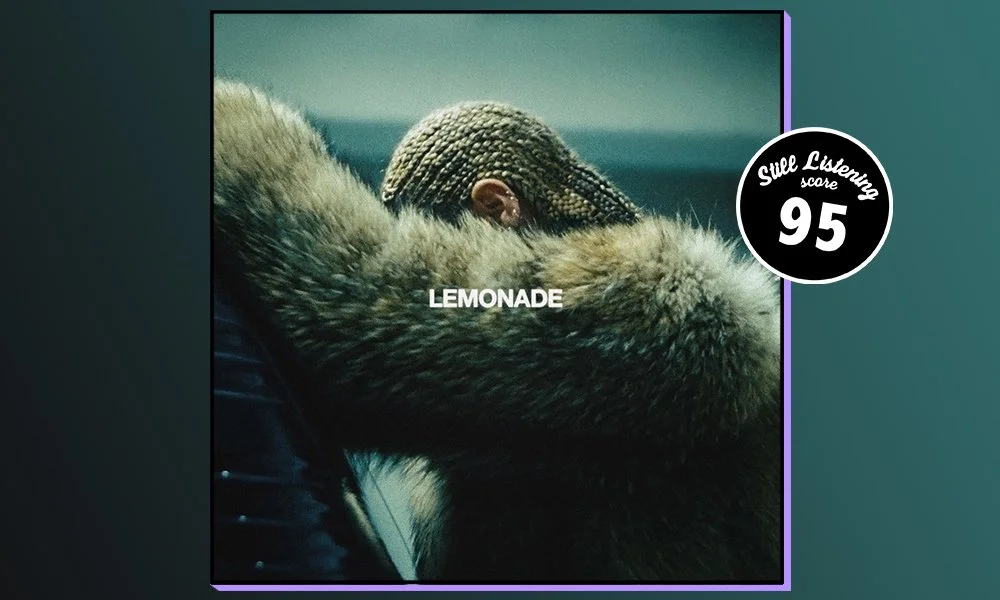
A decade on, Beyoncé’s Lemonade remains a defining cultural landmark, fusing personal vulnerability with political urgency to reshape the boundaries of modern pop.
Surprise-released like its predecessor on April 23, 2016, Beyoncé’s sixth studio album, Lemonade, landed in the middle of a cultural breaking point in the United States. The end of the Obama-era took with it the myth of a post-racial America. The country held its breath watching the bitter presidential campaigns of Hillary Clinton and Donald Trump rage on against a backdrop of nationwide Black Lives Matter protests in the wake of persistent police brutality and racially motivated violence. The groundbreaking visual album, which explores themes of intergenerational love, loss, betrayal, and healing through an African American female lens, became the most acclaimed studio album of Beyoncé’s career, raking up accolades from a Peabody to a Grammy and setting a new standard for the potential of popular music in the 21st century.
First teased with her controversial performance of the album’s first single, ‘Formation’ at the Super Bowl 50 Halftime Show, the Lemonade-era came out swinging. Paired with a visual tribute to the Black Panthers, the potently political track instantly sparked divisive debates from cultural commentators to politicians, officially marking the end of Beyoncé as a unanimously palatable pop star. Unmistakably political and celebratorily Black, the accompanying video for the single only fanned the flames of right-wing backlash as some police unions and conservative figures rallied to “Boycott Beyoncé,” claiming she was anti-cop, anti-American, and racist. From the outset of the era, Beyoncé had made it clear that in the midst of a shifting world, it was better to speak than to be silent, shedding the limitations and expectations garnered and required by white palatability to unapologetically align herself with the truth of the Black experience.
An audio-visual spectacle, Lemonade indulged audiences with a glimpse into her marital problems, seeing Beyoncé lay bare her thoughts, feelings, and insecurities with such vulnerability that the album not ending with a dissolution of her marriage provoked dialogue on a massive scale. Over the course of twelve tracks split into the emotional stages of reckoning with her husband’s infidelity, the record is a potent fusion of joyous melodic warmth and rich sensuous female fury that masterfully melds the varied aspects of past and present Black musical glories with lyrically vivid songwriting and an eclectic set of features to produce what many critics at the time deemed an instant classic.
Sonically, the album was a departure from the more R&B, funk-pop fusions of her wider discography. The record sees Beyoncé foray into a dazzling genre-bending series of infectious tunes that powerfully lament over the interconnectedness of generational betryal and systematic injustice, tied together by an unwavering commitment to honesty with a vulnerability notoriously rare for the star. Lemonade was an impressive showcase of Beyoncé’s expansive frame of reference and vast musical repertoire, pulling samples and interpolations from Andy Williams to Led Zeppelin and Outkast, weaving past and present influences to create something formidable and fresh - a strategy she’d later revisit for her ongoing three-act project with the sample-heavy Renaissance and Cowboy Carter.
The record was a cultural phenomenon from its inception, infiltrating and igniting trends across music, fashion, and pop culture. Mass hysteria ensued as people scrambled to find the real face behind “Becky with the good hair.” The term “slay,” while by no means Beyoncé’s own creation, reached mainstream status with its use in ‘Formation.’ From sheer mention alone, Red Lobster saw a 33% boost in sales months before the record even came out. Shades of yellow began to dominate the fashion of 2016 on the runway and in the streets. ‘Freedom’ and ‘Formation’ joined the repertoire of protest songs for various sociopolitical movements, notably Black Lives Matter and the Women’s March of 2017. Beyond the countless accolades and awards, the album and its accompanying imagery have and continue to be the subject of countless articles, thinkpieces, parodies, and homages from The Simpsons to bell hooks, proving Lemonade to be one of the most influential and monumental pop culture moments of the 2010s.
In the ten years that have passed since the release of Lemonade, Beyoncé has only continued to cement her status as an extradonary tour de force in all facets of culture whose influence goes well beyond the music industry and popular culture into politics and even economics - just look at the impact her latest tour had on the sales of cowboy hats, boots and Western wear. Each album post-Lemonade has attempted to one-up the last, seeing Beyoncé, an artist well over three decades into her career, producing some of her best and most ambitious work to date. Yet, it is undoubtedly Lemonade and its culturally captivating era that marked a poignant shift in the trajectory of her career and further established audiences' contemporary understanding of who Beyoncé is as an artist. Drawing on sounds enriched in the musical landscape of her Southern heritage, Lemonade is in-part an ode to Black legacy and the resilience of the human spirit, planting the sonic seeds for her current three-act reclamation project with songs like ‘Don’t Hurt Yourself’ and ‘Daddy Lessons’ - the latter of which became the impetus for the creation of Cowboy Carter following the racist vitriol spewed following Bey’s performance of the track at the 2016 Country Music Awards.
A decade later, the album continues to be an integral part of popular culture. From trending Tik-Tok audios to ‘Freedom’ being used by presidential candidate Kamala Harris’ campaign in 2024, Lemonade has proven to stand the test of time in influence, artistry and sheer reverence. The choices made on the record forever changed her legacy, solidifying Beyoncé’s status as one of the greats in music, solely in competition with herself. In an era where streams are currency and album tracklists have begun to resemble curated playlists more than a cohesive body of work, Beyoncé’s Lemonade is a gorgeously sensuous showcase of the type of rich, complex, and nuanced art that can be created when the confines of genre are not only neglected but reimagined.