
Start Listening To: Essence Martins
Ahead of the release of new single “Red Velvet,” Essence Martins reflects on the confidence that comes from trusting yourself, and why her most personal songs have become her most honest.
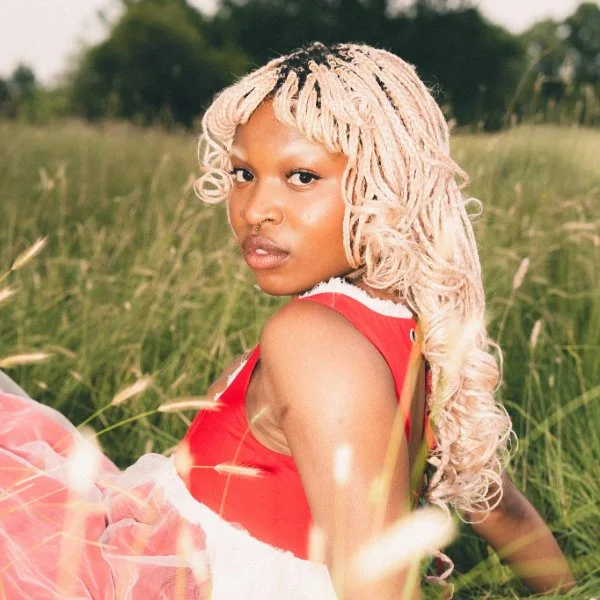
Photo credit: Gaby Du Plessis
Essence Martins has always written with remarkable emotional clarity, but new track Red Velvet finds the London singer-songwriter looking inwards more than ever before. Drawing on memories and the strange passage of time, the single marks the next step for a brilliantly distinctive artistic voice. We caught up with Martins to discuss finding a creative community, trusting her own instincts and why, for her, songwriting has become as much about understanding herself as it is telling a story.
It's been an exciting few years for you. Looking back to your debut single, what’s surprised you most about everything since?
Before all of this started, I didn't have much experience performing live, so it's been nice to grow into that side of myself. That's probably what's surprised me most: how much my confidence has grown over the last couple of years.
You've spoken before about finding your people in music. What does your creative community look like these days?
It starts with my band. I met a lot of them at university, and working out how to arrange songs for live performance has shaped so much of what ends up on record. I also get to experiment with two of my best friends, Hayden and Alison, who are incredible singers and artists in their own right.
Through them, I've met a whole community of songwriters and producers around North-West London. It feels like I've found my people!
You've been on the road supporting artists like Paris Paloma, Cat Burns and, most recently, Maisie Peters. Has touring changed the way you think about your own music?
It's made me realise that this music resonates all over Europe. Seeing how people respond after shows is so special. People tell me, "That song is exactly what I went through," or, "That lyric really hit me.” Touring has reminded me why I'm doing this in the first place.
You started out in elite tennis before music, where success is tangible: there's rankings and opponents. Music feels harder to quantify. Has that changed your relationship with ambition?
It's very different. Sport is inherently competitive: you have an opponent. But in music, your only opponent is yourself.
My ambition is still there. In tennis, you're choosing the right tournaments to play; in music, you're choosing the right gigs or career moves. But the competitiveness is only within yourself, as you try to become a better version of yourself.
You've spoken before about drawing inspiration from literature as well as music. Are there any books that helped shape your creative process?
I don't think I ever go into a book thinking, "This is going to inspire a song." It's more that I'll be writing and suddenly something I've read comes back to me. Like a feeling or concept that connects with what I'm trying to say.
There is one book I always carry with me, even to songwriting sessions, called Wise Words for Women. It's a collection of beautiful, encouraging poems. If I'm ever stuck, I'll open it to a random page and there'll be a title or phrase that sparks an idea.
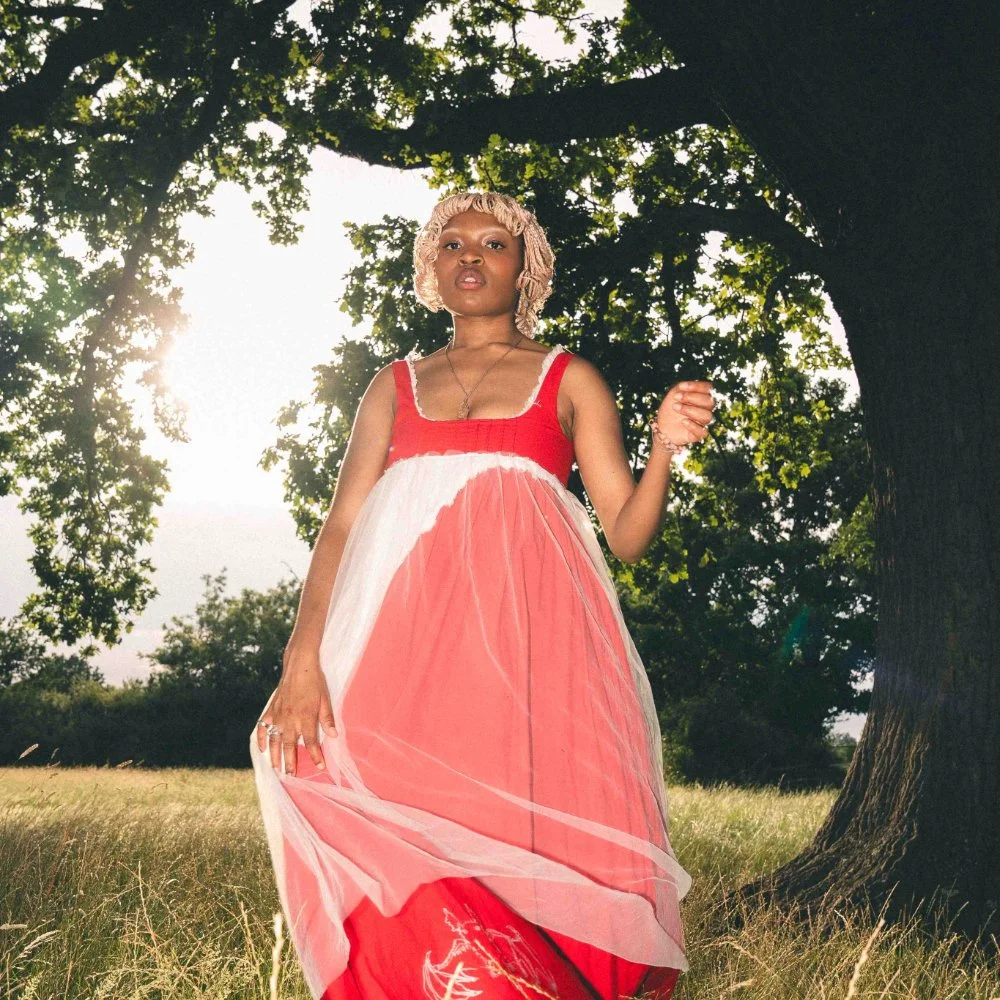
You've described your new music as feeling almost like diary entries. Do you think your songwriting has become more honest the longer you've been making music?
Definitely! When I first started writing songs, I was mostly making things up because I hadn't experienced things like love or heartbreak yet.
Now I can write about what's actually happening in my life. The music I'm working on now comes from within more than ever before. It's more vulnerable, but it's worth it.
Time feels like a recurring thread throughout your recent writing. Why do you think it's become such a preoccupation for you?
I think I miss childhood a lot. Even though I'm an adult now, I still feel like I don't really know what I'm doing. Sometimes it feels like time is just running away from me.I think a lot of people in their twenties have that feeling where one minute you're 19 and the next you're 29, wondering where the time went.
I'm also aware that time is limited, which makes me want to make the most of it.
You also write a lot about slowing down and being present. Is that something you've become better at, or are you still figuring it out yourself?
Oh, I'm definitely still figuring it out. I'm just trying to find the little things that bring me joy. My twin sister has become really good at it. She's travelling around China at the moment and vlogging every day, which has encouraged her to say yes to more opportunities and discover what she genuinely loves. I think that's something I need to do more myself.
You've spoken quite openly about struggling with imposter syndrome and questioning whether you deserve to take up space. Has that voice become quieter over time, or has there been a moment when you realised, "Actually, I do belong here"?
It goes up and down. When I first started making music, I never really questioned whether I deserved to take up space. I loved writing songs, I knew I wanted to get better, and I wanted to share that with people. But the more I got into the music industry, the more I realised how hard it is and how much incredible talent is out there. That's when I started thinking, "Oh my God, maybe I'm in over my head."
I think that's calming down now, as I've realised everybody has those thoughts. You look around and think, "There are so many people who are better than me," but we all deserve to take up space.
Social media can make it feel as though everyone is performing a version of themselves. Do you think audiences are craving authenticity because they're surrounded by so much performance online?
I think there’s a real need for authenticity. For me, doing anything that doesn't feel like me is uncomfortable. Whether it's jumping on trends or trying to present a version of myself that isn't genuine, it doesn't sit right.
At the same time, it's important to step outside your comfort zone and try new things. It's about finding that balance, pushing yourself creatively without losing who you are.
Do you feel like this new music has helped you understand yourself a little better?
Definitely, sometimes I'll write a song and think I've embellished something, but then I'll come back to it later and realise, "Wait... this actually is how I feel." I think that's often just a way of protecting myself.
"Please Don't Wake Me", for example, came from dating someone who was scared to fall for me, but I've also been on the other side of that too. The same was true of "Can We Slow Down." It was simply the thing I needed to say that day, and that's when I realised these songs really are honest pieces of myself.
Your music taste has always been pretty eclectic. Can you trace how your influences have evolved, from what you grew up hearing to what you're listening to now?
The music I grew up listening to was really different from the music that inspired me to start writing songs. Drake was definitely part of that first era, especially when I was playing sports.
But I also grew up in a really music-loving household. There was loads of R&B and '90s soul, artists like Beyoncé, Britney Spears and the Spice Girls. My dad introduced me to soul, whilst my mum loved folk and singer-songwriters. Even films like High School Musical, Sister Act and The Sound of Music shaped how I think about music.
Once I started writing myself, I became obsessed with Paramore and Norah Jones. More recently, I've been listening to Olivia Dean, Dora Jar, Aurora, Laura Marling, Clairo, Arlo Parks, Billie Marten and Lizzy McAlpine. A real mixed bag!
Have there ever been production choices that changed the meaning of a song from where it started?
Yes, actually with "Red Velvet." We increased the tempo by about four BPM, and the song itself stayed the same, but suddenly it had this urgency it didn't have before. It was a scary decision at first, but we realised the song needed to feel that way. Like, "This is happening. This is real."
If someone could step inside the world of "Red Velvet", what would they find?
It would be filled with memories, specifically good memories, a rose-tinted nostalgia. It would capture that version of a relationship you remember after it's ended, even if it isn't completely accurate. So there'd be rose-tinted glass everywhere.
There'd be cakes, strawberry ice cream and, somewhere in the middle, a glass box.