
Start Listening To: Lene 3000
From classical violin lessons to an album named after a Shrek-themed playlist, Norway’s Lene 3000 finds inspiration in nostalgia, daydreams and the music she grew up with.
placeholder
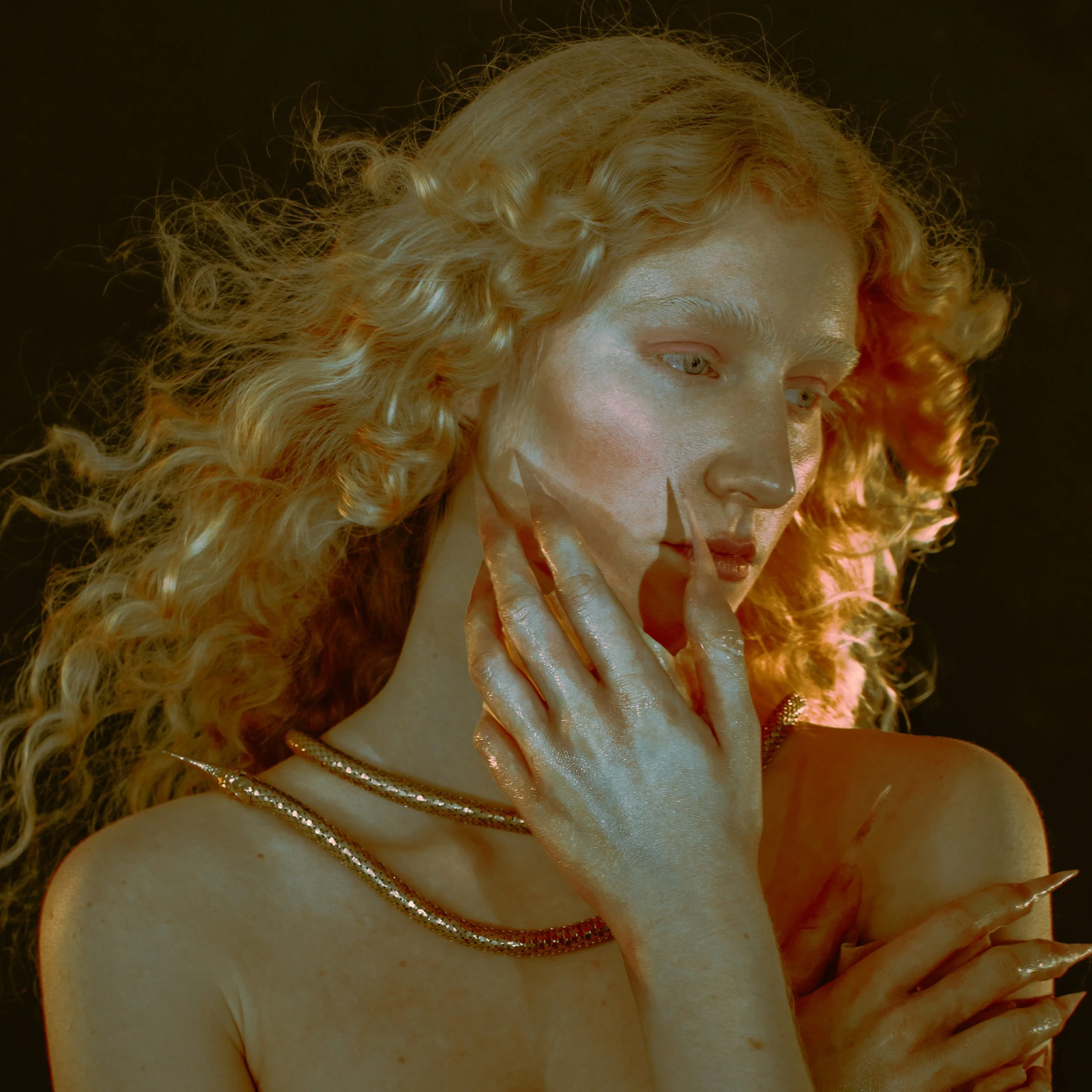
Lene 3000’s debut album, Greatest Swamp Hits, takes its name from a playlist she made at 15, still in rotation a decade later and still sporting Shrek on the cover. Growing up in Sandnes, Norway, she found music through films and radio, and friendship through online games, before her classical violin training led her towards electronic production. An attempt to record strings inspired by Björk became a way into writing her own songs, with influences stretching from Lady Gaga to The Cure. We caught up with her to talk out-of-tune pianos, ‘digital witchcraft’ and redefining EDM for a night spent dancing in your bedroom.
For those unfamiliar with your music, can you tell us who you are, where you’re from and about the music you make?
I’m an artist based in Norway. I’m from a town there called Sandnes, in the south-west of the country. I make indie electronic music.
Calling your debut album Greatest Swamp Hits is a pretty good way to introduce yourself. Where did that title come from?
The title came from a playlist I made when I was 15. I still listen to that same playlist today. I’m now 25. The playlist cover image is still Shrek.
You started playing violin at five and spent years in classical training. What first got you interested in making electronic music?
When I was studying at university, I wanted to record violins like you hear in Björk’s music. Then I started writing songs while producing.
When you’re producing now, where do you hear that classical background coming through, and what has surprised you about working on your own music?
I love strong and easy melodies in the instrumental parts and dynamics, which are very important in classical music. I hadn’t thought about that myself until somebody I worked with pointed it out.
What was it like growing up in your part of Norway, and where were you finding the music that excited you?
It was really nice growing up here because the nature gives a lot of peace. At the same time, I was struggling to find like-minded people. I spent a lot of time on the internet and finding friends on games like MovieStarPlanet and goSupermodel. I found most of the music I listen to today from watching movies and listening to this Norwegian radio programme on NRK called Transmission with Espen Omdahl.
You’re researching how nostalgia affects modern music production. What’s something you’ve discovered that has changed how you hear your own work?
One guy told me my music was a mixture of Eurodance and shoegaze, which I find amusing.
Are there particular sounds that take you straight back to a time in your life, and did any of them find their way onto this album?
Retro string pads remind me of The Cure and The Smiths, which take me back to when I met my boyfriend. You can hear some string pads in the song ‘dreams’. I used Korg M1 for that one. I now use four synths when I produce: my Korg Minilogue XD, and Spire, Serum and Korg M1, which I have as plug-ins.
What did you want to explore on Greatest Swamp Hits that you hadn’t had the chance to do with the individual singles?
Testing out certain eras in one song. You can hear it in the song ‘life to this body’. It’s a mixture of Lady Gaga, Kate Bush and punk basslines.
How did ‘Lights off’ begin, and what was on your mind when you wrote it?
‘Lights off’ started on my parents’ piano, which is a very old one and out of tune. I recorded some chords with my iPhone and AirDropped them to my Mac. I reversed the piano and was just improvising on my Korg Minilogue over it while finding a melody for the voice. I wrote the song in an afternoon on the 17th of May. It’s a big party day in Norway, Constitution Day. I think because it was the end of the biggest party day of our nation, my mind was kind of in that space, thinking about all the young people having fun but also knowing a lot of mistakes would be made that day.
Your project has been described as ‘digital witchcraft’. What does that phrase mean to you, and how did you and Charlotte Dion approach the video for ‘Lights off’?
Digital witchcraft is how I like to think about the concept of making music on a computer but being a human behind it, trying to morph my feelings into sound. Using too much delay and reverb on my voice.
When you’re writing lyrics, how much do you draw directly from your life, and how much do you enjoy making things up?
I think a lot of it is directly from my life, even though sometimes I’m not even aware of it. At the same time, I like to fantasise about a lot of things and I’m a big daydreamer, so I think it’s a mixture of escapism and realism.
Your music has taken on a life of its own on TikTok. What’s it been like seeing people attach their own stories and images to something you made?
I think it’s crazy. Did not expect that to happen.
What do you love right now?
Right now, I love Interpol (the band) and Fatih Akin’s movies.
What do you hate right now?
I hate plane rides and AI.
Name an album you’re still listening to from when you were younger. Why is it still important to you?
The Fame by Lady Gaga. As a kid, I was very afraid of being alone in the dark (still am), so I always used to listen to that album when I went to bed. Now I listen to it when I need energy. All the songs are so nostalgic and I know all the lyrics by heart.
The album closes with ‘Ethereal dance music!’. What made that the right ending, and where do you imagine people listening to the record?
I felt it was the right ending because ethereal dance music stands for EDM, a genre I feel is often associated with male artists and DJs. It would be fun to redefine it as something feminine. I imagine people listening to the record going to a party and going home after a party. Or just enjoying their own company, dancing alone in the bedroom.