
Start Listening To: Odette
The Sydney artist talks about making her new album with Kiah Gossner, the freedom of working independently and why humour belongs in even her darkest songs.
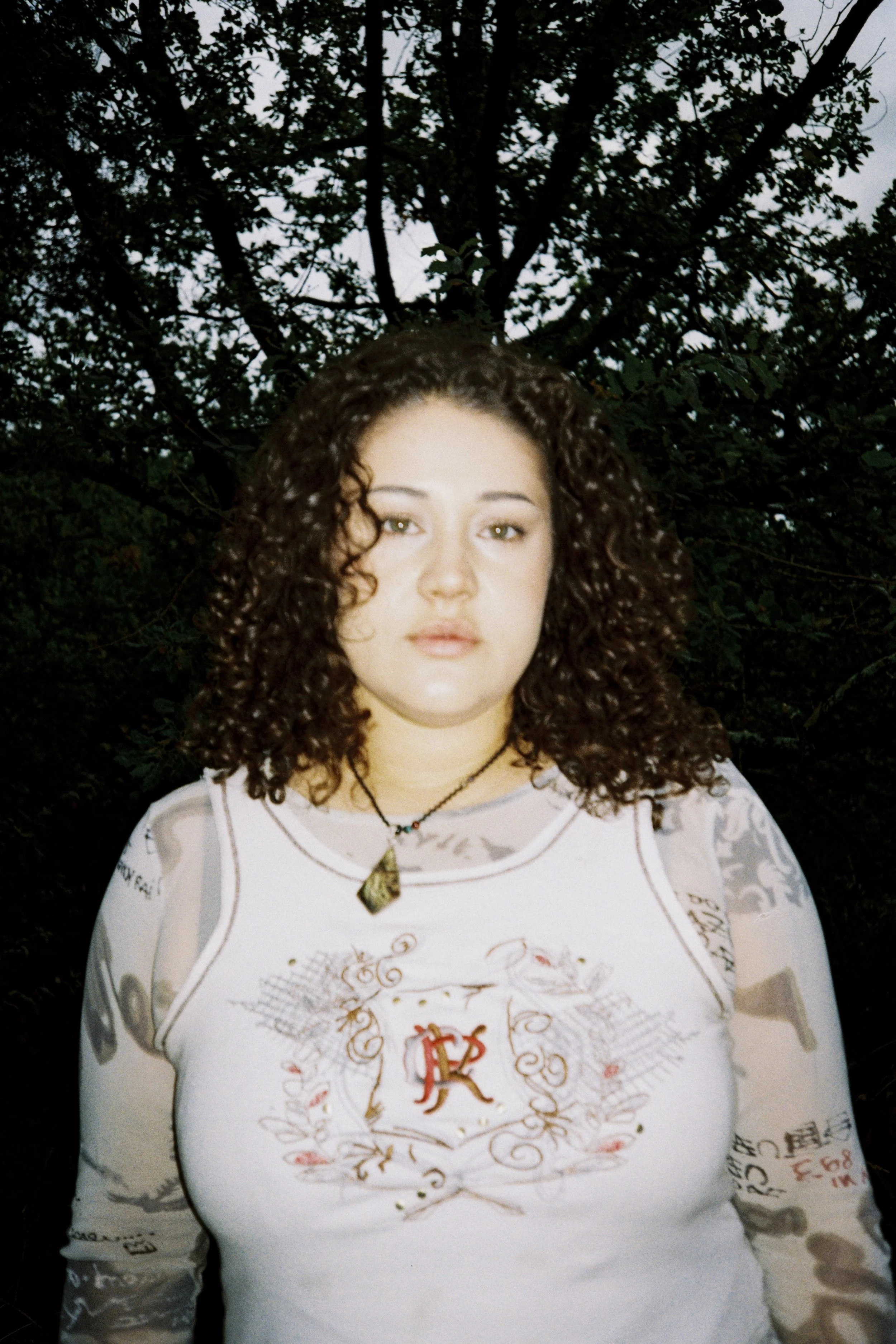
Made over several years with her friend and collaborator Kiah Gossner, Odette’s Blink follows a period of profound change in her life. The album moves between alternative pop, folk and spoken word, with the piano still at the heart of what she does. Here, she tells us about the creative shorthand she shares with Kiah, what four months in The Great Gatsby did for her stage presence, and the things she loves and hates right now.
For those unfamiliar with your music, can you tell us who you are, where you’re from and about the music you make?
My name is Georgia (Odette) Sallybanks, but I go by Odette. I live on Gadigal land (Sydney, Australia). I make alternative pop/folk music. It’s kind of a collage genre and hard to quantify, but I love it so much and I love the freedom of being able to use whatever textures feel right without having to worry too much about fitting an exact mould. My true love is the piano and I love plucky guitar as well!
We’ve been listening to Blink and really love it. Can you tell us how the album came together?
Thanks so much! It came together over the course of a few years, maybe four. My good friend Kiah and I worked on it for a long time. I wasn’t doing well when we started and now I am the best I’ve ever been (despite living in this complicated and terrifying and beautiful place). The album details a metamorphosis from experiencing severe mental illness to being relatively normal but still changed forever. Kiah plays the double bass and is a sonic wizard and genius, so working with him on this album has been such an incredible experience.
You worked on these songs with Kiah Gossner over several years. What made him someone you felt comfortable making such a personal record with?
He’s Kiah! He’s gentle. I am a bit rough around the edges. We bonded because something in our brains hums when we’re together and creating. He picks up on what I’m thinking sometimes without me having to say anything. I am learning that I am not always right (but Kiah, if you are reading this, yes I am). I won’t go on too much about it, but Kiah has changed my life forever.
This is your first album as an independent artist. What did that freedom change in practice, day to day in the studio?
It has been an indulgence for sure. I am completely uninhibited in the studio now. It has been a breath of cold air on a sweaty head. Absolute euphoria. Of course, there is the other side of things, worrying about whether or not it’s even good. I think you just have to be as honest as possible and hopefully people can resonate with what I am trying to do here!
You’ve called Blink a patchwork of ‘disasters and epiphanies’. Did you know you were making an album as you wrote these songs, or did you only see what connected them later?
I knew it would be an album. These are really good questions, by the way, wow! My albums are already in existence in my soul (?) and my body and mind are just catching up, so the practice part is important. I can get very frustrated when the translation isn’t perfect (Kiah and even Damian, who did my first two records, can attest to this). It’s important I am with people who understand that the distress is at the dissonances and language barriers, and I am really, really blessed that I have worked with people who know how to translate and amplify.
Some of the record was made while you were beginning to recover from a difficult period in your life. Were there things you could say in a song before you could say them to anyone else?
Unfortunately, I have a big mouth and when I was in active addiction and very unwell, I was incredibly impulsive. I think I would often unload onto others the harshest truth when it became too much for me to bear. Music is my way of processing, reframing, accepting and communicating with others in a way that isn’t me standing in a stranger’s house, eyes rolled back in my head, pointing and screaming at the horrors. Music is far more socially acceptable and easier for people to digest. Also feels really good!
You’ve described your creative relationship with Kiah as ‘mycelial’, which is a brilliant description. What does a writing or recording session between the two of you actually look like?
We sit down in the room and stare at each other and laugh and talk and make noises, and then eventually, after sharing lots of content and watching videos and laughing, we actually make something pretty amazing. It usually starts when I have something to play on the piano or Kiah has something to play on the bass or guitar. Then it all kicks off from there in a bit of a frenzy. It can be quite hyper and feral sometimes, which is really quite exciting. It is rarely chill; we are rarely chill. When we are, it is because we are tired. So we write amazing music and then we go home!
Your music can move from sung melodies into spoken words very naturally. How do you know which form a particular thought needs?
This is more about translating again. It already exists in my body (sorry if this sounds arrogant); I just need to make sure it exists well. Usually, if something goes to spoken word, it is because there is a flood of information I need to lay out, and I know spoken word can be super cringe, so I do worry about that. But it is the best way to get an onslaught of stimuli on paper in a succinct way. I need to read more also; my grammar isn’t what it used to be.
‘Seahorses’ has a playful streak alongside its social commentary. Is humour something you reach for when a subject feels particularly frustrating?
Oh absolutely! Another great question! This song is actually quite dark. The meaning is about a terrible experience I had trying to report something to the police, and they were cartoonishly ineffective. This song is a cartoon world for cartoon people doing cartoon crimes.
You recently spent four months performing in The Great Gatsby at the Sydney Opera House. Did inhabiting someone else’s story change how you approached your own songs?
Not really. It was nice to be on a stage though, as always. I will say it definitely improved my bodily confidence. I used to hide behind my keyboard a little bit, but any stage presence definitely got workshopped being up there every night in a suit and corset.
After everything that went into Blink, what does releasing it feel like to you now?
Very strange, like there’s still more to do. I think music will always feel like that to me. I am extremely grateful that it exists.
What do you love right now?
My cat, my girlfriend, the piano, my friends, rain and dirt, ‘Choke Enough’ by Oklou, always Fiona Apple and PJ Harvey, relaxing at home, sobriety.
What do you hate right now?
Billionaires, apathy, unkind people, people who ghost (grow up and say goodbye, cowards), cowards, people who beep their horns when traffic is at a standstill (what do you think you are achieving here?), AI, data centres, the Australian government as it currently operates (they do not care about everyday people), people who walk their cute dogs and get annoyed when the dog comes up to you and yank it away (you chose to have a cute dog, live with the consequences). There’s so much more, but I fear that I would be going on forever. I do love to complain, sorry!
Name an album you’re still listening to from when you were younger and why it’s still important to you.
The Sound of White by Missy Higgins. It revolutionised my life. As an emo child, finding out that a woman can make her means by singing about her feelings on piano was pretty radical to me. I knew I wanted to do that the second I heard it. Also because it’s one of the greatest albums of all time. I love you, Missy Higgins!
When someone hears your music for the first time, what do you hope sticks with them?
I hope people are more honest with themselves. We are here only for a specific period of time. It’d be a shame not to tell the truth and accept ourselves wherever possible. We can all bring a lot to the table when we are honest, and I think it is the highest form of love to tell the truth, make amends, live imperfectly and try your best and change as much as you can and live, live, live!