
Start Listening To: Why Horses?
Why Horses? talk through their new EP These Hands, finding meaning in randomness, working with Zein and the enduring power of Austrian Lidl.
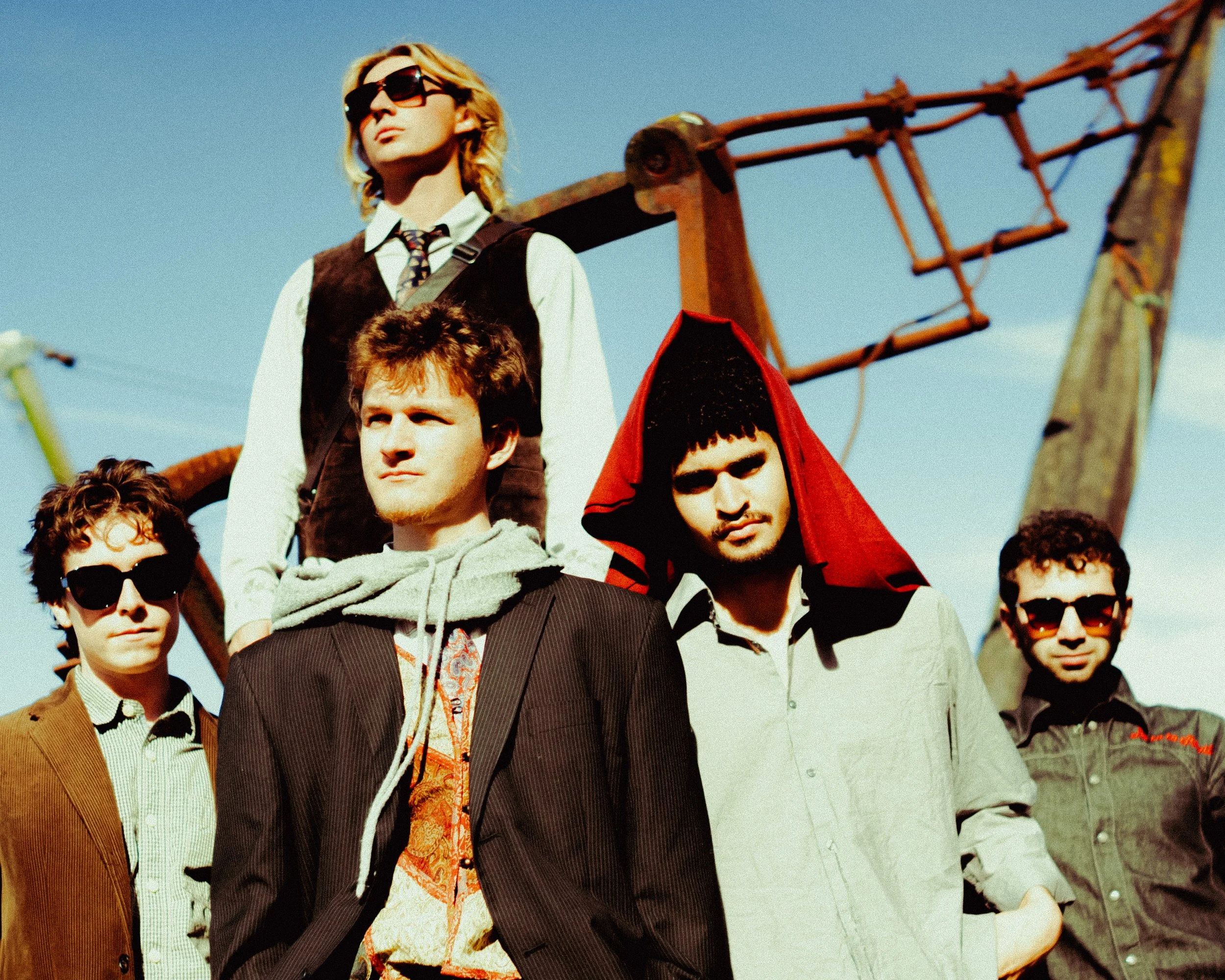
Cardiff band Why Horses? describe their music as ‘post hypnagogic punk wave’, which feels about right for a band pulling from art rock, post-rock and post-punk without ever quite settling into any of them. Their new EP, These Hands, moves through faith, addiction, existentialism and the strangely difficult business of trying to understand the world from the tiny corner of it you happen to occupy. Here, they tell us about Kurt Vonnegut, frantic vocal takes, family ties in the studio and why the bakery section in Austrian Lidl has recently become a serious source of joy.
For those unfamiliar with your music, can you tell us who you are, where you’re from and about the music you make?
We’re Why Horses? We formed in Cardiff. We take inspiration from art rock, post-rock and post-punk, but we like to describe our music as ‘post hypnagogic punk wave’.
These Hands is built around the idea of trying to understand the world through your own experiences. Where did the title come from, and why did hands feel like the right metaphor for that?
The title actually came from an old lyric of ‘Cat’s Cradle’ that’s not in there anymore. We all debated the name for a while and then, once we decided on this one, the common theme between the songs came up. The metaphor was already there, but the title brought it to light, I guess.
‘Cat’s Cradle’ was inspired by Kurt Vonnegut’s novel, but you’ve said that you actually disagree with the absurdist ideas you found in it. What was it about the book that provoked such a strong response from you?
I really loved the book and how weird it was, but on rereading it I realised that a lot of it is about how life has no meaning and there being not much point to anything. I was sad when I came to this realisation because I loved the randomness so much that I wanted it to mean something, rather than being a motif for absurdism.
Gabriel, you’ve spoken about being brought up Christian and believing that everything has a purpose, while also struggling with that belief. How much of These Hands became a way of working through your relationship with faith?
Very little, or not at all. When I write lyrics, I often write them in a stream of consciousness type way. Because of this, they’re very self-revealing. I’m a religious person and I’m often thinking about faith and greater purpose, so that’s why it comes up quite a bit.
There’s a point in ‘Cat’s Cradle’ where the vocal performance seems to become increasingly frantic and unhinged. How did you and Zein approach creating that sense of someone gradually losing their grip?
When Zein and I were recording the vocals for this song, he made me sing each line about ten different ways. He cut down all the takes and found the perfect combination to emulate someone losing their grip on reality. There were definitely some really funny takes that Zein had to listen to while choosing the best ones.
The EP moves between some pretty enormous subjects: addiction, existentialism, religion and our place in the universe. Do those ideas tend to be things you deliberately sit down to write about, or do you only realise what a song is about once it has started taking shape?
It really varies. Most songs start with a jam or a riff and the lyrics come after that. I find lyrics are a unique way to write about something that’s important in my life. In some of the first songs I wrote, I was only really writing romantic love songs, but somewhere along the line I started questioning why I was doing that. I realised that I could use our music to express my inner world without ever fully revealing it, I guess, to some extent in a therapeutic way.
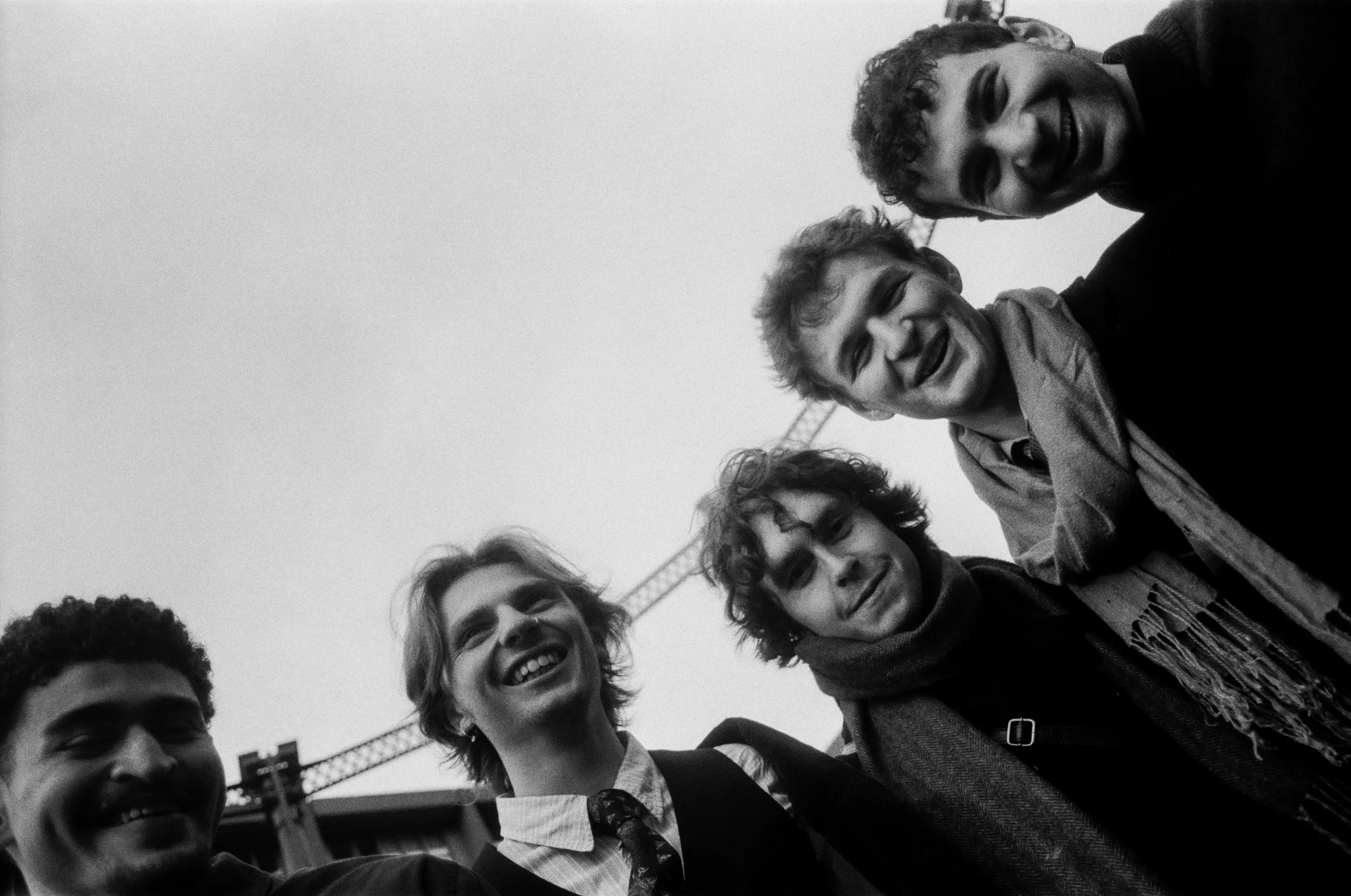
Zein comes from a background in what you’ve described as ‘wonky dance music’. What did bringing someone with that perspective into the studio unlock that you might not have found working with a more traditional rock producer?
Zein has said that the EP sits somewhere between where he would naturally take things, to be angrier, weirder and with more contrasts, and where we sit as an art rock and post-punk inspired band. That push and pull is a big part of what These Hands sounds like. He spent a lot of time trying to fully express the world that each song builds in his production, but also in stringing them together through transitions and his own sounds and synth pads he made just for this EP. The relationship that we had with Zein being Hadi’s brother also made it feel special in some way to have him mix the EP, like it was a family thing.
Why Horses? has recently expanded into a five-piece. How has that changed the chemistry of the band, both in terms of writing and what you’re capable of doing live?
It’s slower writing as a five-piece as opposed to a three-piece like before, but both Will and Dilibe bring their own music knowledge and style, which allows us to take our music places that we couldn’t before. They both have a more classical understanding of music that helps us understand songs in ways that we never could. I think naturally, having more people in the band, we can give more of a show too.
What do you love right now?
Austrian Lidl. The bakery there is so much better than the UK. When we played at Waves Vienna, we all went a bit crazy and bought like half of the bakery section.
What do you hate right now?
OpenAI, naturally.
Name an album you’re still listening to from when you were younger and why it’s still important to you.
Charades by The Shivers. It’s lyrically and sonically very beautiful. Every time I listen to it, I feel like I’m living his life, feeling his love and sadness. It’s also got some lo-fi production that makes it feel really unique.
For an EP concerned with trying to make sense of the world, These Hands seems to leave plenty unresolved. By the time you finished making it, had you actually found any answers, or did writing these songs just give you a better set of questions?
We’re still searching for the answers and I think we always will be.