
Arlo Parks - Ambiguous Desire Review
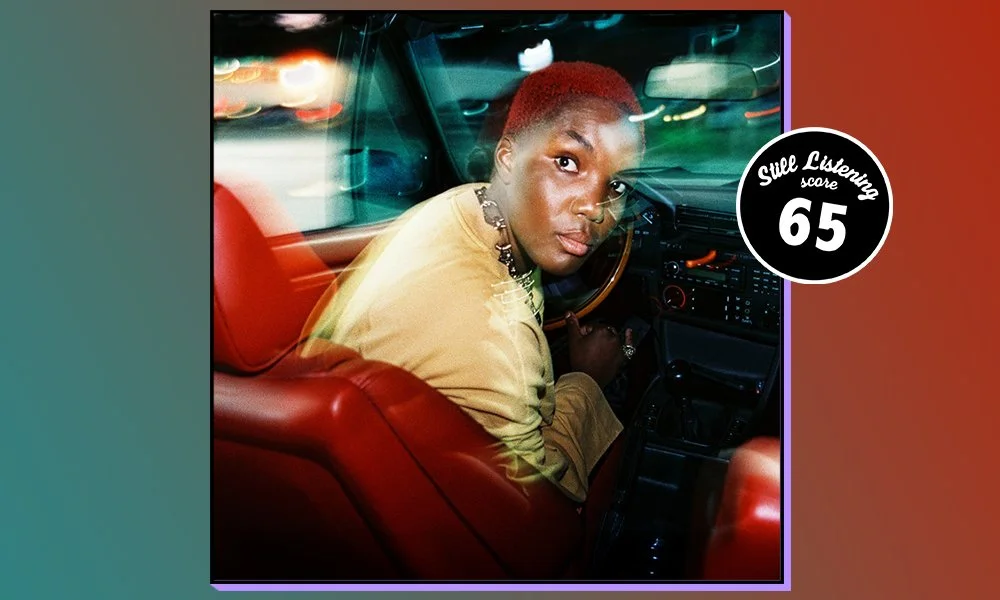
A gentle and subdued record that proves comfort can quickly become creative stagnation.
Arlo Parks has built her reputation on emotional vulnerability. Since her Mercury Prize-winning debut Collapsed in Sunbeams, Parks has specialised in softly lit indie-pop and diaristic storytelling, an approach that earned her early acclaim for its pleasant and atmospheric sound.
With Ambiguous Desire, her third album, she returns to that same palette once again. Which would be perfectly fine, if it didn’t feel quite so familiar.
In the lead-up to release, the record was framed as a sonic expansion, with Parks enthusiastically citing house, techno and electronic music as inspirations. In practice, those influences are difficult to detect beyond a handful of extra synth textures. Much of Ambiguous Desire continues the lo-fi indie-pop atmosphere that defined her earlier work, only now slightly more polished and smoothed out.
Nothing here is unpleasant. But very little feels new.
The problem isn’t simply that Parks has stuck to her sound. Many artists have established lasting legacies on the mantra of “if it ain’t broke, don’t fix it”. Rather, three albums in, the formula has begun to settle into something bordering on artistic autopilot. Whilst several of her early-2020s contemporaries have taken noticeable creative risks, like Beabadoobee pivoting towards grunge-tinged guitar rock, or Clairo reshaping her sound with lush psych-soul arrangements, Parks appears more comfortable staying exactly where she started.
As a result, Ambiguous Desire often drifts by in a soft-focus, “ambiguous” blur.
To be fair, fleeting moments of emotional clarity still crop up throughout the record. Parks remains a perceptive lyricist, capable of capturing the difficulties of navigating modern relationships with a quiet observational eye. On ‘Senses’, she admits: “I treat myself with this impatience // I would never give a friend,” a line that neatly summarises the album’s recurring themes of self-doubt and vulnerability. The track is elevated further by Sampha’s guest appearance, particularly in the outro, where he briefly injects a sense of life that much of the album otherwise lacks.
Elsewhere, however, the record frequently struggles to build momentum. Many of the songs move at the same gentle pace, supported by subdued percussion and soft synth washes that rarely push themselves beyond pleasant background ambience: the sort of music best suited to a slow Sunday of cooking or household chores. At times, the production feels so restrained that it borders on anonymous, making this an album that fades politely into obscurity, rather than fighting to capture your attention.
Even the album’s singles rarely break that spell. ‘Heaven’ carries a sweet melodic lift in its post-chorus, whilst ‘Beams’ stands out thanks to its delicate piano arrangement and earnest exploration of a complicated love. Yet even these stronger moments never quite develop into the kind of emotional climax that might anchor the album more firmly in public memory.
And by the latter half, the songs begin to blur together in a way that makes the listener feel as if they’re drifting off. ‘Nightswimming’ and ‘2SIDED’ pass by with such similar sonic textures that the transition between them barely registers. At this point it becomes genuinely difficult to tell where one song ends and the next begins, rarely the ideal outcome for a new album.
When Parks does attempt something different, it arrives surprisingly late. The closing track ‘Floette’ introduces a burst of chaotic rhythmic experimentation, building toward a messy percussion outro that feels like the album remembered it was supposed to offer us something new. Unfortunately, by that point the record is already ending, leaving the moment feeling like a panicked afterthought than a genuine shift in direction.
None of this makes Ambiguous Desire actively bad. Parks’ voice remains warm and mellow, and her songwriting efforts still resonate. There are certainly a few lovely moments scattered throughout the record, it’s just that they simply fizzle out before they can build into anything truly memorable.
The irony is that Parks clearly has the instincts of a compelling songwriter. What she may need now is the confidence to disrupt her own formula. Because while Ambiguous Desire is a pleasant listen, pleasant alone rarely makes for a standout album.
Eventually, even the softest music needs to wake up, and here, Ambiguous Desire is still hitting snooze.