
Dove Ellis - Blizzard Review
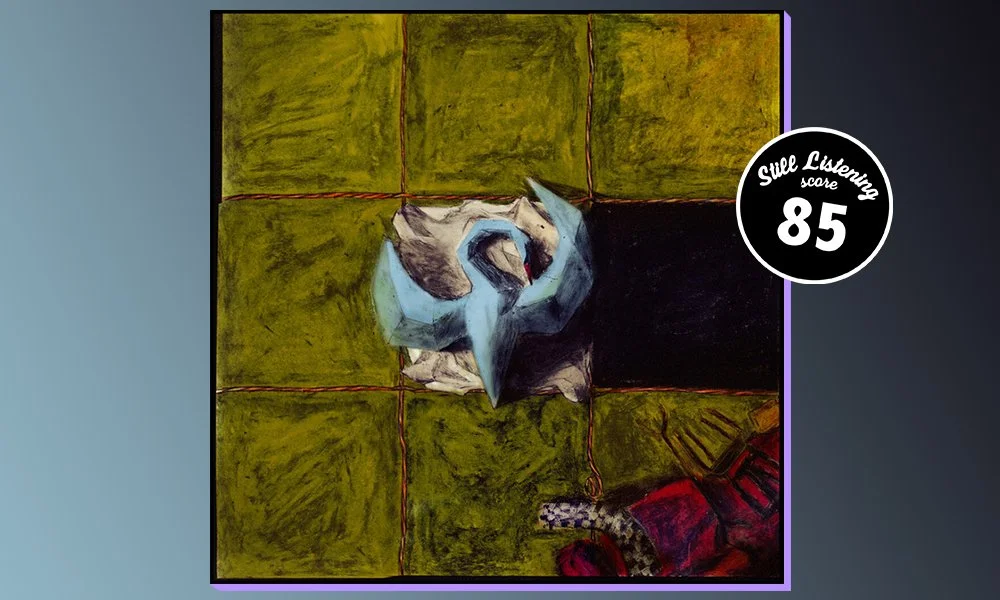
A stripped-back, emotionally precise debut that keeps its distance, letting strong songs and a sense of mystery do the heavy lifting.
The mystique of the solo male songwriter has for some time seemed a thing of the past; a dodo fantasy entangled with grainy monochromatic photography, cigarettes, complicated press relations and dubious yet often overlooked moral decisions.
But recently, in the dust of Dylan and Cohen, there have been stirrings. The last two years have seen some of the most ambitious solo male records of the decade with the likes of Cameron Winter and MJ Lenderman blazing unanticipated trails. In Blizzard, Dove Ellis makes his contribution to the burgeoning trend.
As in the case of Winter, there was little fanfare before the arrival of Ellis’ debut. A few promising singles via Bandcamp, sporadic gig footage on the Instagram stories of musically inclined friends, but nothing suggestive of the weighty offering that Blizzard has proven to be.
Before writing this review, I had planned to attend Ellis’ London show at the ICA, but like many others I missed the boat; it sold out within an hour.
At just 22 years of age, the Galway born singer has garnered a unique buzz. Little information exists online about Ellis besides track listings, reviews, and a few well-taken photographs. This elusive quality, paired with the earnest, heart-rending heft of his songs, has naturally stirred intrigue.
It is an approach somewhat misaligned with the PR frenzies typical of breakthrough artists pushing a debut, but having rejected attention from major labels, opting instead to go with an independent, one gets the sense that Ellis’ path will be ardently his own – a sentiment only bolstered by his song writing.
The obvious comparisons have already been made. In his swooning and elastic falsetto, Ellis has (in the few existing reviews of his music) been likened to both Jeff and Tim Buckley. Additionally, following a recent tour supporting Geese, the clear kinship between his and Winter’s philosophies of song has no doubt contributed to a certain sense of the phenomenal.
Blizzard, however, comes to life in its divergence from comparisons. Disorienting influences run through the album. The production, for one, is sparse, evoking the earthy sense of musicians in a room. The guitars, for the most part, sound like things made of metal and wood. But here and there, jangling intrusions of noughties alt-rock and rhapsodic traditional folk-melodies tear through Blizzard’s sweet melancholia.
A stand-out track for its exultant boom is ‘Love Is’. Providing alternate lists of what love is and is not, the song is a well-reasoned celebration of the sacred emotion and its short fallings. With a thrilling, if embarrassingly infectious, rom-com quality, ‘Love Is’ presents a starkly honest portrayal of the semi-hysteria of romance. But despite the swoon of it all, listeners are reminded come each chorus that ‘love is not the antidote to all [their] problems’.
Another of the album’s highlights is ‘Feathers, Cash’, a quietly ruinous recollection of intimacy. Featuring some bafflingly efficient string arrangements – just two notes per devastating swoop – the song showcases Ellis’ impressive lyrical aptitude. As echoed later in the album, here we first encounter Ellis’ ability to harness the rhythm of his lyrics in a manner that functions equal parts as architectural and poetic.
Nowhere else in Blizzard is that propensity of Ellis’ as apparent as in ‘To The Sandals’. By some margin the most accomplished song on the album, it is certain to inspire envy and awe in musicians and listeners alike. Without a clearly defined chorus, ‘To The Sandals’ glides between a series of micro-hooks, each outdoing the previous in lyrical poignancy. Throughout, the pace is set by Ellis’ mournful vocal, which from near mumbling spills staccato into expansive, reaching wails. Listeners will be hard pressed to pry its ‘harrying, carrion nightmare’ from their inner jukebox.
So precise and inventive is ‘To The Sandals’, however, that the song does inadvertently highlight weaknesses elsewhere. Blizzard is not a perfect album. It is tantalisingly close, and undoubtedly an astonishing debut, but an occasional lack of stylistic coherence holds it back from the likes of Buckley’s Grace.
This is not to say that Ellis was aiming for Grace. As good beginnings should, Blizzard lays the table for experimentation. In failing a singularly focussed sound, Ellis has granted himself the freedom to take his music where he chooses. For its myriad influences, at no point does this debut come across contrived. There is a sense of gracious borrowing, of nods to the towering greats and handshakes with contemporaries.
Perhaps the greatest achievement of Blizzard – as Ellis sings in ‘Feathers, Cash’ – is that it has succeeded to ‘push the door wide open’.