
The Orielles On Only You Left
Recording in Hydra and Hamburg, stripping back as a trio, and leaning into melancholy.
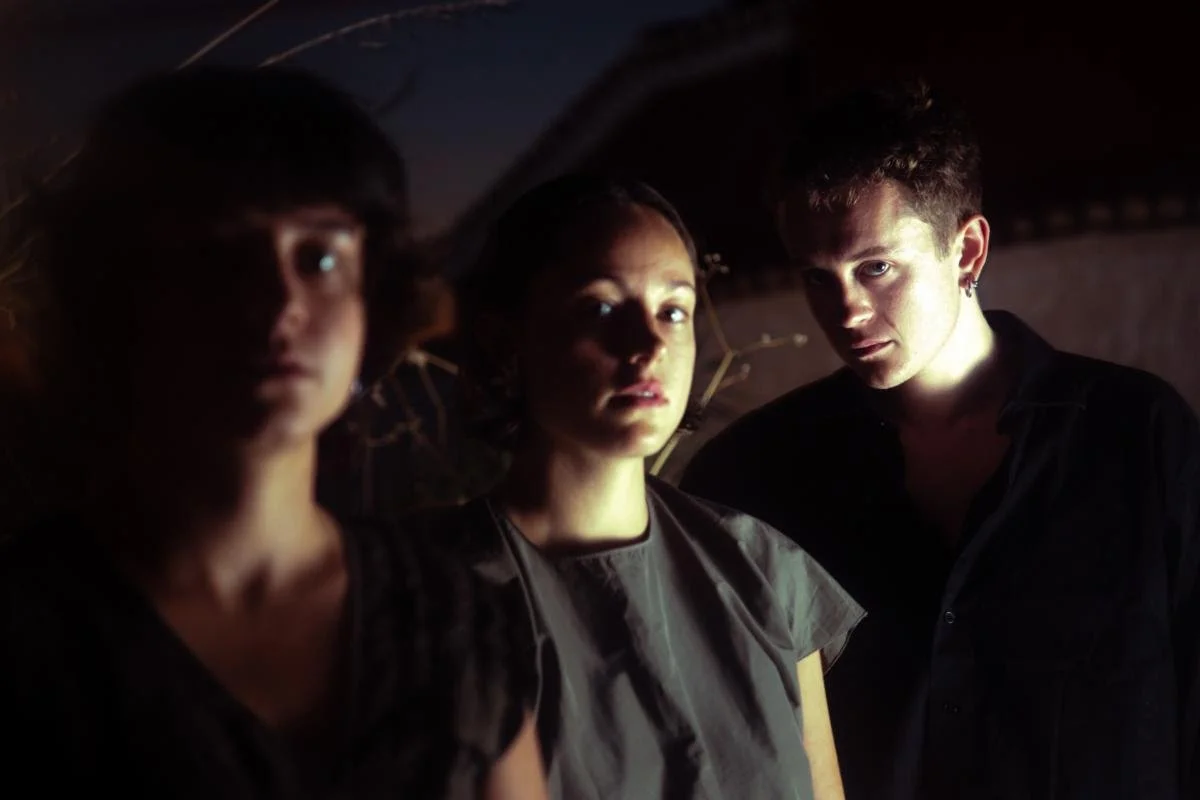
For more than a decade, The Orielles have treated songwriting as a shared experiment. Ideas are passed between the trio, shaped by instinct, and often transformed by the places they happen to be working. On their fourth album Only You Left, that approach stretches further than ever, with songs written, recorded and reshaped across dramatically different environments.
Across the record, that sense of place quietly shapes the music. Songs move between tightly controlled studio sessions and recordings that capture the atmosphere of the spaces around them. It’s an approach that mirrors the way the band have always worked: collaboratively, patiently, and with a willingness to let ideas evolve over time.
The band explain that the title of one of the album’s most striking tracks, “You Are Eating a Part of Yourself,” stems from an unexpected source. “‘You Are Eating a Part of Yourself’ comes from a video art installation by Shilpa Gupta dated 1996, wherein this mantra is repeated over an accompanying video of the artist biting at the skin around her nails” they say. Sid discovered the piece while visiting Antwerp and captured a field recording of it, which later made its way into the song itself.
The track began far more quietly, originally as a guitar loop Henry wrote in his bedroom during what the band describe as “a moment of vulnerability that he felt compelled to share.” The band see the title as a reflection of that emotional state. “Sometimes we hit self destruct mode and find ourselves eating away at various parts of ourselves, and it is easy to turn inward during these times.”
Another song title, ‘To Undo the World Itself,’ explores the opposite impulse. “‘To Undo the World Itself’ is almost an antithesis to this feeling. Optimistic or fatalistic depending on which way you look at it, either way the title asks you to look outward. A chance to return to more hopeful origins, or an attempt at unravelling how things have become.”
The environments in which Only You Left was recorded played a major role in shaping the music. The Orielles had already begun experimenting with the idea that location could transform a song while making their previous album Tableau. This time, they pushed the concept to its limit by splitting recording between two drastically different studios in Hamburg and Hydra. “From the minute we chose the two studios, even imagining playing certain songs in the respective spaces started to morph how things would turn out,” they explain. Hamburg provided precision and structure. “The studio was very well equipped and acoustically treated which gave everything an immediate and punchy feel.” Hydra, where the band recorded the other half of the album, offered the opposite experience entirely. “There’s inescapable bleed on everything from the gorgeous live room that 100% influenced how we wrote songs in the space.” The contrast between those sessions can be heard across the record. “The most obvious contrast is if you listen to ‘Tears Are’ (Hamburg) then ‘The Woodland Has Returned’ (Hydra).”
Despite the shifting locations, the band’s writing process remains rooted in the same collaborative structure they’ve used since forming. “We have always wrote as a trio,” they say, noting that the only major exception was ‘Disco Volador.’ This time, they made a conscious decision about the direction they wanted to take. “We agreed to not write for a fourth member.” The early stages of writing were shaped by a simple question: what should come next after Tableau? Rather than entering the studio with unfinished ideas as they had previously, they decided to develop songs much further before recording. “We would craft songs way closer to completion, inspired by what we found most fun to play live from our year and a half of touring.”
Outside of music, everyday life inevitably shaped the schedule. “Because we all work in retail and restaurants, our writing was mostly limited to our collective days off,” they explain. On those days they would gather with new ideas, record everything on their phones, and share the recordings in their group chat. Over the following week they would analyse what they had made and return with fresh ideas about where the songs could go next.
That process eventually led to the defining sound of the album. “Early on we were drawn to very large dynamic shifts, and an altogether more guitar driven sound.” Much of the final structure of the record emerged during the studio sessions themselves. “The rest of the writing came in both studios and that’s where I feel the record and its sound was drawn together, writing and recording the glue of the album.”
Recording on Hydra in particular created moments that felt unlike anything the band had experienced before. “One standout moment from recording on the island of Hydra was the ability to hear our music within the whole landscape of the small island,” they recall. With no cars and virtually no noise pollution, the island seemed to amplify everything.
“I really enjoyed heading down the steps from the studio, on a quick trip to the shop, meanwhile still hearing the sounds of Henry doing a guitar take, or Sid jamming on the organ, bouncing ambiently around the walls of the island.” Those sounds didn’t stay as memories either. “We captured all of these sounds on our phones and have featured them on our field recordings tape.”
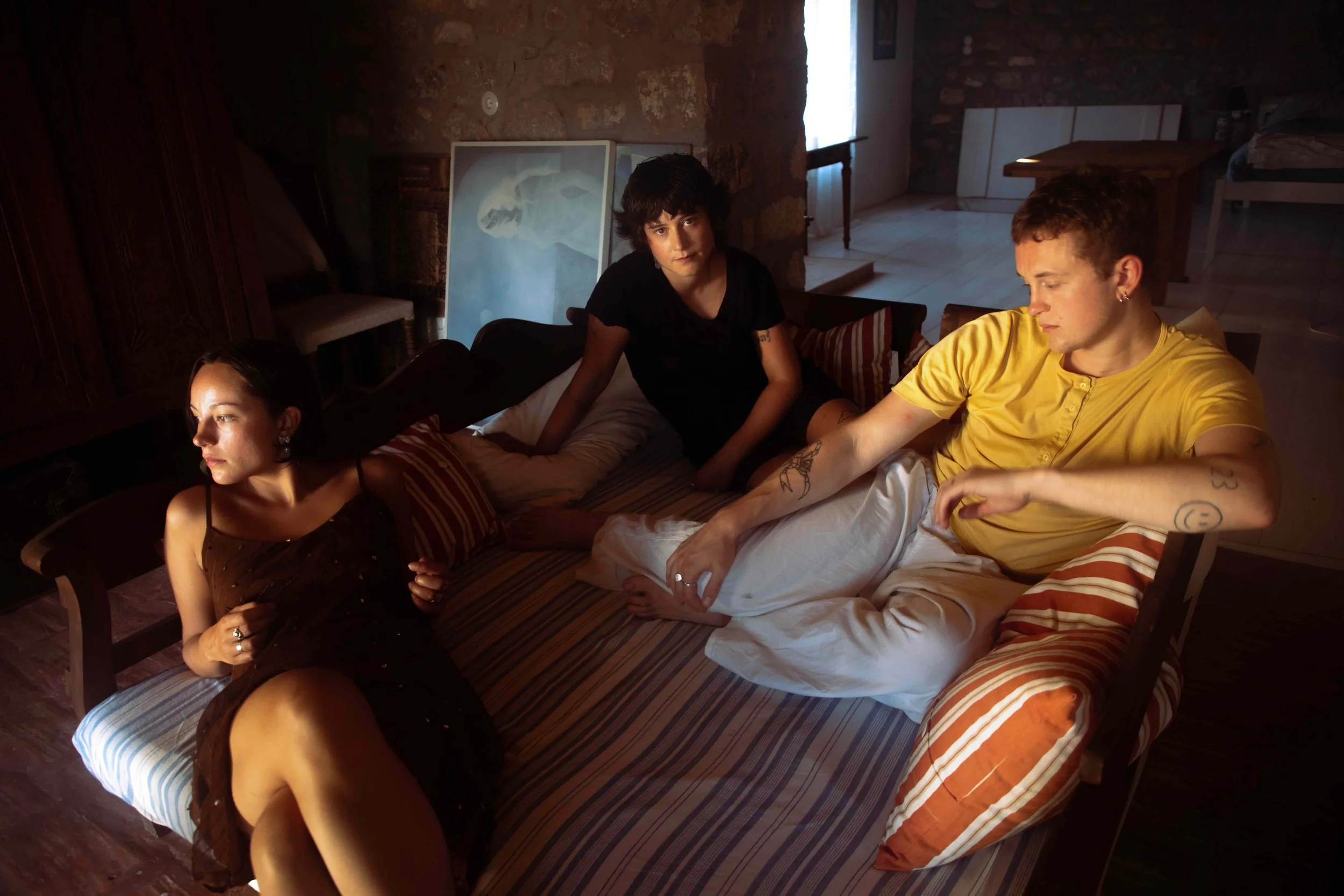
Visual art has always been closely tied to The Orielles’ music, and Only You Left continues that relationship. “Visuals play a huge role when it comes to crafting and conceptualising the record,” they explain. For this album they were particularly interested in the idea of something physical and tangible. “We knew that for Only You Left we wanted to create something physical that ‘you can hold’.” The imagery and artwork draw on the idea of triptychs. “We were drawn to things occurring in threes, and triptychs being a form of art that appear in this form.”
Their interpretation of that format carries its own symbolism. “Our triptych, a physical formation featuring some of Neelam’s images printed to its surface, stands for something that has been created a long time ago, showing signs of wear, yet standing there knowingly, as though only just discovered.” After more than ten years playing together, the band feel their creative growth has often involved stripping things back rather than building them up. “For us growth always seems to be about scaling things back,” they say. On Only You Left, that approach becomes central to the music.
“We had reached a point where we felt like the musicianship should shine first and foremost, less hiding underneath layers of instruments or production unless intentional.” The decision reflects the band’s long history together. “It's taken over ten years of playing music together to take this approach as ardently as we have on Only You Left.”
Their live shows reflect a similarly fluid philosophy. The band treat performances as fleeting experiences rather than fixed versions of songs. “Once the sound waves from live music dissipate that’s it’s gone forever,” they say, which is why they enjoy creating pieces that only exist in the moment. “We love to write material for a live set that will only exist there, never to be recorded.” It allows the band to push songs in new directions. “There are so many ways you can work a piece of music, there’s endless directions to pull stuff into and it’s fun figuring all of that out.”It also gives their concerts a very different feel to the records. “We’ve also been told our live sets are generally a lot heavier and more energetic than our recorded music to distinguish the two even more.”
For all the experimentation in the studio, The Orielles are equally aware of the connection their music can form once it leaves the room. “We’ve been very lucky to share some really life affirming moments with fans,” they say. One memory in particular still stands out. Because Disco Volador arrived just two weeks before lockdown, the record took on a different meaning for many listeners. “We had many people say we were their lockdown album, their last gig before and their first gig back, saying it provided them with a lot of comfort and I think that's a really beautiful connection to have.”
Those moments can appear unexpectedly. The band recall a show at Green Man where someone asked them to dedicate their song ‘Sunflower Seeds’ to a friend who had passed away. “It turns out she was in the front row when we made the dedication and it was so moving to play that for her and for the memory of him,” they say. “It’s powerful seeing people form such an emotional connection to our music.”
Despite more than a decade of making music together, that sense of discovery still seems central to how The Orielles think about their work. When asked about an album that has stayed with them over the years, they point to a classic. “Such a classic, flawless and inspirational album that we’ve all really loved since a young age is Pet Sounds by The Beach Boys,” they say. “Sid and I (Ez) would sing this in the back of the car from a young age, trying to wrap our young heads around the beautiful harmonies across the record.”
Listening to it now still brings the same feeling. “The melancholy in that record runs deep beneath the surface whilst its beauty rises to the top - a perfect combination.” It’s a description that could easily apply to The Orielles themselves.
The Orielles’ Only You Left is out 13 March 2026 via Heavenly Recordings. Purchase your copy here.
Photography By: Neelam Khan Vela