
Start Listening To: Civil Partnership
London band Civil Partnership discuss their debut EP Head for the Hills, the uneasy overlap between wellness culture and capitalism, and why improvisation still sits at the centre of how they write.
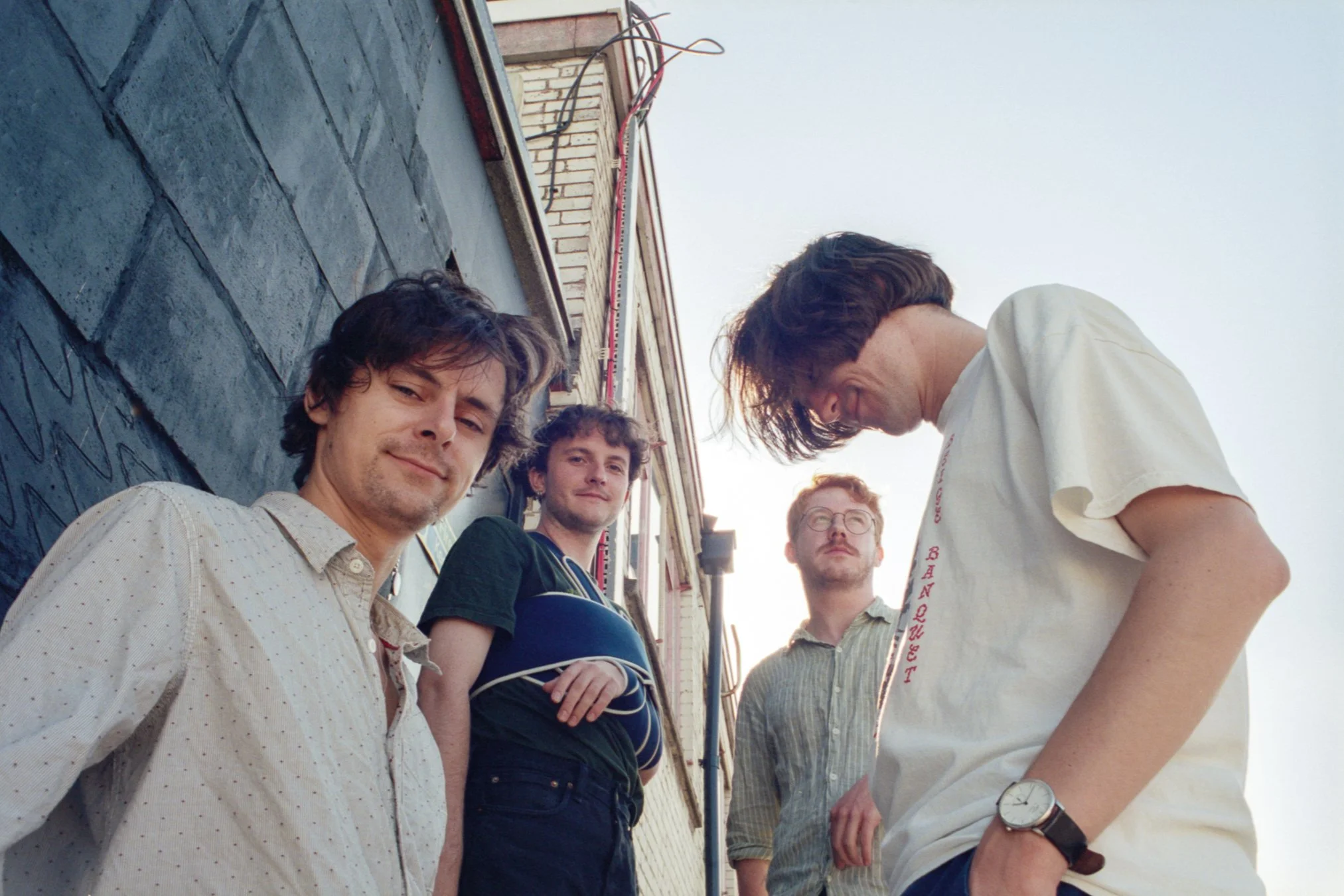
London-based four-piece Civil Partnership make guitar music that favours feeling over formula. Their songs often begin as loose improvisations before gradually taking shape, carrying a melancholic streak that feels both thoughtful and quietly expansive. With their debut EP Head for the Hills introducing the band’s sound more fully, we spoke to the group about the ideas behind recent single ‘Big Calm,’ the realities of making a record without much time or money, and how their live shows have started to connect with audiences in unexpected ways.
For those unfamiliar with your music, can you tell us who you are, where you’re from and about the music you make?
We’re CIVIL PARTNERSHIP. We’re based in London, but as individuals we’re from all over the UK and the self-governing British Crown Dependency of the Isle of Man. We don’t plan the music we make but it often comes out guitar-based and melancholic. We hope it sounds original and makes listeners feel something.
What themes or ideas did you want to explore with your latest single ‘Big Calm’ and how do they connect to your overall narrative?
‘Big Calm’ riffs on how wellness culture and late-capitalist consumerism intersect. The lyrics explore how the marketing of wellness products by companies and influencers can feel quite predatory, cultivating and exploiting health anxiety for profit. Wellness culture and capitalism more broadly try to teach us that we can only feel better through market consumption. The problem is you’ll never consume enough, keeping on chasing the next product you’re told you need to feel better. We don’t think this leads to happiness or a good life so we wrote a song about it.
Can you share insights into your songwriting process?
Most of our songs start with improvising together. That normally leaves us with a handful of music ideas which we then collectively hone into songs. Vocals and lyrics usually come last. Recently we’ve also been writing, demoing and re-demoing songs in the studio which has been fun – it can be easier to listen and think abstractly when you’re not having to play your instrument at the same time. We think this has led to some lovely, more expansive results, but you’ll have to wait a bit longer to hear them.
How do you typically translate your ideas into lyrics and music?
This varies a lot between band members and across songs, but often it starts with a musical or lyrical idea which we find exciting. That’ll then serve as the nucleus from which we build out our parts and collectively create the song. We normally try to keep the exploration and development of ideas as automatic as possible – we don’t like to think about it. We’re sure that the artists we listen to have a big influence on what comes out at the other end.
What was the most challenging aspect of creating your debut EP Head for the Hills and how did you overcome it?
Finding the money and the time has been a big challenge. We dealt with that by working steadily over a longer period, during which our tastes, skills, ideas and approaches evolved alongside the songs. That resulted in an EP that’s more representative of us over a year or so rather than a moment in time, but that is a nice document of how we developed during that period.
The EP also has a lot of our loudest songs on it, which are easy to make sound good in small rooms but are a little harder to translate onto a record. We addressed that by being quite picky and brutal during the production process, for example we were very restrained with overdubs.
This is also the first record which our guitarist Jack has played on, not just with CIVIL PARTNERSHIP but in general. He’s had to deal with committing to his recorded takes and living with them for eternity.
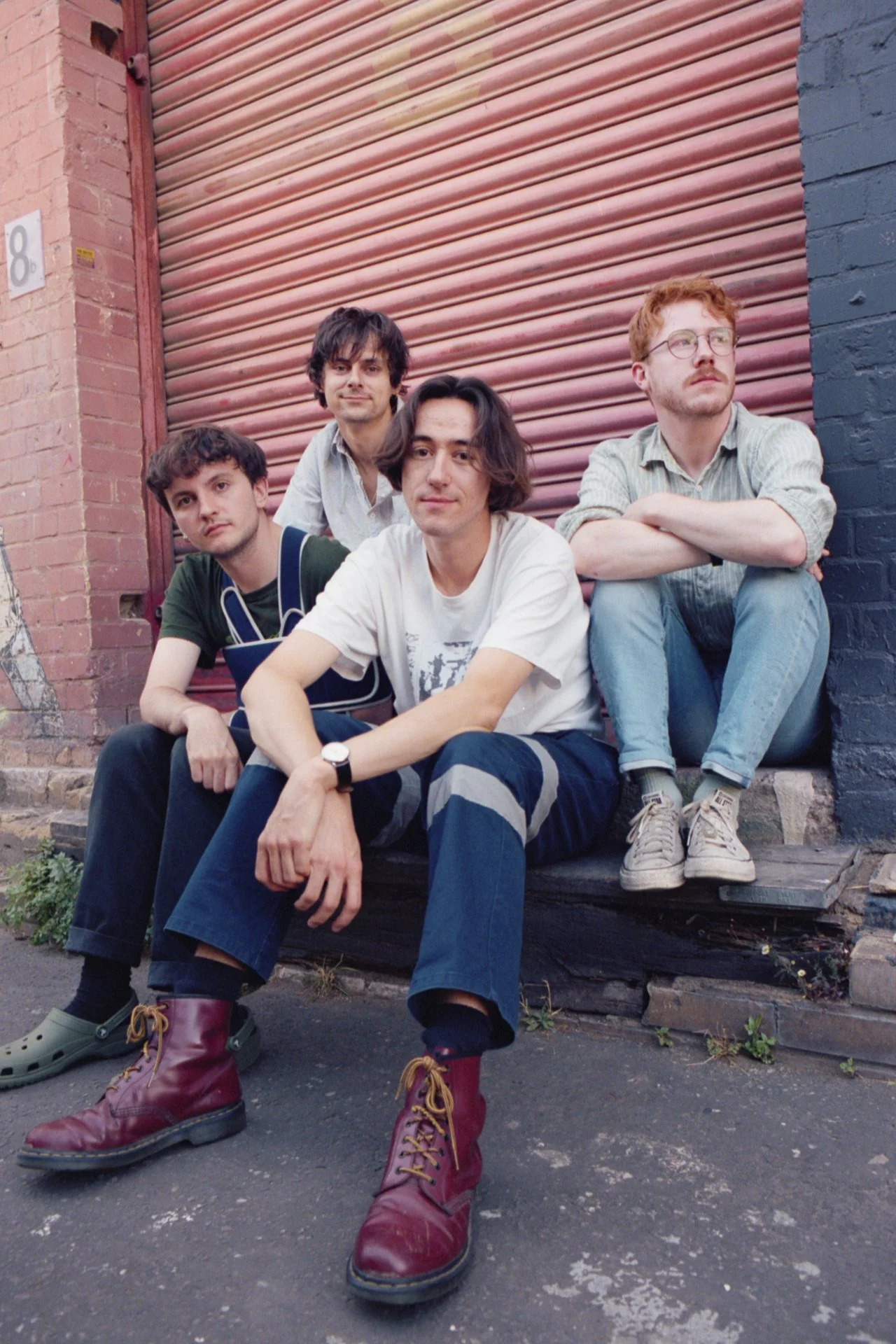
How did working with producer Jake Thomas influence the sound and direction of Head for the Hills?
In addition to producing all our records, Jake was also on drums back when we started the band, and he plays drums with us now. This means Jake is traditionally quite immersed in our songs well before they reach the studio.
‘Head for the Hills’ was a little different because Jake wasn’t in the band when the songs were written, road tested and when recording sessions started. All drums on the EP are played by our former bandmate Cam Black, who is an incredible musician and now plays in a project called Unlucky. This gave Jake a bit more separation from the music in the studio which we think was helpful in morphing what are mostly quite taught, loud live loud songs into recordings with depth.
Jake is a great producer with an uncanny ability to bring objectivity and fresh, creative perspective to songs in the studio. It was great working on these songs with him and we’re very lucky to have him!
Can you describe the visual elements you envision accompanying the music from your new EP?
Our manager Julia is also a very talented artist who shoots really lovely analogue photos. She kindly gave us access to a series of photos she shot in Poland on old 35mm cameras (including an old Soviet Zenit), which we chose because they seemed to rhyme nicely with the songs’ ideas and atmospheres. The photos on the singles are a few years old, but the shot on the cover of the EP was photographed especially for the record. The photographs are really beautiful and we’d love to see them in an exhibition one day, or on a physical sleeve if any labels are reading this…
What role do you think live performances play in your connection with your audience, especially with the themes in your music?
Lately our music seems to be connecting with audiences more than ever. People seem to really like our gentler songs, which is new because that used to be when people would go out for a cig. Nowadays we see couples slowdancing to Tidal Pool and increasingly singing along now more of the records are coming out. That’s quite moving to see. Audiences seem to like our faster, louder songs too, but it’s nice to feel like we also have scope to explore more vulnerable territory during our gigs. Our music has a broad range and it’s nice to reflect that when we play live.
How has your experience of touring shaped your music and your understanding of the communities you perform for?
The people around us – fans, artists, producers and promoters – are all incredible. Everyone is so kind and supportive, and being around those people feels really energising. Shout out to Tim at The Windmill in particular. We’ve played The Windmill loads and playing so often in such an excellent sounding room with such an inspiring scene has helped us grow more confident as a band.
Can you discuss any particular influences or inspirations that shaped the sound and style of your upcoming tracks on the EP?
The rhythm section sounds quite unconventional across the EP, and that’s probably influenced by some Canadian bands that JGS and Cam like listening to. The drum parts are quite distinctively dense and syncopated and the bass is doing unusual stuff like melodic harmonics, bass chords and counterpunctual lines. There’s definitely some conceptual stuff informing the instrumentation.
Callum from Moss Studios – which is where we record – also gave us some really helpful feedback on the mixes throughout the recording process. Jake picked up a lot of techniques from Callum which were used on ‘Head for the Hills’. Props to Callum!
Ben Lincoln – the engineer who mastered ‘Head for the Hills’ – also had a big hand in the sound of the EP. It wouldn’t sound half as good without him. He runs a great analogue mastering studio called Middle Mastering and we love involving him in our process.
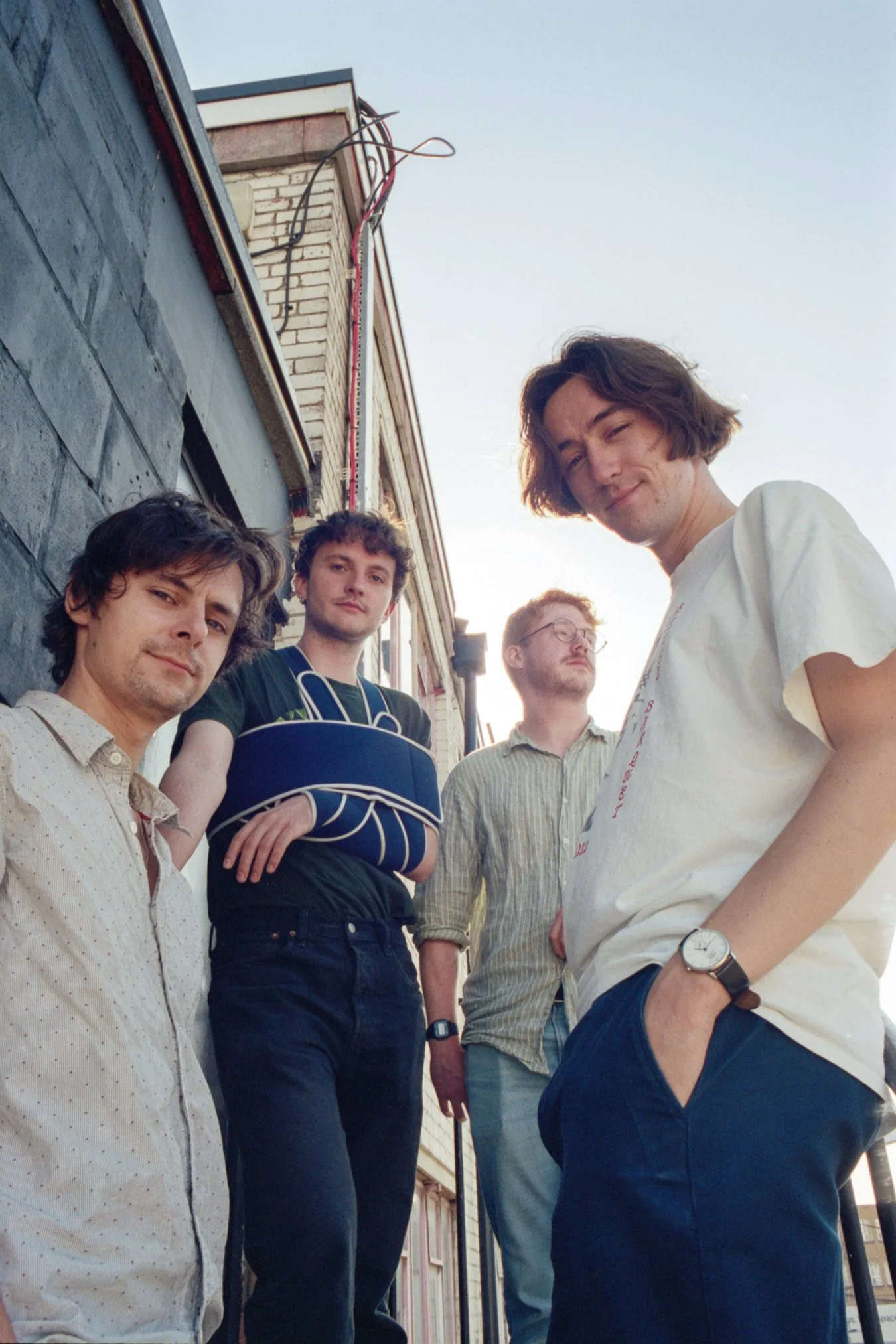
What do you love right now?
We all love different things at the moment. One thing we can agree on is that we love Jack’s cat Pimlico who is currently feeling unwell. Get well soon Pimlico!
What do you hate right now?
We all hate different things at the moment, but one thing that stands out is the ticket prices during Harry Styles’ recent tour. We think charging £700 for a ticket is a disgrace.
Name an album you’re still listening to from when you were younger and why it’s still important to you?
Jake: Demon Days by Gorillaz. This was the first album I bought on CD (from Morrison’s) and it’s probably my all time favourite. It’s had a big influence on me, especially the bits by Danger Mouse, and I loved revisiting it in anticipation of the new Gorillaz album.
JGS: Enter the Wu-Tang (36 Chambers) by Wu-Tang Clan. This is probably the best record of all time and I can’t wait to see them on their farewell tour this year.
Will: Hopes and Fears by Keane. The songwriting is near flawless and the melodies are so perfect and sad. A couple of years ago I went to see them play it in full with my parents, who used to play it in the car when I was a kid. It was one of the best things I’ve ever seen.
Jack: No Angel by Dido. It’s a shame she has slipped from the cultural lexicon. I think the line where she says “I can't breathe until you're resting here with me” is very powerful.
When someone hears your music for the first time, what do you hope sticks with them?
We hope it moves them in some way, that it engages their heart or head somehow.
Photography By: Julia Kobak