
Start Listening To: Dottie Andersson
A Swedish songwriter embracing heartbreak, melody and the full spectrum of feeling through punchy, self-defined garage-pop.
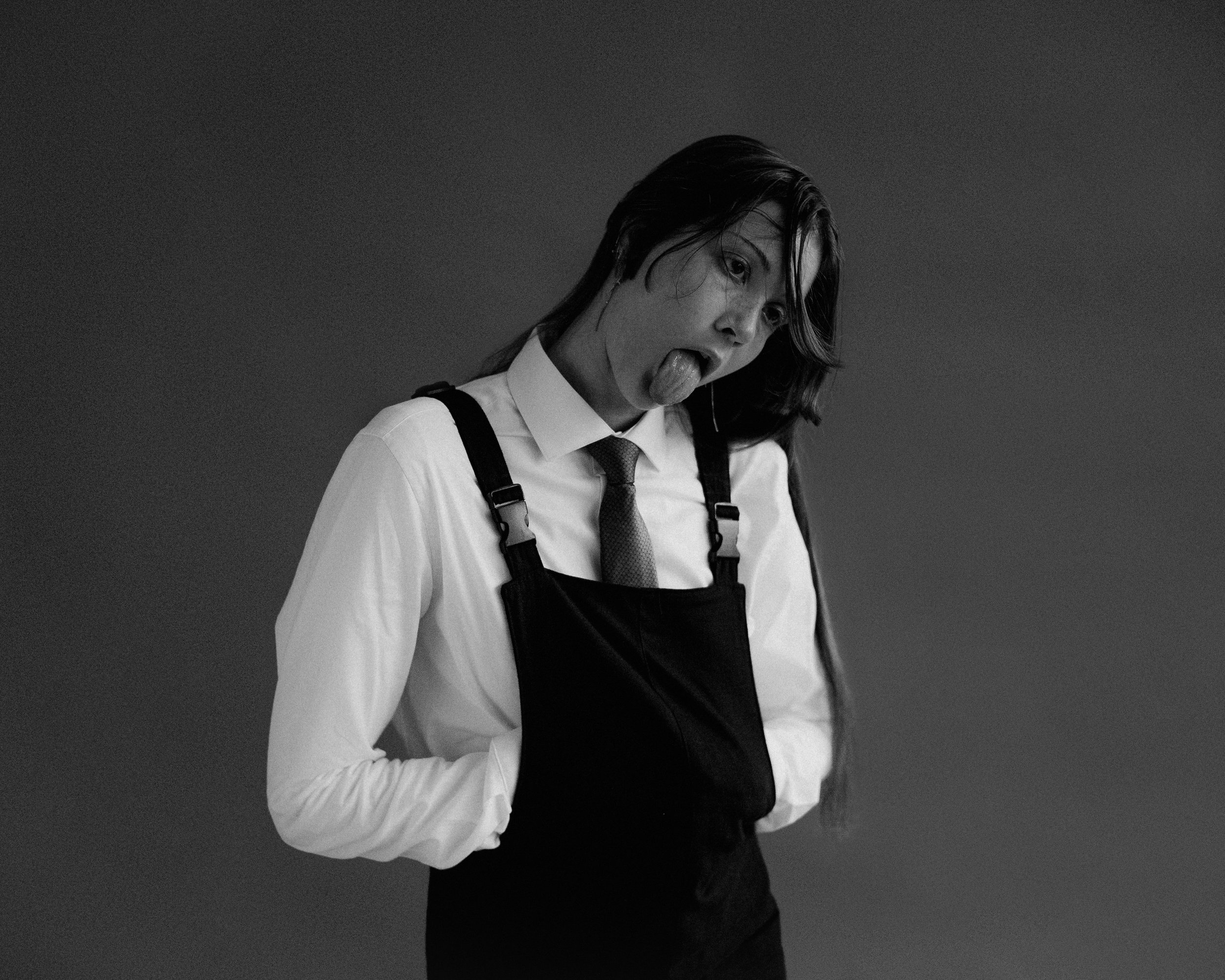
Swedish artist Dottie writes direct, emotionally open songs drawn from her own life. Originally trained as a drummer, she now centres her work around sharp melodies, live instrumentation and lyrics that say exactly what they mean. Her latest single, ‘I Love Being Sad,’ was sparked by a breakup that forced her to confront how much she values feeling deeply. Instead of softening that instinct, she leans into it, delivering a track that feels immediate, self-assured and intentionally hands-on. It’s garage-pop in the truest sense, played and shaped by real people in a room, with no interest in sanding off the edges.
For those unfamiliar with your music, can you tell us who you are, where you’re from and about the music you make?
I’m Dottie. I’m Swedish.
I studied drums and went from there.
Now I’m a songwriter and musician, and I love the freedom that art gives me. I want my songs to feel like me, and most of all I want to make music to access new parts of myself. It’s the key to many weirdly hidden locks, in my opinion.
What was the creative process like for “I Love Being Sad,” and how did it evolve from the initial idea to the final product?
My ex broke up with me because I was “too sad for him.”
Then I realised I would rather have the freedom to be sad than be with someone who can’t handle emotions, understanding in that moment how much sadness actually means to me. I always want to allow myself the full range of emotion that life has to offer.
Then I can also write songs about it.
Feeling deeply is a privilege.
Can you share more about the collaboration with Ben Jackson-Cook and what each of you brought to the table during production?
We got to know each other in 2023 when we wrote “Alrighter” on my EP Nordic Machine. We became friends and continued to write in 2024 and 2025, and it just always felt so right. It wasn’t a business relationship, but instead turned into a real friendship, which made it possible for both of us to just be ourselves in the studio.
Our time in the studio became a “yes, and…” situation.
We really thrive off each other’s ideas and creativity. Ben is a wizard on the piano and inspires me all the time. He’s also incredible at translating what melodies I’m looking for - I often sing or hum what I would like to hear on the guitar or piano, and he can bring those ideas into reality. I find myself sitting with my finger at the piano a lot, but more than that I’m at the drum set or recording fun sounds.
I also take pride in the fact that I write all of my lyrics myself.
The song was inspired by a personal breakup; how do you think your experiences shape the themes present in your music?
They shape the songs 100%. I always like to write about things that happen in my universe. I also think it’s really important not to hide behind shallow lyrics, but to talk about - or at least think about - personal experience when writing a song. The fact is: people can always relate. It becomes part of their own story anyway, which I love.
How did you approach the visuals for the music video, and what message were you hoping to convey through its imagery?
I was wondering in which place people are the saddest, which I thought was probably the graveyard. It’s a place that is kind of exclusively reserved for grieving. No one walks around there celebrating a passing (that only happens in New Orleans).
So to convey what the song means to me - that sadness and happiness go hand in hand - I wanted to show joyfulness in a place that is mostly riddled with sadness. I was adamant about having a bit of a ’90s look because I myself am obsessed with ’90s series and movies. Big nerd.
What does the term “Garage-Pop” mean to you, and how do you feel it reflects your musical identity and style?
I think the song feels and sounds like someone recorded a band in their mum’s garage and then gave it to a singer, and she put the vocals on top.
It’s almost like the instruments and vocals have their own lives.
Ben and I were very, very precise with that sound and mixed everything ourselves because we knew exactly how we wanted it. I love that.
Also, garage pop because it’s real music - no instrument is faked here, no samples. We played it all. 7. What role does your Swedish background play in your music?
People say the Swedes work differently with melodies, and I think there’s a lot of truth to that. To me, it has to do with the fact that the Swedish language is super melodic and upsy-downsy. And of course, every Swede has a big, beating pop heart, and I have that too. Mine is wearing a cool indie coat.
What do you enjoy doing outside of music that influences your creativity and keeps you inspired as an artist?
I work a lot with clay, which is also what I like to use as a comparison when explaining to people what it’s like writing a song.
You start out with nothing - a lump of clay.
You form it with your fingers, perfect it, soften it, cut it, and then suddenly you have a beautiful sculpture.
It’s like going into the studio and talking with your friend, giggling and playing instruments, and then suddenly, at the end of the day, there’s a song.
A song that no one’s ever heard before and a song that comes directly from you. There’s so much magic involved in that.
I also do my own nails (it’s like therapy)
and go to the movies as much as I can.
At home, my TV is always on in the background.
What do you love right now?
Selling my designer bags and eating hard kiwis with the fur on.
What do you hate right now?
I hate hating things, but I’ll always hate cold feet - physically and metaphorically. Also inconsiderate behaviour. Big one.
When someone hears your music for the first time, what do you hope sticks with them?
I hope it moves their body and makes them feel something. I’m tired of music that’s created to be a product instead of art. Music needs to meet us somewhere at our core - make us happy or sad, it doesn’t really matter - as long as it draws attention to our own feelings.
Photography By: Eric Joel