
Start Listening To: Balderdasch
Balderdasch explores the tension between intimacy and isolation in their vibrant new EP.

Balderdasch is an experimental pop artist from Cork, now based in London, making music that pairs abrasive, club-adjacent production with writing that stays front and centre. Her new EP Stillness Gyrating tracks the pursuit of intimacy in different forms, including the awkwardness, the misalignment, and the self-mythologising that can come with trying to be seen by someone else.
In this Q&A, she talks about pushing ‘Homoerotic’ into heavier territory after playing a FLINTA festival in Germany, working with longtime collaborator Pete Wareham across remote sessions, and building a visual world that moves between London and Ireland with a deliberately voyeuristic VHS feel. She also reflects on growing up Catholic in Ireland, writing openly as a queer artist, and bringing humour into live shows even when the subject matter is intense.
For those unfamiliar with your music, can you tell us who you are, where you’re from and about the music you make?
I’m balderdasch. I grew up in Cork, Ireland, but now I’m based in London. I make experimental pop.
Can you share the story behind the title of your new EP, Stillness Gyrating, and what it represents for you personally?
Stillness Gyrating comes from the line “stillness against a person gyrating” from the opening track of the EP. For me, it’s an EP about the pursuit of intimacy in its many forms and grappling with misalignments when you’re on this pursuit.
How did your experiences in Germany influence the final version of ‘Homoerotic,’ particularly regarding the intensity you aimed to capture?
I played Homoerotic at a FLINTA festival in Mönchengladbach called Medusa Rising. I had never played in Germany before and people were so kind and receptive. I could tell they were especially into the production of Homoerotic. Through that, I booked another gig at a different festival and stayed for the weekend. I heard so many hardcore sets and felt the appetite for that, and I thought, wow, my track is a pussycat compared to all this, there is room to push it.
What was the collaborative process like with Pete Wareham during the production and mixing of your latest tracks?
I have worked with Pete for many years, but a lot of the collaboration is done remotely. I basically send the demo and arrangement in this Frankenstein form, then he does what he calls “restoring a great painting.” We go back and forth on voice notes for ages until the mix is nearly there, and then I go and record the vocals alone in his home studio right at the end.
Can you describe the visual elements of the “Homoerotic” visualiser and how they connect to the song’s themes and your artistic vision?
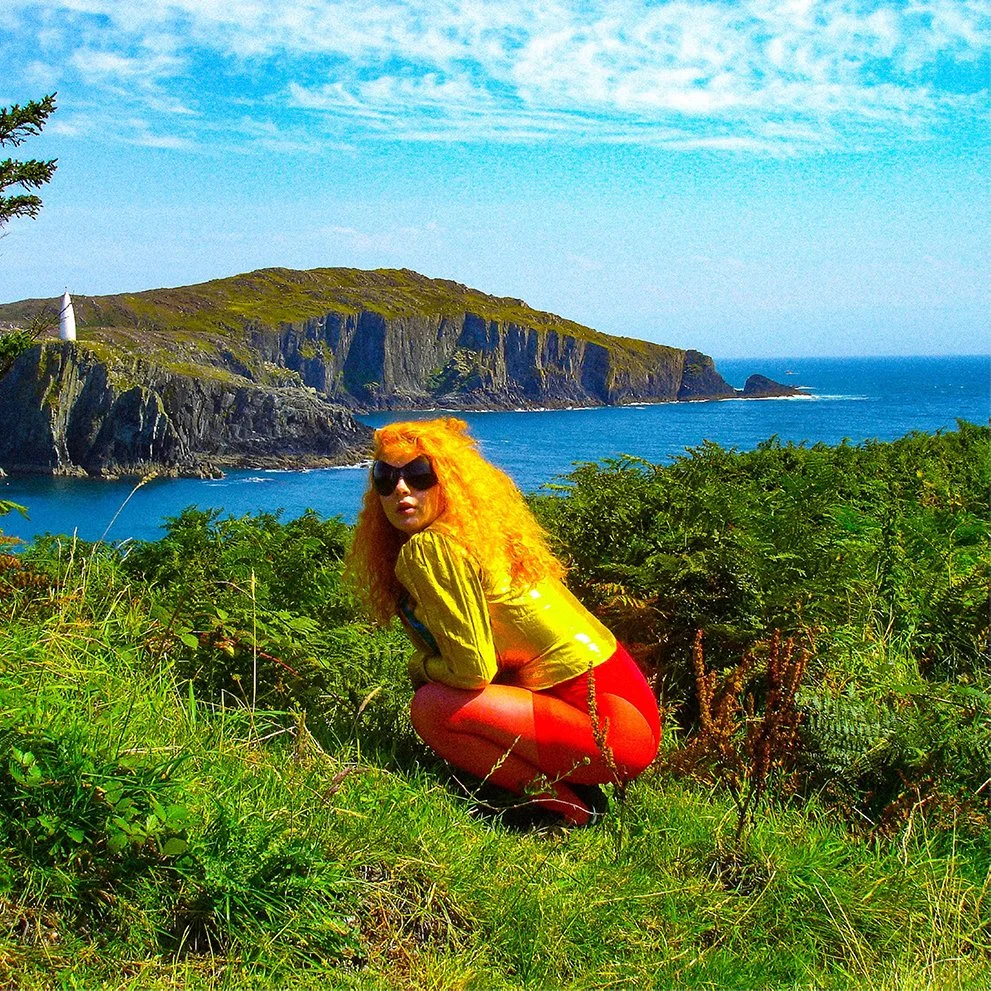
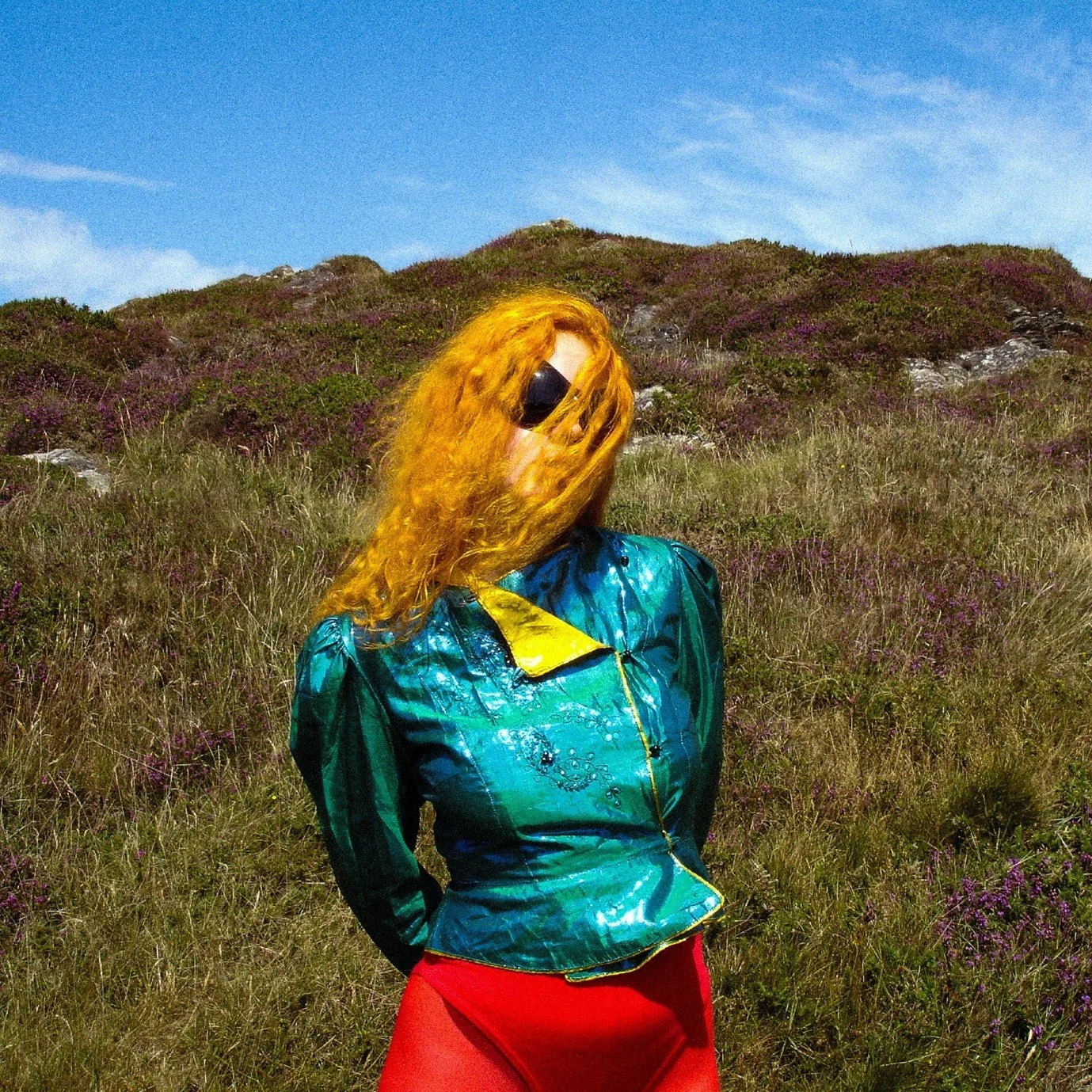
My best friend, Fai West and I shot some of the visualiser on a digicam on Sherkin Island. It felt right to have her there as she’s so a part of my life in London and helped me style these sort of club/ alien/lingerie looks in the irish countryside.
We mixed that with footage Matt Spratt shot at my flat in London. Matt ran all of the EP’s visualisers though a vhs player as we wanted this voyeuristic feel to accompany the EP because the lyrical content, to me, feels quite exposing.
In some shots I am wearing these big, plastic sunglasses and there is a bravado to it, yet I think you can still tell that I am a bit awkward and unsure. I wanted that to come through especially, because the song is about trying to play a character in order to appeal.
How do you balance the raw, industrial sound of your music with the more personal, vulnerable lyrics you often write?
Every song I write, the music serves the words. I am a big believer in word painting. Some of the soundscapes are much more delicate, depending on what is needed.
What do you hope audiences take away from your live performances, especially considering their visceral nature and emotional intensity?
I hope they see the humour in it! I deal with intense feelings through humour, so I hope there is a sense of levity, even though the songs are maybe rooted in heavy themes.
How does your identity as a queer artist shape your music and the themes you explore in your work?
As a queer person, as a lesbian navigating my life, it is important for me to be unambiguous about who I am writing about. Anyone can identify with the music, but I make it for me and people like me.
What role does the environment play in your creative process, both in your writing and the visuals you create for your music?
I write most of my songs in my bedroom. I can’t afford to record drums or hire a drummer, so I use samples, run them through strange plugins and try to forge something new out of something already existing.
Visually, for this EP, going back to Ireland felt important, as I wanted footage of me as the person I am now, with a backdrop of where I came from. It felt like I was in open dialogue with my two selves.
Can you tell us about any specific influences from artists like Kim Gordon or Nine Inch Nails that resonate in your current work?
I hadn’t really listened to Sonic Youth, but I came across Kim Gordon from her song Paprika Pony and adored the trap beat, the minimalism and the spoken word style vocals. Her song Bye Bye, definitely also inspired Homoerotic.
With Nine Inch Nails, honestly I don’t know loads of their stuff, but Closer is one of my favourite songs of all time! I wanted Homoerotic to feel like Closer’s cousin. The lyrics inspired the EP a lot, they’re so confronting and sexy but there is a desperation there. I wanted that tone narratively across the EP.
How do you approach songwriting when it comes to blending personal experiences with broader themes of repression and self-reinvention?
I grew up in quite a prudish household, to put it mildly, and went to Catholic school in Ireland. There is always an unsolicited reaction in my head that says, “I will not be able to keep that in”, when I am writing. The workaround is telling myself “it’s just a placeholder”, but then it grows roots, and you can’t get rid of it.
I wrote Stillness Gyrating first and realised I wanted more for myself. The songwriting process for this EP was me going out, pushing my own boundaries and documenting it. I was not worried about it being too specific to be relatable. I was mostly focused on testing myself.
What do you enjoy most about performing live, and how do you connect with your audience during those moments?
I rarely close my eyes when I play a set. I lock eyes with anyone in the audience who will make eye contact with me. It is such a strange form of connection between two strangers, but I love that part.
How has your journey from Ireland to London impacted your music and the communities you engage with in both places?
I moved to London as soon as I turned 18. I had experienced a lot of loss in my teens and it felt like an escape. A lot of Irish people come to London and connect with other Irish people, but I sadly sort of distanced myself, but luckily spent time in queer art spaces instead.
That gave me a much stronger sense of belonging and exposed me to so much great queer art and music. Only recently have I started playing more gigs in Ireland and connecting with Irish scenes again, which has been really lovely. My music still feels very rooted in Irishness so there’s a homecoming in that.
What do you love right now?
Pickled Onion Monster Munch Coronation Street Vodka martinis that taste like battery acid Emily Panter’s song Remember They Love You Open Ear Festival on Sherkin Island (the idea of going again this summer is what’s getting me through the winter)
What do you hate right now?
That my dentist just told me I need braces to fix my beast of an overbite That everything is fucked That I cannot get through a whole sliced pan before it goes mouldy, and I cannot fit half of it in my minuscule landlord special freezer
When someone hears your music for the first time, what do you hope sticks with them?
The words I have written. I love putting words to music. I don’t know if I would care to make music if I could not do that. I would just go to someone else’s DJ set or gig and have a good time.