
Sword II on Electric Hour, DIY Recording and Finding Light in a Dark America
Sword II reflect on the fourteen months spent building Electric Hour, discussing the pressure, the joy, and the reality of making art amid surveillance, precarity and a shifting America.
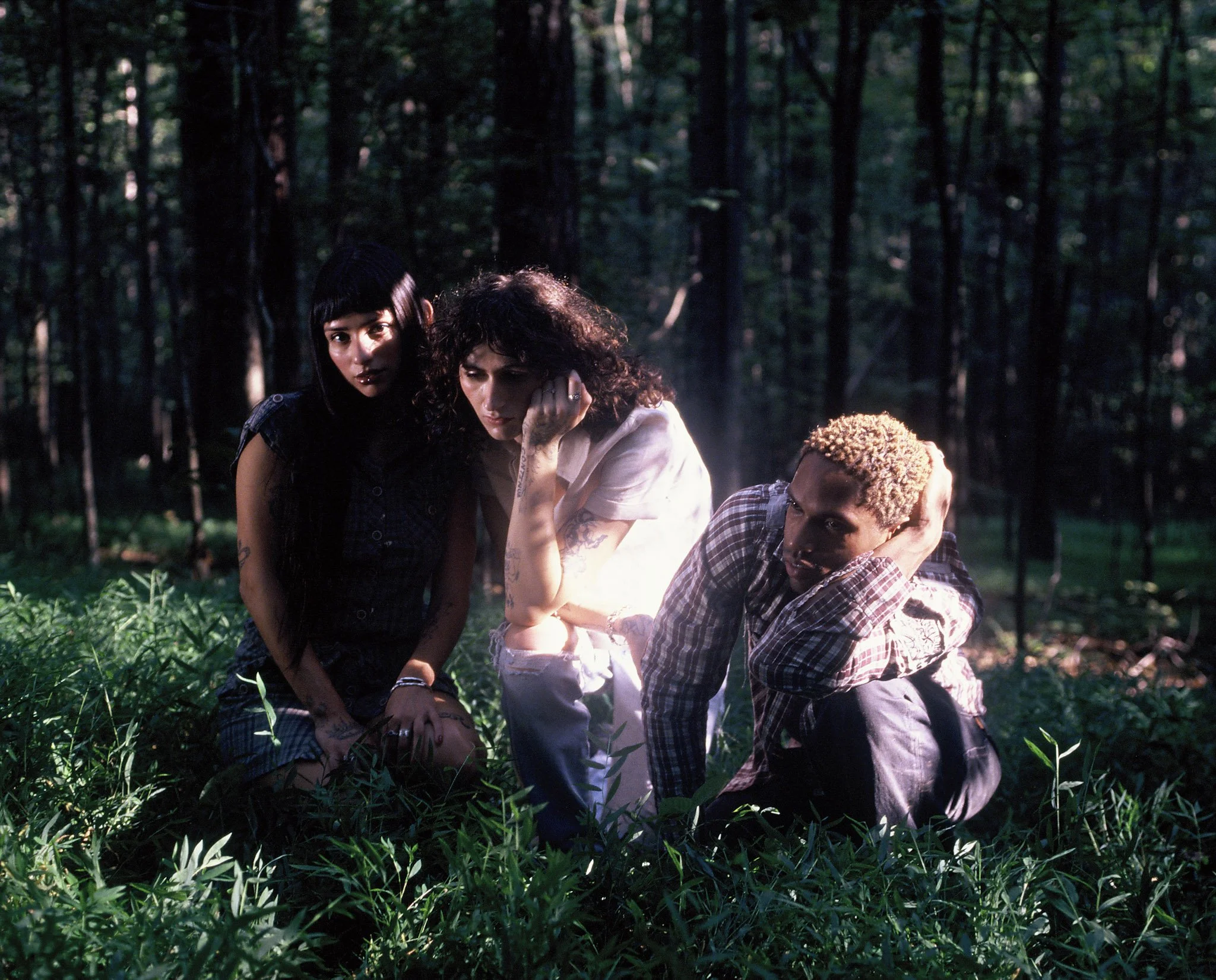
Under the shadow of its jeering beneficiary, The American Dream has seldom seemed a more wilted ideal. As university funding comes under unprecedented threat and ICE raids populate news feeds, the optimistic faith in democracy of America’s not-too-distant past is becoming an ever fainter after-image.
In such a time of crisis, escape would not seem an unreasonable impulse, but with their latest album, Sword II opted to dig their heels in.
Inside a bust-up Atlanta house, the rent of which was covered by their record label’s advance, the band set about creating their upcoming album, Electric Hour. Their 2023 release, Spirit World Tour, was recorded in similar circumstances just a short way down the road from the birthplace of Outkast’s early releases; a studio the band dubbed ‘the dungeon’.
“Starting the record just down the street from that house started this fascination,” says Certain Zuko, Sword II’s guitarist and singer.
“The idea that we can make incredible music in a basement or something, that’s kind of our M.O. We don’t go to a studio, we don’t necessarily need to do that, so we had the same mentality going into this house, but we kind of rushed it and didn’t realise the electricity was all fucked-up.”
The result of the property’s electrical malfunctions was that the band resorted to using more acoustic instruments than ever before. “We didn’t want to get shocked,” Zuko laughs. “It was kind of a freaky and gross place to be, but that really added to the vibe.”
Not all of the band’s surroundings were bleak, however. Beyond the dilapidated walls of their studio home, a small farm offered intermittent solace. “It was really beautiful — plants and trees everywhere. We would go outside, smoke cigs, the sun would be shining. I think that influenced the record, too. We were kind of cosplaying that we were country,” says Zuko.
“We wanted to see what it would be like to write songs without starting with a beat or a loop,” adds Mari González, singer and bassist. “But another big thing in terms of writing the songs was that Certain got given a 12-string acoustic guitar when her grandma died.”
“Oh yeah!” Zuko recalls. “I was already doing weird pitch-up stuff with pedals, and the 12-string has that extra octave anyway, so we ran it through the pitch-shift on quite a lot of the songs.”
Such glitchy, off-kilter textures are scattered throughout Electric Hour, where the band’s DIY recording ethos has distilled into a potent, idiosyncratic essence. Arriving at that point, according to González, was the product of an extended and highly focussed effort, the after effects of which linger even as Sword II prepare for the album’s release.

“I’m going through something now where it feels so hard to find new music,” she says. “I feel like because we were spending such long intensive days listening over and over again during recording, I just needed silence once the day was over. I got really out of practice listening to anything else. I would go to bed with those songs blaring in my ears. I think more space from the project would be beneficial next time around.”
At this remark, Zuko and the band's other guitarist and singer, Travis Arnold, nod along in somber agreement.
But countering the intensity of the sessions was the fact the band were guaranteed accommodation for the 14–month recording period, allowing them, at least initially, to ditch their day-jobs.
“It was a one-bedroom house,” says Zuko, “so my room was in the closet, but I only worked occasionally because I knew that I was always going to have somewhere to sleep. So yeah, at least I didn’t have to worry about that… But some days we were just locked in there because it was like ‘okay, fuck! We have to work on this and finish it.’”
Functioning equally as songwriters, engineers, and producers, the trio abandoned personal borders in pursuit of Electric Hour’s sound. “A lot of the time we sung each other’s lyrics,” explains Zuko. “Most of the lyrics on the album that each of us sings was actually written by somebody else, which is kind of really fun. I think sometimes we would get in there and be a little embarrassed to be singing. We’d get in our heads and then someone else would be like, ‘No! You’re going to sound lit like this, you have to do it!’” She laughs, then gasps. “Travis was doing this vampire voice thing, I don’t think it made it in there in the end, but it was so sexy, I was begging to keep it in!”
A sense of honest vulnerability underpins the lyrics of Electric Hour. There is a closeness to the album, a human warmth, but it is rarely present without an underlying sense of threat. The encroachments are seemingly everywhere, whether in the form of state surveillance or systematic capitalism.
“I think we feel like storytellers, just about our own lives.” says Zuko.
“We are just regular people going through the same things everyone else is going through. Everyone is dealing with the rise of the police state here, the rise of fascism. Everyone is seeing the atrocities in Gaza, and the horrific ICE raids. We have friends and family dealing with this ICE shit. So, you know, we are just trying to channel how it feels to look at those things.”
“It is terrifying, but it’s also a time to innovate our ideas,” she elaborates. “It’s a good time to be real about what we believe and to have an answer to things. Also, to be real about how things are affecting us, and not pretend that everything is fine.”
One track demonstrating Sword II’s ability to find joy in the face of hard times is ‘Passionate Nun’ – a song written as a rebuttal to trans bathroom laws through the lens of a lesbian love-affair. Discussing concepts for an accompanying music video, Zuko said: “We thought it would be cool if it was like a bunch of trans girls in a locker room, then the cops try to drag them out and they just start shooting the cops. There would be blood everywhere. That was my idea for it.”
“Blood everywhere,” González laughs, “whenever we are trying to put anything into an idea, it always ends with that. There’s either blood everywhere or it is in a dark dungeon.”
“The last album was a sex dungeon,” Zuko contributes to the spiralling bit, “but this album there’s blood everywhere.”
But for all the talk of blood and dungeons, in Electric Hour, Sword II have shown a softer side. Their hardcore influences remain palpable, but here they serve principally as a threatening bed beneath a multitude of sweet, pop melodies.
“I hope people can see both sides of it,” Zuko says.
“I think some people might listen to the album and think, ‘oh, this is a pop record.’ But the point of it was to do the pop shit only to expose how dark and scary some of the things we are trying to talk about are.”
According to Arnold, their method towards achieving that stylistic goal was to focus on vocal arrangements. “The vocals have always been a big thing for us,” he says. “Since Spirit World Tour we haven’t been trying to be, like, a shoegaze band. We didn’t want the vocals buried behind the instruments, but in the mix with them–”
“I think we all just love singing,” González interrupts.
“It’s just lit,” Zuko concurs.
“I think the catharsis is what comes through the most with this kind of music,” González continues. “There was a lot going down for each of us in our personal lives during the making of this. I think just showing up for each other throughout, and being like, we’re still going to be there, even if we are exhausted and depressed and whatever the fuck is happening, was really important.
Having now left their ramshackle studio, Sword II seem unified by the work they completed there. During their time at the house, a friend of the band visited and painted a mural on one of the basement’s walls which can now be seen on the cover of Electric Hour.
“We’ve got a new spot now,” Zuko tells me when I ask about the studio’s fate, “but we saved the mural.”
Gonzalez nods along, a proud smile barely suppressed: “We cut it out of the wall.”
Photography By: Karo Melocra