
Ulrika Spacek, EXPO And The Power Of Making Art Together
Ahead of their new album EXPO, Ulrika Spacek reflect on shared spaces, long-distance collaboration, resisting algorithmic culture and how growing older has changed the way they make music.
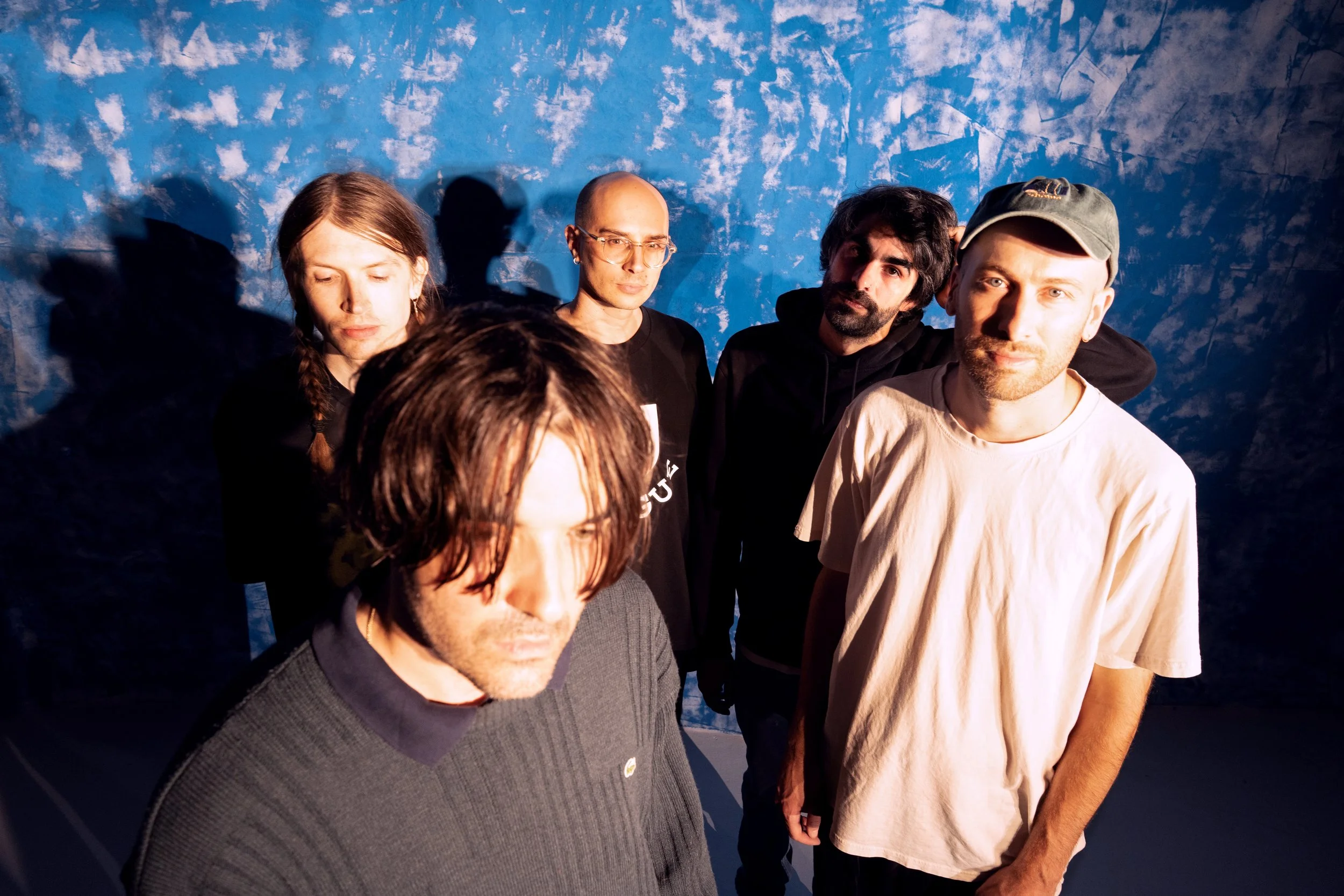
It’s November, the days are getting much shorter and the skies are much darker, and I’m ill. Having cancelled on Ulrika Spacek last week for the same reason, stumbling onto this Zoom call in a bedroom I’m soon to move out of, I am apologetic but excited. There’s few bands that have been walking the tightrope of being indie rock stalwarts while continuing to push forward out of their own sonic comfort zones like they have, and their forthcoming album EXPO, as well as their first release through Full Time Hobby, is a brash statement on where they think art might go. It’s light conversation for a Monday morning, but one that they seem more than up for having, especially as frontman Rhys Edwards’ baby daughter climbs into view of his webcam.
“There’s a lot of power in putting people in a room together, and there’s a context to it all as well,” says guitarist Joseph Stone. He continues:
“We’re constantly getting bombarded by things with no context, so when you link things together, they come across a lot more human, and easier for people to invest in it.”
We’re speaking about two things concurrently here, as they pertain to each other. The week before, the band brought back their semi-regular curated night of art and music, Oysterland. An equal part temperature check and celebration of the current scenes they find themselves in, it’s the unique sort of night that tries to fight against the algorithmic discovery that’s easy to fall victim to. “We always try to remember how it started, where it was easier for musicians to get gigs but harder for our friends who were artists to exhibit their work,” Edwards explains, “so we said let’s try and just combine them together.” Their commitment to this ethos extends to their choices of venues too, with this latest iteration happening at Club Cheek, a recently refitted small arts venue off the shoulder of Brixton.
Similarly, Stone’s sentiment correctly extends to how the band approached their latest album, where sharing a room is not only a thematic throughline, but also an extra special occasion for them now that they don’t all live in the same city anymore. “The time we do have together is precious,” says Edwards, “we’re not really a band that has a lot of time jamming together.” But their shared experience as a group means that while communication is easiest when they’re together, they can rely on a little WhatsApp group chat ‘room’, and as drummer Callum Brown says; “There’s solitude in working alone, especially when you’re honing in on what you’re contributing to a certain song, but obviously there’s beauty in the whole also.” EXPO isn’t intentionally a sharp critique of the current trends of technology, but as Ulrika Spacek constantly face the frustrations of facing screens, the album took shape around trying to persist as a group of five trying to make something greater than the sum of their individual efforts.
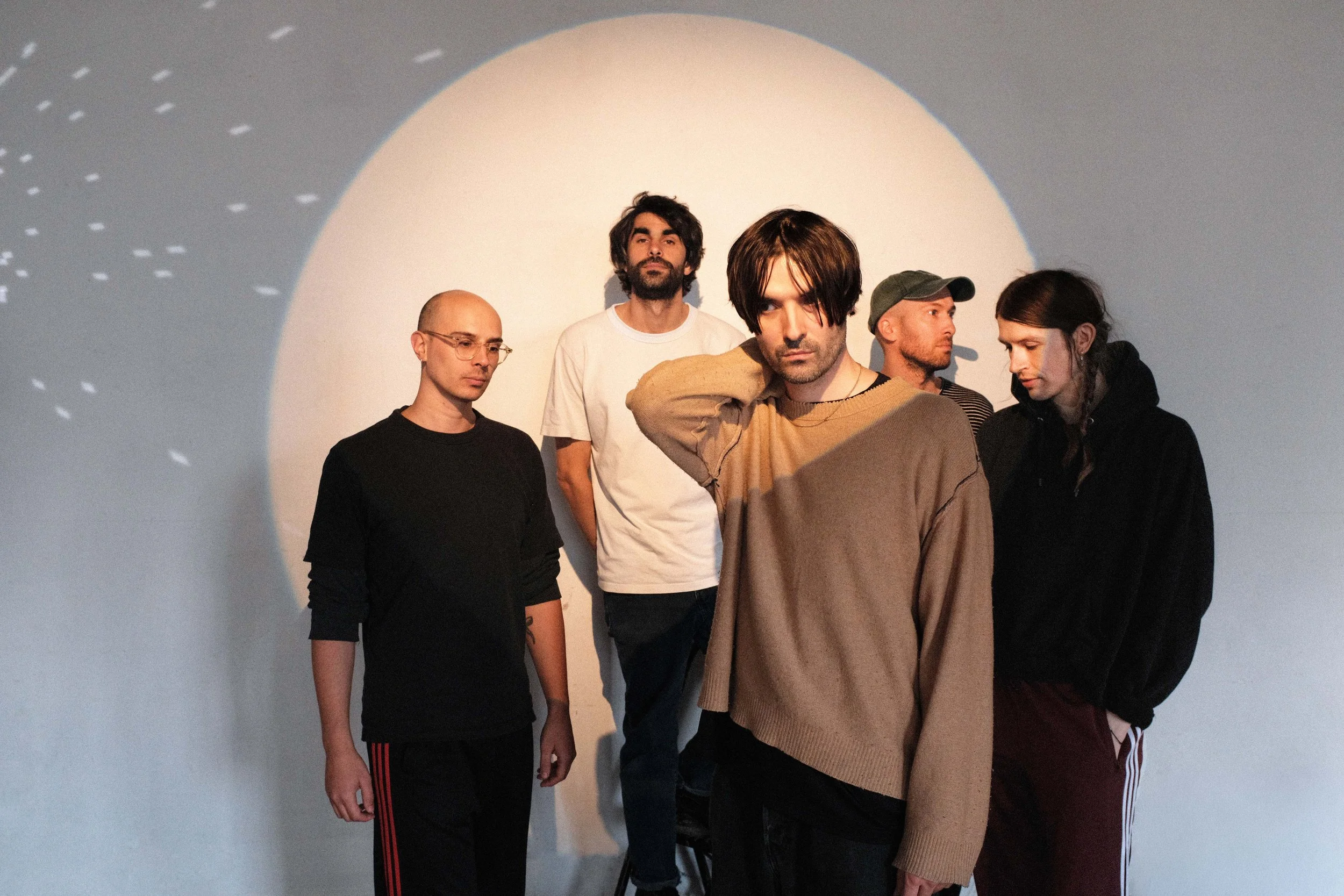
Where many bands might render themselves unable to create with the barriers of distance and time that they have with each other, the band sees it differently.
“We’re lucky in the sense that we can have studios at home, come up with ideas at home, then start sharing those files back and forth before we come together,”
Says Stone, “and also when we do come to rehearsing, that’s when we actually piece the music together.” For them, they see the result of this somewhat difficult process as a tangible difference in their music. “It’s like another avenue for the listener to go down when they come to a live show than maybe what’s on the recorded version,” Edwards expands, “or maybe there’s a section that we’ve realised just functions better in the live set.” The way they express this implies that maybe in the past this anxiety was more explosive, and they’re all in unison that being stuck in a studio with each other for too long would drive each other insane. When I speak to them now though, they are older, not only as individuals, but importantly as a collective. They’re more attuned to each other’s habits, when to push and when to pull, and the limits of each other’s musical humility.
Compared to their last album, Compact Trauma, which holds a figurative meaning but for them also a brutally literal one for them, their latest record is a notable transformation, but not departure. “We were never going to detour too much from the Ulrika sound, like we still love guitars,” says Edwards, “but we were excited about maybe using more electronics and samples and such.” He brings up how it connects him more to his 14 year old self more than ever, to bands like Cooper Temple Clause, or early Warp Records acts. The difference was now they trust their own production abilities to nail these more nuanced and mature blends of sounds. It’s all there to hear in the music, from the shuffling drum rhythms that transition into drum pad synths on ‘This Time I’m Present’, reminiscent of Rainbows Radiohead, to guitars that sound like they’ve been pushed though a fishtank mixed with flute synths on ‘Expo’. “The drumming on this started from a much more rhythmic place,” says Brown, “than on previous records which felt almost motoric. Which made it more fun to play around with drum machines and programme beats.” Edwards is clear that they didn’t have a clear cut direction, when they were moving forward from Compact Trauma, but that everyone just wanted to expand past their comfort zones, and that the direction really only reveals itself from doing. His daughter interrupts with a squeal of agreement before he can mute himself on Zoom.
A change in growth necessitates seeds to expand from, and for Ulrika, it came in the form of sonic scrapbooks and the random spurts of creativity. “Callum had put together a collection of beats that I think were using mostly electric drum beats,” Stone elaborates, “There was a lot of sub bass and interesting use of reverb which I think sowed a lot of seeds of this direction.” As a group that writes quite chronologically, it seems that by the first few songs on the tracklist, the group could feel a sound coming together that they were comfortable exploring further. ‘Picto’ has a unique drum sound that came from Brown dangling a mic over a spare cymbal stand DIY-style, or on ‘Square Root Of None’ came from messing about with new guitarist Bruce Jenkins on an interface. “He had a programmed beat I think, then Rhys took it, flipped it, and it came out better than what we imagined,” says Stone.
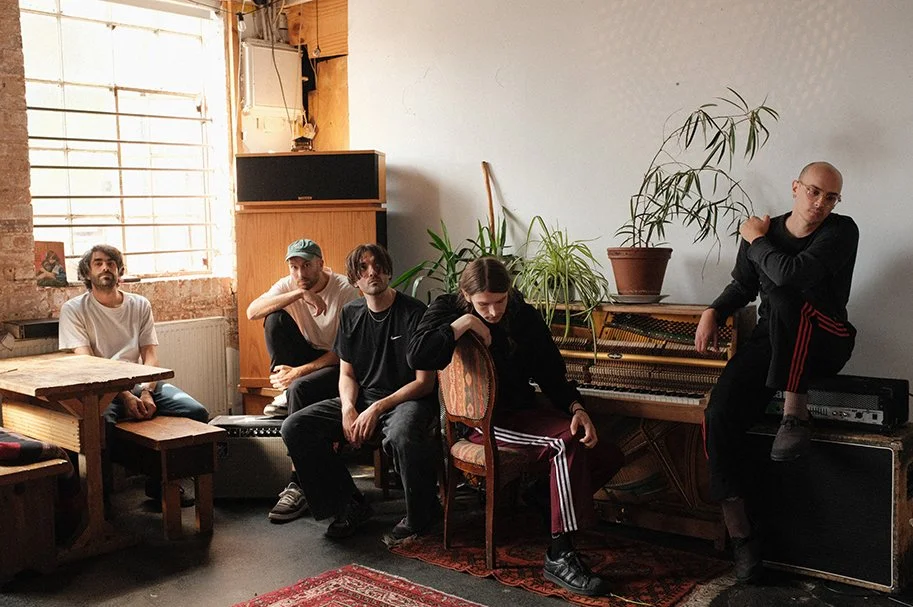
The fluidity of this process, as well as the inherent circumstances that mediated the use of technology, led the band in using even newer technologies like AI to change the tone of vocals on tracks like ‘Picto’. “As long as the hand that controls it is human I feel like it makes it an artistic thing,” clarifies Edwards, “and with ‘Picto’ it just started as a placeholder, before we came around to the glitchiness of it all.” While its use in art is still contentious, as our screens are consumed by AI generated slop content, Edwards is adamant that its use shouldn’t be inherently demonised, and there’s a certain aesthetic blend that might be subject to recreation. “Sort of like how people like the pixelation of early digital cameras, I think this particular moment where we stretch things out and change the pitch will be artefacts of now,” he says. Given the context of how this album came about, the tension between technology and creativity is present, but never one that they feel need to be given more credence.
“We’re still in the same context as everyone else, but the key point is that we are working as a group and a collective,”
Edwards argues, “I’m not necessarily pushing for people to be making music separately, but say on this where we had to use screen sharing to even be able to mix and edit songs together, it can be a pretty incredible tool.”
Even if slightly corny and indicative of the exact context we’re discussing, our conversation reminded me of Ethan Hawke’s Subway Take (™?), when he says that “There’s no such thing as your favourite Beatle”. His point is that they were all parts of the whole, and knew what strengths to lean on and when. Ulrika Spacek have grown and evolved together through the years, so naturally so as their sound and notably their medium for creating the music that they are known for. EXPO comes across as their most mature work to date, and despite the challenges of making music across countries, or lineup changes, or the general state of affairs in contemporary indie music, they continue to use the tools at their disposal to create, but most importantly they continue to rely on each other’s strengths and personalities to make a project that’s a capsule of themselves as they are right now.
Photography By: anya broido