
Mitski - Nothing's About to Happen to Me Review
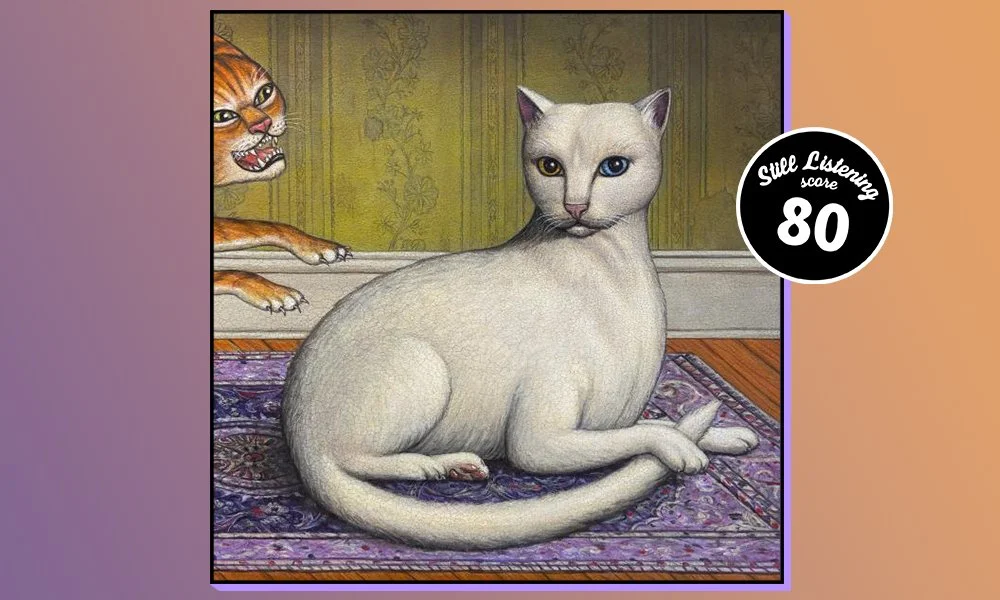
A stark, inward-looking record that trades dreamlike distance for bruised clarity, as Mitski confronts shame, isolation and longing with newfound directness.
“Everywhere you go makes your heart ache when you’ve done enough walks of shame” Sings Mitski towards the beginning of her eighth studio album Nothing’s About to Happen to Me setting the tone for an album exploring themes of shame, loss and isolation. A spiritual and quite literal successor to her 2023 album The Land is Inhospitable and So Are We, her touring band have returned to record and assist her in spinning her narrative of a recluse woman slowly unravelling, but finding freedom within the walls of her own, dilapidated home.
This album feels more down to earth than her previous outings, her voice is no longer as ethereal or dreamlike as it was in her early work such as Lush, She is now present and front facing, accompanied by a choir as well as an orchestra of string, brass and woodwind sections lending her a folk sound with a grandiosity befitting of her earlier work, melding the two concepts together and creating something new but also being unmistakably Mitski.
This is made evident as soon as the album starts with ‘In a lake’, which starts in a more grounded place than much of her earlier work, before continuing into the album’s lead single and second track, ‘Where’s my Phone’, which uses static riffs and dreamlike vocals to marry her two styles while pacing the song somewhat inconsistently, making it feel at points like it is tripping up on itself and highlighting the disordered psyche of the song’s protagonist. This is further accentuated with the song’s discordant climax as distortion bleeds in and a high pitched squeal of feedback finishes it up, vastly contrasting the next song, the slower, more somber ‘Cats’, which abandons the pop melodies for a swaying, overtly country sound.
This dramatic contrast is by no means the standard for the album, as calls back to elements of her older style in order to assure her longtime fans that she has no intentions of completely upending what they have come to love, while making use of the more recent, Americana-inspired sounds to create something new. The styles compliment each other both sonically and in the tone of the album’s content.
‘Rules’ is the song on the album that most embraces her new sound, but also directly thematically ties with “Me and my Husband” (Be the Cowboy), showing that the more grounded vocal and instrumental style is perfectly capable of exploring the same themes that she is known for, but perhaps helps look at it from a different, more mature perspective. By eschewing her more ephemeral approach, Mitski is no longer shying away nor avoiding her problems, but is now facing them head on and coming down to reality. She expands on this style further in ‘Charon’s Obol’, slowing down and making full use of both the choir and orchestra while maintaining the themes of loss and yearning that prevail throughout the rest of her work.
‘Dead Woman’ is perhaps the most classic Mitski song in the album both in content and tone. Sonically it is the most ephemeral, ghostly song on the album, with muffled drums and a haunting fiddle accompanying. In the song, the protagonist asks “Would you have liked me better if I had died, so you could tell my story the way it ought to be?” She laments over the fact that it would be easier if she died so that the subject of the song could spin a narrative inaccurately representing her, but ultimately fitting more comfortably into their idea of who she is and what she should be. The song almost works as a mirror to 2018’s ‘Washing Machine Heart’, a song about washing away the pain of herself and her partner even at the potential cost of losing herself in the process. ‘Dead Woman’ could perhaps serve as a reflection on that earlier song, looking at its themes from a different angle nearly a decade later.
The album’s second single ‘I’ll change for you’ is a bottomless pool of self pity, ripe to throw yourself into. By her own admission, Mitski wanted “to write a song about being pathetic”. The song is bossa nova inspired, its rich, deep instrumental and vocal tones are the picture of self indulgence as she once again laments a past love that she can’t leave behind as they are “the only other keeper of my most precious memories”. The song gives the listener space to openly indulge in their own melancholy and the lyrics, while poignant, are vague enough for the listener to ascribe their own meaning to it.
As a whole, the album is cohesive, thoughtfully arranged and often striking in its emotional clarity. The interplay between her earlier, more ethereal tendencies and the grounded Americana textures of her recent work is handled with confidence, and there’s a clear sense of intention behind its narrative arc. But for all its polish and conceptual strength, it rarely feels like unexplored territory. Mitski refines and recontextualises ideas she has already mastered rather than radically reshaping them. It’s a compelling and often beautiful addition to her catalogue, even if it stops short of revealing a new side of her artistry.