
Start Listening To: Charlie Franklin
London-based singer-songwriter Charlie Franklin talks lyrical honesty, romantic blues-leaning indie-folk, and the calm at the centre of new single ‘Julius’.
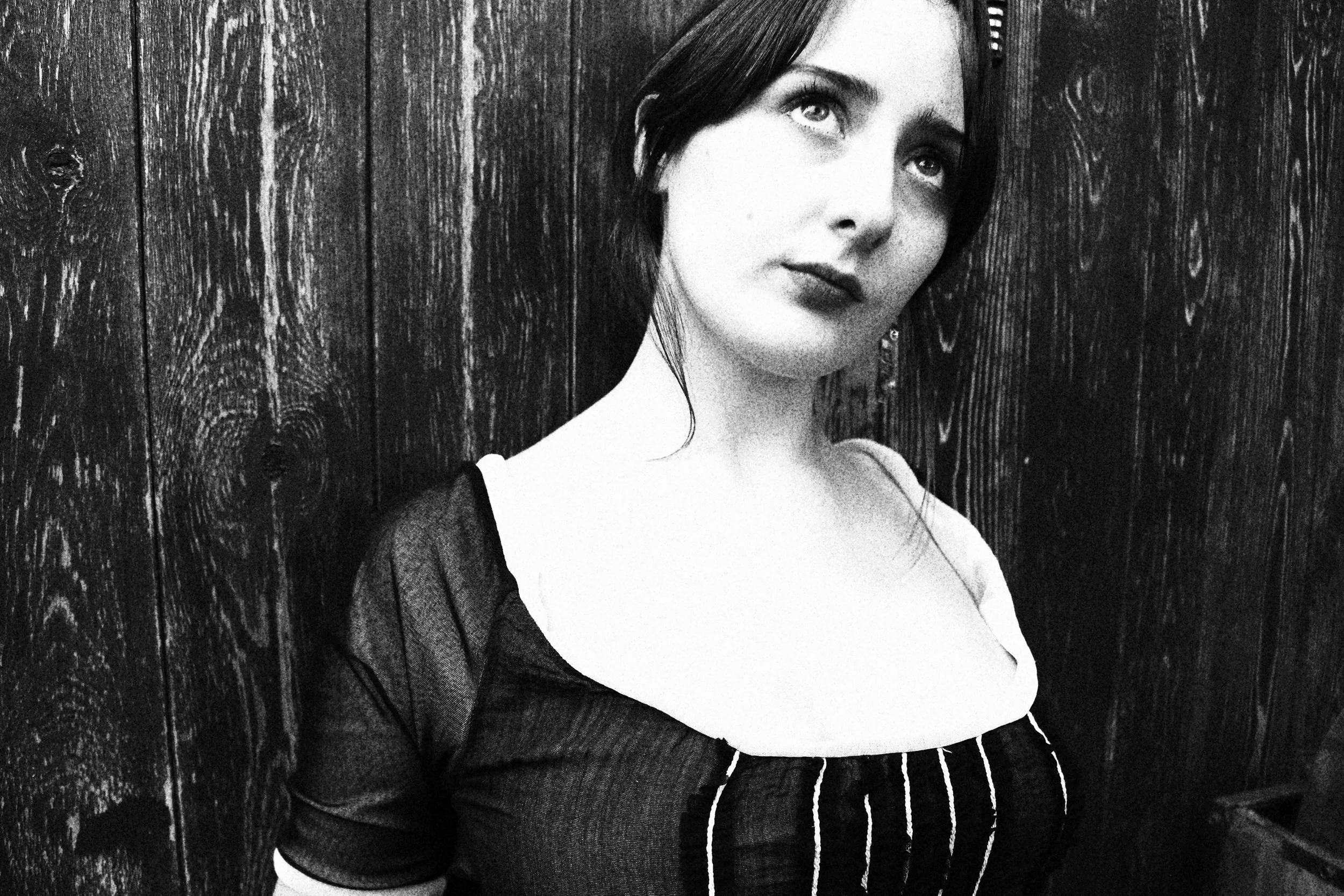
Charlie Franklin is a London-based singer-songwriter whose music sits between contemporary indie-folk, old-school acoustic songwriting and romantic blues. Originally finding her musical footing in Bristol, she writes with a focus on intuitive release and lyrical depth, keeping things earthy, stripped-back and emotionally direct. In this Q&A, Charlie reflects on recording ‘Julius’ with producer Natalie Wildgoose in a fast, live session that pushed her to embrace imperfection, and how the song became a love story built from real experiences and romantic longing. She also talks about making space for stillness inside London life, shaping a visual world rooted in nature and dreamlike imagery, and why honest lyrics are always the thing she hopes people carry with them.
For those unfamiliar with your music, can you tell us who you are, where you’re from and about the music you make?
I’m Charlie Franklin, I’m a singer/songwriter living in London. Home is ambiguous, but Bristol is the place I first established myself musically and where I’ve felt the strongest sense of belonging. The catharsis of intuitive release is what drives my song-writing. The heart of my music is my words, I’m uncompromising when it comes to lyrical depth. Currently my sound lies somewhere between contemporary indie-folk, old-school acoustic, and romantic blues. I’d say golden hour, earthy folk with a steady thread of deep introspection.
How did the experience of recording 'Julius' with Natalie Wildgoose shape your artistic vision and approach to future projects?
It was really the first time I’d trusted someone enough with my music. Working with a female producer was important to me, and Natalie also being a singer/songwriter in the folk world was a huge bonus. She really got my vision and helped it come alive. It was so exciting seeing these ideas that had existed in my head, spilling out into the room. Money was tight and time was too, so the process was super condensed. But if anything, this limitation was a gift. ‘Julius’ was one of 5 songs we recorded in about 6 hours. This supported a live element that didn’t allow for perfectionism. I didn’t do any more than about four takes of ‘Julius’ and we ended up using the first take anyway. All the instrumentals we added were super delicate and subtle textures - intuitive playing, gently guided by mine and Natalie’s suggestions. It built such confidence for me, embracing imperfection as a crucial and historic element of folk music, and something that naturally lends itself to the vulnerability of my songs. Keeping things live and intuitive is key, and trusting the right people with your vision.
Can you share any specific inspirations or experiences that influenced the themes and emotions expressed in 'Julius'?
‘Julius’ was inspired by several real-life lovers. I had experienced a fleeting, but profoundly deep connection with someone who made me feel this total openness and soul baring. We had an unquestioning kind of love, but life’s practicalities got in the way. This was soon after leaving a relationship that was quite tumultuous and unsteady, where their love for me was always uncertain. Julius is essentially a love song about the relief of finding someone where the love between you just feels totally right, the kind of love you didn’t know you were waiting for until it arrives. It’s a deeply romantic expression of delicious, strong desire accompanied by steadiness and calm.
What does the title 'Julius' signify for you, and how does it connect to the song's overall message?
Julius is a pseudonym. Sorry to strip the veil, but the name Julius was actually the last part of the song I came up with. I wanted a melodic name and somehow ‘James’ or ‘Brian’ didn’t fit. Call it artistic license. Julius isn’t a specific person I’ve encountered but rather a romantic fantasy born out of experience and longing. The person I’m singing about is really an amalgamation of different people intertwined with a desire for true love. Julius isn’t someone in my life, but rather a fictional representation of the kind of love I want to experience.
How do you balance the chaotic energy of London life with your desire for introspection and calmness in your music?
Epping Forest. The Marshes. I am very lucky to be (and have made a point of) living near greenery. I can’t really survive mentally without immersing myself in nature on a regular basis. London can be brutal on your senses, and I am a sensitive person. I find myself gradually forming this hardened shell over the weeks and months, and being in the expanse of trees, laying in moss, quite literally burying my feet in soil, is a necessary grounding and calm for me, a softening of the shell. Seeing the Longhorns grazing, and sitting in a tree. I often take my guitar with me. I have also made a sanctuary of my bedroom. I’m an extremely sentimental person, my room is draped in ornaments, pictures, paintings, it’s deeply expressive of who I am, and provides this space for me to sink into my internal world. It’s common for me to spend half an hour, an hour laying down just daydreaming. Thinking, not engaging with anything other than my imagination. I give time to be gentle, to slow down in my movement and not oversaturate my mind with stimulation. London can be really inspirational for outrospection. I like to go on solo outings a lot, to observe. I love inferring the inner worlds of strangers, sitting still outside in the busy city. Learning to live in the city at your own pace is a conscious practice, and a necessary one I believe.
What role does visual imagery play in your music, and how do you envision the visuals accompanying your songs?
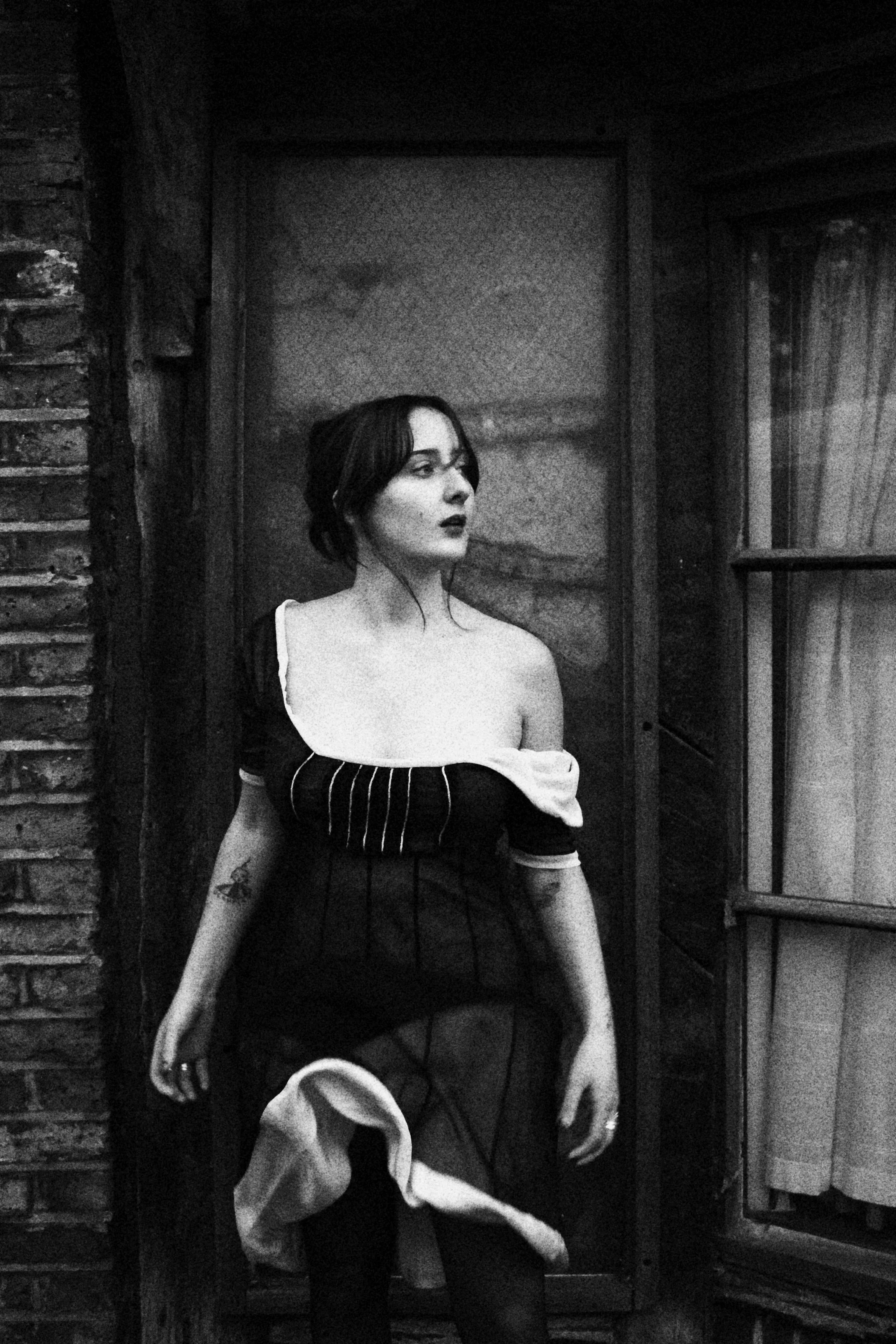
My visual world is often tied to the places I create from and have connections to. I lean towards strong natural imagery, distorted in dream-like sequence - a synesthetic experience. I like soft-intensity, romantic and filmic, verging on invasive. But still firmly rooted in real, earthy aesthetic. I’m not for the clean girl look. I want torn up, wind-swept, alive and warm.
How has your collaboration with other artists, like those you've performed with, influenced your musical style and growth?
My writing process is typically very private, imagined from secluded spaces or in nature with just a guitar. I really enjoy this intimacy with myself and my music. It feels sacred. So, when I invite collaboration, it has to be with someone I feel really connected with musically, someone I really get on with, feel totally safe with and unjudged by. Opening myself up to collaboration recently has widened my vision for what’s possible, not just limiting myself to this self-sufficient mindset. It’s been a welcome challenge. Recently working with Alex Haines on some new music, his instrumental fluency and magnificent brain have taken my familiar raw, folky sound into an experimental/indie world which I’ve loved, and has really excited me, glimpsing the potential of where I can go next with my music.
How do you see your music fitting into the broader indie folk scene?
I trust that my music will find its place naturally, depending on who it grabs. I think it sits more on the naïve-folk side of the scene, inviting intimate encounters with sit down gigs, finding an audience who want to immerse in attentive listening. I’m at a stage where I’m really enjoying performing solo acoustic shows, super stripped back. My music isn’t about the frills, and that’s what I want to bring to the scene, totally unaffected vulnerability, unashamed rawness and imperfection. I see myself amongst the younger old souls who are getting a taste for this nostalgic, timeless folky sound. Songwriters that can stand alone with their guitar and their voice and demand silence in room, without a need for much else.
What advice would you give to emerging artists trying to find their voice?
Be conscientious in listening to as much music as you can. I am always listening to music, discovering new stuff, listening to things I don’t like as well as what I know I love. It helps sharpen your ear and your understanding of different sounds. And trusting yourself. Try not to get swayed by what other people think of your style or your sound. Don’t place importance on judgement, focus on intuitive expression, that’s really where the beauty lies, and where you find your true voice. Play, fuck around, contort your voice, mimic other artists. I think this is a really valuable way to get to know what sounds work for you, what fits. Try your best to always be truthful. You’re only doing it for you. The people who are meant to connect with your music will.
What do you love right now?
Making things for people. I had no money over Christmas and recent birthdays of loved ones, so I handmade all of my gifts and it was great. Creating something personal for someone, while enjoying practicing art in ways separate to my music. Especially sewing, and making little characters. It’s amazing how resourceful you can be when you’re low on cash.
What do you hate right now?
My goddamn f*ckin phone, and everyone else’s. They’ve got us in a choke hold. It’s frightening.
Name an album you’re still listening to from when you were younger and why it’s still important to you?
Blimey. There are so many. One I always come back to, that has been instrumental to me as a songwriter, is ‘Songs to a Seagull’ by Joni Mitchell. I was extremely lucky to have a mum with an impeccably diverse music taste. She was a musician, and introduced us to everything. But this is one that has always stuck with me, an album that feels like home. Every song is a mystical masterpiece. Her poetry is next to none, of course I’m bias, but beyond the nostalgia, this still holds true for me. The imagery is so vivid and fantastical. She is profoundly autobiographical, in the least obvious way. She sings of divorce as if it were a fairy tale. And she sings so honestly as a young woman torn between the city, nature, and lovers. Whenever I am feeling lost in myself, this album is my solace. The multitude of mystical worlds Joni is able to portray through her words and her transcendent voice, melt me every time.
When someone hears your music for the first time, what do you hope sticks with them?
The honesty of my lyrics and my voice. It’s a strange but wonderful thing, hearing someone hum one of your melodies. But it’s more important to me that people pay attention to my lyrics and find some personal resonance in what I write. It’s the most enriching and connective feeling when someone says to me that they really relate to my lyrics. Or that they find meaning there. I hope my music encourages people to slow down for a moment of reflection. I bare my soul in the songs I write and that’s carried by my voice.