
Start Listening To: Starcharm
Chicago artist Starcharm pairs hyper-confessional indie rock with pop melody and odd-time twists on new single ‘Wake Up,’ a sharp take on artistic pressure, performance, and the anxiety of chasing success.
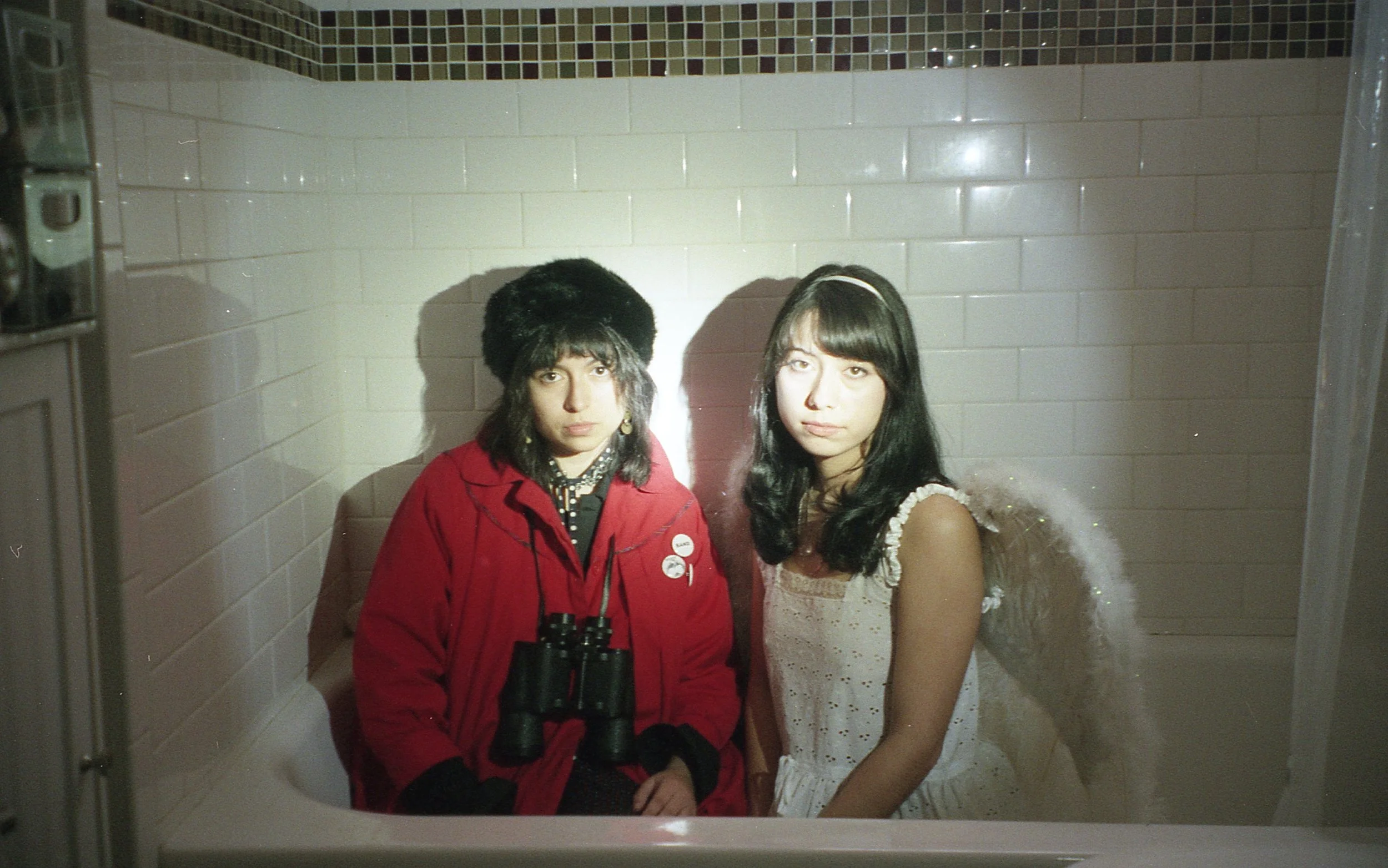
Starcharm is the indie rock project of Chicago's Elena Buenrostro, a musician whose hyper-confessional lyrics and pop-infused sound are both captivating and relatable. With her latest single ‘Wake Up,’ she tackles the weight of artistic pressure and the complexities of success, especially for women in music. In this interview, Buenrostro shares insights into her songwriting process, the evolution of her sound since her previous project Soft and Dumb, and the cathartic experience of performing live. Her reflections reveal a thoughtful artist navigating the challenges of creativity while remaining deeply connected to her local scene and influences.
For those unfamiliar with your music, can you tell us who you are, where you’re from and about the music you make?
Starcharm is the Chicago-based indie rock project of Elena Buenrostro (me hehe). Hyper-confessional lyrics, pop melodies, and odd-time signatures are just a few things that define Starcharm’s sound.
What inspired the themes explored in your new single 'Wake Up,' and how do they resonate with your personal experiences?
‘Wake Up’ is an anxious reflection on the pressure to succeed and continuously produce music, and what one loses through constantly having to consider what an external source may think of your art. As a female musician, I constantly feel the weight of time and its relation to my success as an artist. Although I know there are plenty of successful older female musicians, it’s hard not to feel that pressure when the spectacle of youth is often many up-and-coming artists’ selling point.
Can you share a bit about your songwriting process?
‘Wake Up’ was written collaboratively. I brought the opening riff and vocals to Amaya Pena (drummer) and Jasmin Feliciano (former bassist), and we figured out the composition and other parts together. I typically write vocal melodies and lyrics by myself, so the chorus vocals came after the full instrumental was sorted out.
Do you typically start with lyrics, melodies, or a specific concept in mind?
Usually, I write a guitar part first, find a melody, and then let my stream of consciousness flow until I find a central theme for lyrics. The subconscious is always at work when you’re writing, even if you’re just singing jibberish, so oftentimes the theme reveals itself to me after writing just a line or two.
How do you feel your sound has evolved since your days with Soft and Dumb, and what prompted that change?
Soft and Dumb was a project with my ex and the separation in our romantic relationship swiftly prompted our creative separation. Although I am proud of the work I made in Soft and Dumb, it feels a bit insular to me now. That project started when I was 19 and now as a soon-to-be 26-year-old, I feel more confident in both my performance and songwriting abilities, and the things that I want to write about have shifted. Although pop-melodies and odd time-signatures are some through-lines in both projects, Starcharm feels more existential and unabashed.
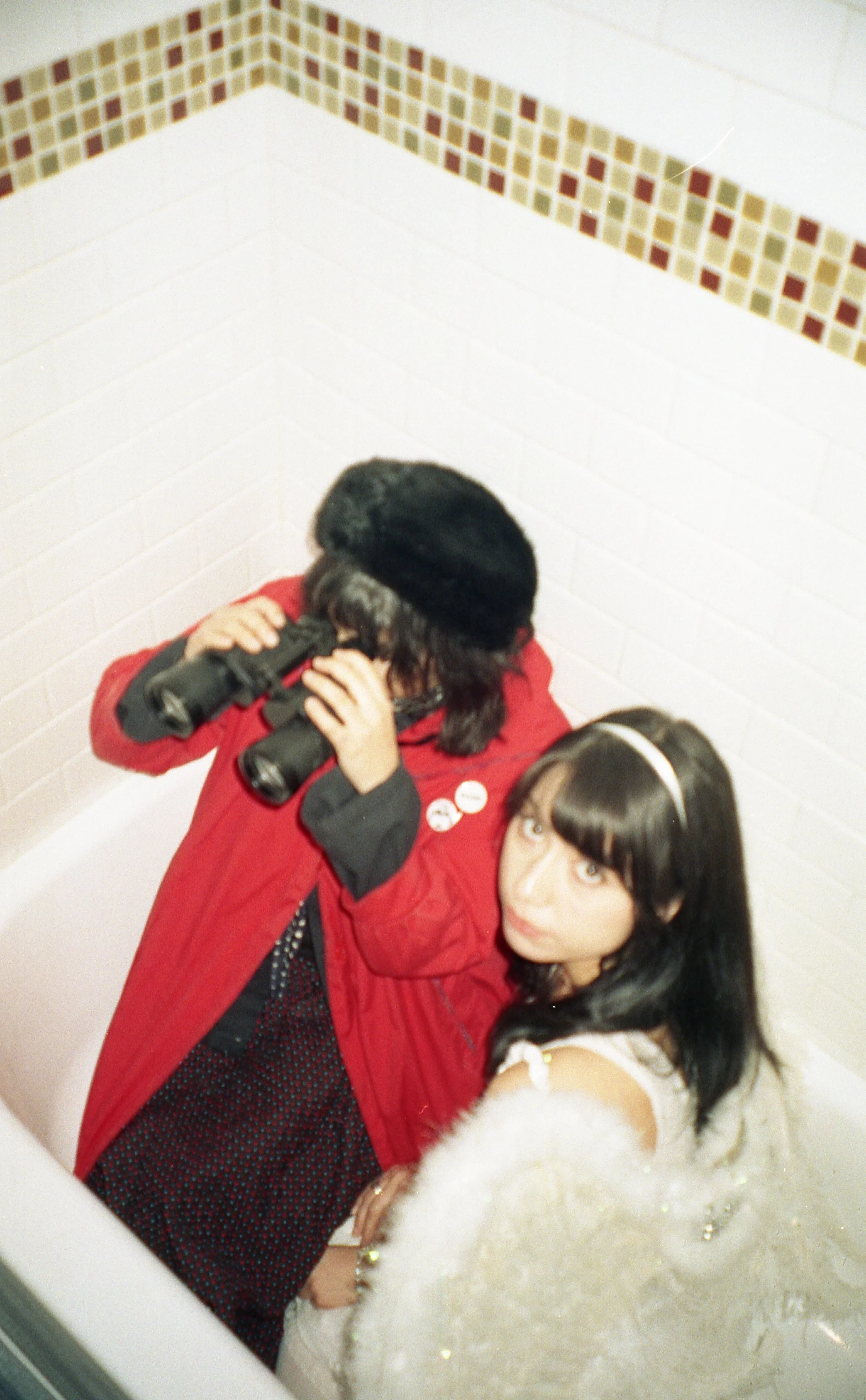
The music video for 'Wake Up' features some striking visuals. What was your vision for the video, and how did you collaborate with Amaya Peña?
In this music video, I wanted to evoke a sense of surreal unease, with desperation and performance being at the forefront of the video. In essence, the Angel character is a performer. She dances, crawls on the floor and collapses for the viewer. Like a ballerina in a music box, the Angel eternally spins for the Hunter, who follows her around the city and peers at her through binoculars. The music video is a dramatized version of what it feels like to be an entertainer, in both its mundanity and absurdity. Amaya is a fantastic videographer. They came up with the Hunter character themselves and have a great sense of composition. They help me formulate my loose ideas and translate them into reality.
What role does the Chicago music scene play in your creative process, and how has it influenced your sound and style?
I met both Amaya and Jasmin at shows in Chicago. Although the project looks different now, it was through continuously engaging with the scene that it was able to start.
Could you describe the feeling of performing live?
Performing is the ultimate form of catharsis. Not to get too therapy-speak-y, but when feelings are framed as unproductive to society, there is a lot of learned shame that one experiences for being emotional. However, performing is the only time that having an emotional experience is celebrated and rewarded. As a very shameful person, it feels fantastic.
How does it differ from the experience of recording in the studio?
Recording is meticulous, repetitive and focused. Performing feels more like an approximation of the song, or an instance of the song that you may never recreate again. It’s ephemeral.
Are there any particular artists or bands that you’ve drawn inspiration from while creating Starcharm’s music?
Phoenix, Blonde Redhead, Palm (although we don’t sound much like any of those bands)
What challenges have you faced while establishing Starcharm as a new project, and how have you overcome them?
Taking on a leadership role. Coming from my prior project, which was collaborative often to a fault, I found it difficult to express my desires and “lead the ship” once starting a new project. With time I’ve learned that unmet desire only leads to widespread dissatisfaction, and at its worst, resentment. A dedication to honesty and the unbridled support from Amaya has made it easy to step into this role.
What do you love right now?
Buttons, decay, and unfinished drawings
What do you hate right now?
Chicago weather, vertical videos, and subscription models
Name an album you’re still listening to from when you were younger and why it’s still important to you?
Puberty 2 by Mitski. I mention Mitski in every interview I’ve done because she is an incredibly formative artist for me. Puberty 2 is Mitski at her grungiest, which I love, and her songwriting on that album is simple, concise and moving. She was my age when she released it, so it feels especially relevant to me now.
When someone hears your music for the first time, what do you hope sticks with them?
It sounds trite, but I hope they feel some sort of connection to it. Or, they want to dance. Or, best of all, they want to start a band themselves. Yay!